This time, based on the way of thinking about skeletons and muscles -Part 1 and 2-, I summarized the simplified way of thinking about skeletons and muscles, and what to be careful about when simplifying!

↓ The auxiliary lines for the pectoral and abdominal muscles are the same as those used in the video.

↓ The two red lines are where the deltoid muscle overlaps the pectoralis major muscle.
The position of the navel is on the third row, counting from the top of the abdominal muscles. (There are quite a few individual differences in how muscles are attached, so it may not be the case.)

If you are aware of the above, you can avoid using the wrong auxiliary lines!

Have you ever had the experience of tracing the auxiliary lines straight from the front without any discomfort, but as soon as the angle is added, the picture becomes hard...!?
The reason why this happens is because the auxiliary line of this muscle represents the root of the muscle.
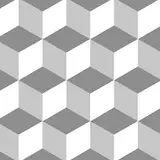
↓Let's think about it like a cube!

↑the root of the muscle is the base of the muscle (bottom). The areas drawn with red lines correspond to the swelling of the muscles (top and side). In the same way that a cube can see many faces and create depth when it is angled, muscles also have depth in the same way.
The actual muscle is not a cube, but I think you'll be able to understand it better if you use figures like this, so please try it!

·Pectoral muscle
・Abs
・Back muscles
The trick is to draw these three so that they are large, including the silhouette!
Instead of drawing muscle lines on a slender body, you will be able to draw muscular muscles just by being aware of the bulge.
↓ After drawing a slender body, practice drawing lines outside the lines of the body is one way to improve your drawing! It may seem plain at first glance, but it is a practice that uses your head quite a bit. Let's shake it off from small things!


This method is recommended for those who have some understanding of the shape of the bones themselves and which skeleton the muscles are connected to.
If you don't know how to draw, you'll get confused, so if you're just starting to draw, I'd be happy if you could read it lightly...!
As I told you in the second part of this course, muscles have points of attachment to bones. Thanks to the attachment points, if the bone moves, the muscles will work together.
The more you move, the more your bones will move and your muscles will stretch and contract, giving you a different shape than stick standing poses.
Skeletal-style auxiliary lines are easy to apply to such changes.
When having a character take a bold pose, if the auxiliary lines are similar in shape to the skeleton, it will be easier to check the consistency of the twist and tilt of the body, and the attachment points of the muscles.
It's a bit difficult for people who are just starting to draw, but I don't think it's that difficult to actually draw the skeletal style auxiliary lines, so even if you just separate the chest and waist parts ! ↓

By all means, please try to practice the skeletal style auxiliary line!
So, the summary of today's article is three things:
Stay tuned for future posts~