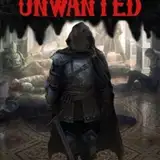
(This post could have been titled "Sorry folks, I've got another book or two for you to buy.")
Today I want to write about new TTRPG Doomsong and the accompanying sandbox campaign Lord Have Mercy Upon Us. You might have seen that this game is nominated for a bunch of Ennies this year. I'm here to add to the hype.
Also, I want to explain how - quite unfortunately - this game has fallen between the cracks of Quinns Quest a little bit.

So, in the words of Teeth designer Jim Rossignol who was excitedly messaging me about Doomsong this week, "these books are berserk."
I might start by describing Doomsong as a fantasy TTRPG that takes the exact elements of history that fantasy RPGs generally discard like so many unpalatable chicken bones - namely filth, misery, and Christianity - and then turns them up to the max like the designers were cranking up a guitar amplifier.
Now, this might sound a bit like I'm describing indie smash hit MÖRK BORG. And sure, both are games that take place mid-way through the apocalypse, and both books can be heard giggling while presenting you the most hopeless locations, monsters and NPCs you've ever read.
But the two games are quite different.
MÖRK BORG presents grit and darkness as a kind of... stylistic pastiche of the fantasy RPG. Reading MÖRK BORG gives you a whiff of the Scandinavian role-playing scene, with its leather jackets, piercings and curse-words. The world is ending, and there's nothing you can do about it. Except rock some monsters!!!!
Doomsong has a far more nausea-inducing proposition. The world is ending, but there is hope... and it lies in the hands of the fanatical, witch-burning, achingly formal institution of the church.

Doomsong is a game that reads like the authors grew up Christian and are trying to exorcise (or at least parley with) some of those demons.
In other words, where MÖRK BORG is Death Metal, Doomsong is a hymn.
Let me talk about the core book first, which presents the world, the rules, and the bestiary. After that, I want to talk about the campaign book, Lord Have Mercy Upon Us, which is what really captured my heart.
So, Doomsong!

With exquisite black and white presentation, and then thin licks and splats of colour whenever it talks about the pantheon of Traitor Gods that are ruining the world (see above), Doomsong presents just the worst world ever.
At least MÖRK BORG is zoomed out a little bit, letting you consume the setting like so many song lyrics. Doomsong presents a society in lurid detail and you're going to wish it didn't.
Characters are created through a sprawling and surprising lifepath system, which feels like falling out of a tree and hitting every miserable branch on the way down. See below.

The Doomsong core book also has a calendar (which is expanded greatly in the charming official calendar supplement), bringing your campaign to life with a relentless barrage of holy days and wildlife breeding schedules and heretical traditions. The book has eight beautifully-illustrated pages on plants, trees and mushrooms help the GM "other" any scene the players are in (e.g. "Purging Buckthorn - This tree reacts to excessive moisture by expelling surplus water from its bark, staining anything it touches a deep black.")

Then we have monsters, which are presented not just as sets of frightening abilities, but as part of a disgusting ecology.
This book has fractionally-more-intelligent bears called "Bautenlobbes" that hunt bears for sport. Because we've all become used to the tired imagery of a giant squid, this game's signature sea monster is a ship-sized prawn. And in the four pages on the game's signature giant spiders - "Laceworkers" - you can practically hear the authors rolling their eyes at the idea that they should accommodate the common fear of arachnophobia, and instead they double and triple down on making spiders as real as possible.

To successfully survive (let alone eliminate) laceworkers, players should try and understand their life cycles (nests, hatchlings, males and females) and unique heresies. Famously, the gaps in the web of a full-grown laceworker act as fragile portals to their other webs. Get stuck in a laceworker web and half of your body could be a mile away, poking out of another web. And if either web is ripped, your body will be instantaneously, permanently sliced in two.
One of the special abilities of laceworkers is simply that they're "lucky", forcing players to re-flip the Doom Coin if they get a good result, which makes me laugh and laugh.
I should talk about the Doom Coin! You can see the official one below, though other coins will work just fine.

I've not played Doomsong, so take all the following with like eight pinches of salt, but the rules in Doomsong seem - in a word - grave. (There's also a novel and thought-provoking combat system, but I don't want to talk about it until I've tried it.)
Players don't have many advantages and checks aren't generous. It's a game where you can expect to die - more on that later - and your journey there will see you writing words on your character sheet like "Starving," "Uneasy," "Bleeding," or "Missing [limb]".

(Above you can see the official skill check reference cards, which - like everything in Doomsong - manage to be seductive, even if you're reading about botched surgeries.)
When reckoning with skill checks, players do have one advantage. They get a choice. A nasty little choice.
After rolling any skill check and getting a result which will be one of three levels - "Fail with cost", "Succeed with cost" or "Succeed", they OR ANY OF THE OTHER PLAYERS can always additionally flip the Doom Coin, which will step their result either up one level or down one level. Did you fail when you really, really needed to succeed? No problem. Would you like a 50% change of succeeding with a cost? Oh, and a 50% chance of truly devastating failure? I'm sure you'll get lucky. G'wan.
Flipping the coin is is the only way you get critical successes, which are one level higher than "Succeed", or critical failures, which are one level lower than "Fail with cost". And as you'd imagine in a game as bleak as this, Critical Successes are desperately desirable and Critical Failures are monstrous.
And here's the twist. Anyone who decides to flip the Doom Coin has to leave the coin in front of them until someone else flips it, and so long as the coin is in front of you, after a skill check the GM can force you to flip the Doom Coin. They can force you to pick up this literally and metaphorically heavy totem when you least want to push your luck. This is called being "Doomed", and lots of monsters and traps have... let's say a professional interest in whichever player around the table who might be Doomed.
As I say, I haven't played Doomsong, but that sounds like a lot of fun. I can imagine my players giggling and screaming through this whole charade.
I want to move on to talking about Doomsong's enormous published campaign, so the last thing to mention about Doomsong's core book is its cool campaign structure.
In the words of the book...
"Doomsong is not the story of any single character, nor even a single party. This is the story of a guild."

Now, while the Doomcoin is cute, I think this is just... uncomplicatedly intelligent. I'd be tempted to structure a campaign of Mothership like this, or any game that wants to threaten (and make good on) player death and party wipes without ending the story.
Whether your campaign is about a guild of Witchfinders or Woodcutters, Signmakers or Ratcatchers, your guild is the main character. This club is what accumulates resources, facilities, opportunities, enemies and character(s) as you play. This at once lets players permanently bank achievements in their administration, but also means the GM can pump the players full of dread like so much botox. Because the GM doesn't need to think twice about killing your character - the guild will always live on - every decision and dice roll can be freighted with risk.
And speaking of guilds... let's talk about the story of the Gravedigger's Guild.

Let's talk about the epic campaign book, Lord Have Mercy Among Us (henceforth L.H.M.). This is the reason I wanted to write this post.
LHM is a good fifty pages longer than the Doomsong core book, and look- I fucking love a giant adventure module. Y'all have seen my Delta Green: Impossible Landscapes review. I read Traveller's Pirates of Drinax like it was a novel despite knowing I'll probably never run it. I had the best time ever playing Mothership's Gradient Descent.
I'm here to tell you that LHM seems to be up there with the best of these mammoth endeavours (although again, I can't state this enough times: I haven't played a single minute of it).
Where do I start?
Oh gosh. Oh yikes. This book is a marvellous thing.

I should start by saying that these books - the core book and the campaign book - are like two halves that make a whole. The Doomsong core book by itself is... just a vision of a world with the authors' pupils fully dilated and maybe some spit at the corner of their mouths. It's all KINGDOMS, TONE, HISTORY, MUCK, MIRE, TRAITOR GODS, CALENDAR HOLIDAYS, FLORA, THE WORST MONSTERS YOU'VE EVER SEEN, COMBAT RULES THAT SEEM QUITE INNOVATIVE HONESTLY I'D BE EXCITED TO TRY THEM.
And so you read it and you're like "Wow!" ...but you'd be disinclined to actually run it because it's not quite a game, it's more like a reference book to an imaginary place. This is in stark contrast with the games I've been choosing to review on the Quinns Quest YouTube channel, because in the year of our lord 2025 many designers have realised that what is traditionally called a "Rulebook" in TTRPGs? That's a backwards descriptor, because what you should be writing is really more like a guidebook. The purpose of your game's core book should be that the GM can read it and know roughly what their job is, what session 0 looks like, what session 1 looks like and so on.
This is not Doomsong. Despite being so breathtakingly modern in its layout, in this one respect it's a bit of a throwback.
So how do you play this game?
I'll tell you! You're simply gonna run LHM (or at least read it to get a bunch of ideas you can pilfer). Because where Doomsong sprawls, LHM tightens.

I mentioned above that Doomsong is about a world at the brink of a holy apocalypse, right? Well, LHM tells the story of an epic - and contained - battle in this war.
Here's the pitch: 50 years ago, one of Doomsong's traitor gods, Pestilence, succeeded at capturing one of the kingdoms of the world for him to treat as his own private fiefdom. In an instant, the kingdom of Lethe vanished from the world, and unknown to all but the cursed people stuck living there, it became... The Plaguescape. It is now an inconceivably miserable mockery of what it once was, and the only reason that the humans and animals are still able to eke out a desperate existence is that Pestilence needs playthings, and subjects, and company.
Nobody can escape the Plaguescape. However, sometimes woe-begotten souls wander into the fog and find themselves there.
And this is how a campaign of LHM starts. Your players are all members of a Gravedigger's Guild in the wider world of Doomsong, only one day they get turned around in a fog and become the newest inhabitants/prisoners in the Lost Kingdom of Lethe.
Confused, alone, and utterly ignorant of what the shit is happening, the players will find themselves at a literal crossroads next to (and I love this for the first scene in a campaign) a broken signpost that says the local branch of the Gravedigger's Guilt is in one of four directions.

Perhaps allies can be found there, or employment, or at least answers?
And so a story begins where the players will eventually realise that the only way out of this hellscape will be for someone to slay the regent of this realm, the god himself, Father Plague. And with all the knights and heroes of the Plaguescape long-dead, it seems hope now lies with the only people willing to take a crack at this... our humble clan of gravediggers.
Important thing here: What I love about LHM is that while the world of Doomsong is laughably dismal, where every single NPC is illustrated as just the most fucked up, wonky-faced freak, and the monsters are so much worse? LHM is a story of heroism.
It's about a society of those wonky-faced fellows choosing to hope, knowing that many or all of them will die horrible deaths on this quest, but if you play this campaign right to the end it can be a story of your pathetic guild of gravediggers in their tumbledown guildhall eventually digging a grave for a god.

Now, your mileage may vary, because I know there are lots of fans out there of the grimdark worlds of MÖRK BORG or Warhammer 40,000, but to me these comedically dreary settings are fun as an aesthetic? They're cool! But they're not fulfilling meals by themselves. I need a little more light and shade than that. A little more texture, a little more nuance. (I also need a little more women lol come on guys it's the year 2025)
So I love that LHM is a game where you'll play in defiance of the setting. And speaking of texture and nuance (and women), LHM is a book that just contains so much texture, and so much nuance, and so many different sorts of people. It reminds me of TEETH in that respect. You get a whopping 350 fabulous pages of just the most colourful, funny, creative locations, objects, monsters, traps and - yes - wonky-faced freaks - you've read in a long time.

Your players can look forward to visiting the little wicker encampments of the child-sized Birdcatcher people. They will contract Toothworms. They will seek the death of Granny Redwork, and find an ally in the Licemother. They may bump into anyone from the book's two pages of feral orphans. They will explore towns and barrows and treehouses and orphanages and sanctuaries and convents and two different floating towns and, like, look-
Since I started Quinns Quest, a lot of people have asked me if I've taken a look at kickstarter success story Dolmenwood. The truth is, I have looked at it, and there's lots that I love about it? But the moment that I felt content closing those books and looking at the next TTRPG on my list was when I browsed the Dolmenwood books that describe the world itself, the various towns and dungeons, and what I discovered was that some of those places were interesting but lots of them weren't. And I don't care if your world is big if all sorts of places that the players might visit aren't super worth visiting.
That's not the case with LHM. The crowning achievement of this book is that I can crack open any of its 350 pages and find myself merrily captivated by the entire double-page spread, whether I'm reading about a bridge or a snake or a moth or a bakery. It's all fucking great!

"Alright then Quinns," you say, exhausted from this week's battery of Quinns' hyperbole. "Why aren't you running a campaign of Lord Have Mercy, then? Why are we hearing about this in a blog post, as opposed to a full-fledged Quinns Quest video review? I've got your number, you overblown salesman."
Good question! Let me try and unpick it.
Let me start by saying that I might well go on to do a video review! It could happen!! Depending on which games capture my interest in 2026, I'm not ruling it out.
But the fact is that Doomsong's been in my possession for about a year, and I've never seriously found myself tapping my index finger against my front teeth while wondering which of my players I might plug into a campaign of this. So this blog post, in a way, is me admitting defeat. I can't see myself running this in the near future.
And if I had to give one reason why that is, it's that I have a nervous feeling in my gut that I'm not sure my players would adore the unique way that LHM is structured.

I'll explain: One of the cool things about Lord Have Mercy is that it actually seems to take a lot of inspiration from open-world videogames, like The Witcher or Elden Ring.
The players are given an open world that hates them and an objective that seems tremendously distant - kill a God who wanders around the world like an itinerant Ganon - and then (as I say, I haven't played it so I could be wrong) the campaign is about them picking their way towards this objective one step at a time (risking their lives time and again for an item, an ally, a fragment of the puzzle) in a way that I imagine could be tremendously satisfying? But would certainly be very different from what I've reviewed on Quinns Quest so far.
In video game design terms this is sometimes referred to as "Telescoping", after the way that a segments of a portable telescope fold up to be contained within one another.
I don't want to spoil too much, but basically the players need to:
Defeat Father Plague. To do this, they must...
Destroy some fraction of seven macguffins scattered around the world. To do this, they must...
Collect these seven macguffins. To do this, they must...
Know they need to look for the macguffins. To do this, they must...
Find out the truth of Father Plague. To do this, they must...
Hear rumours about the resistance against Father Plague. To do this, they must...
Make allies with the right local people. To do this, they must...
Learn about the Plaguescape and start solving problems. To do this, they must...
Explore.
I'm paraphrasing here. This is a TTRPG after all, and the campaign is full of clever ways for players to short-circuit this rough structure. But the campaign is also drastically more complex than I'm making it sound, and the PCs aren't heroes, they are gravediggers, and like, almost everything in this world is either hateful or selfish or deserves to die or wants them to die but most commonly ALL FOUR
And that's cool! The Lord Have Mercy book is an awe-inspiring achievement of interconnected threads. The world has about 100 problems for players to solve, about 100 NPCs with their own agendas, and about 100 locations which contain little clue fragments that encourage you to visit other problems, NPCs and locations. I'd love to see a visualisation of the plotthreads of this book. I suspect they'd look like the roots of a tree.

Again, I'm aware that I'm making this book sound great. And it is great! In writing this blog post I'm hoping that hundreds of members of the Quinns Quest community will realise that "Oh my god, this game was made for me!" And that I'll be able to hear you talking about your campaigns in the comments or the Discord.
But if I had to summarise why I'm not excited about running a campaign of it, it's that while I feel that other TTRPGs place a focus on the story you're enjoying or the individual scene you're in, Lord Have Mercy is all about the struggle.
You see, the nature of an open world that telescopes as much as this is that for the first god-knows-how-many-sessions of LHM it seems like your players are going to be taking on NPC quests that they don't know how to solve (yet), meeting NPCs that talk obliquely about things you won't understand (until - oh my god! - you do), encountering monsters that just fuckin' merc you (until you learn to avoid them, or manipulate them, because LHM loves a monster that has boutique desires who wants to talk to you first) and so on.

And here's the thing- I suspect some of my players would enjoy this struggle, and running their characters across the Plaguescape like they're running their fingers over a Rubik's Cube, working it over and over until it begins to yield to them. I also suspect (with slightly more hesitancy) that those same players would enjoy engaging with Doomsong's ruleset that, while interesting, does seem very excited to give players a black eye as often as it does a success.
But I can't be sure. And I become especially uncertain when you consider that they wouldn't be playing Lord Have Mercy in a vacuum, they'd be comparing it to all of the more immediately-entertaining TTRPGs that we play. And the other thing is that in order to find out if I'm wrong, in order to give this campaign a fair shake, we're talking about me reading a good chunk of the 650 pages represented by the campaign and the core book.
So for now, I'm writing this blog post instead. All 3,262 words of it. Rest assured though, if I'd actually played this game I could have written three times as much. It's really something special.
If I can't get it to the table to find out how special, I sincerely hope that some of you folks can do it for me.
In the words of Lord Have Mercy: Go with grace, beneath His foetid glory.
Tell me what you find.
-- Quinns
Brian Stoffer
2026-03-09 00:47:43 +0000 UTCBrian Stoffer
2026-02-26 12:01:32 +0000 UTCMitch Schiwal
2025-10-03 14:46:38 +0000 UTCZachary Somogyi
2025-07-29 14:17:57 +0000 UTCSamuel Fradette
2025-07-28 01:43:47 +0000 UTC