Everything Everywhere Once A Week (6/23/2023)
Added 2023-06-24 00:17:54 +0000 UTCHello and welcome to Everything Everywhere Once A Week, a weekly newsletter about the goings on in the video game industry over the last week. We took a little time off, to get sick and get better, but we’re back to start discussing video games again. And I suppose, after finishing Zelda, start actually playing other video games again too. Currently have Diablo running on my Steam Deck (for all of an hour and a half before the battery runs out), Street Fighter 6 on my PS5, and FFXVI downloaded and waiting in the wings.
The Injunction against Microsoft
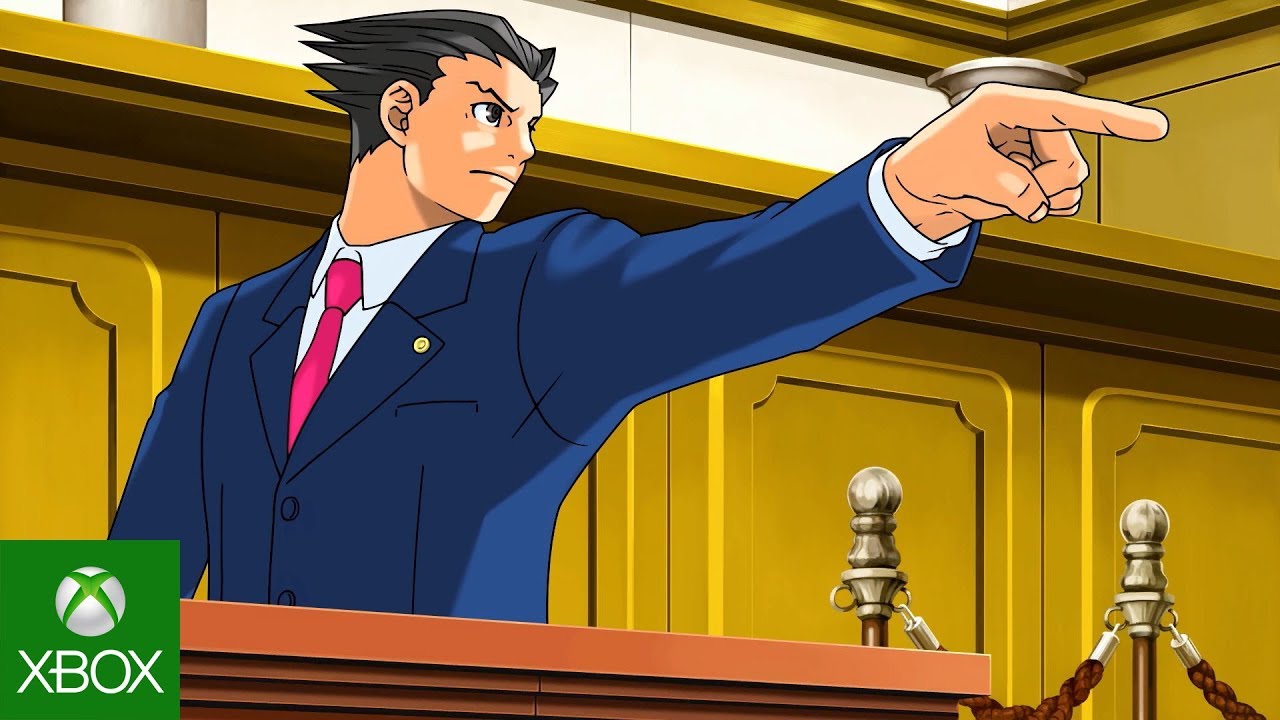
Right now, as in right as I type this, there’s a courtroom battle going on between the Federal Trade Commission and Microsoft with regard to the Activison-Blizzard-King acquisition. The FTC asked for an emergency injunction to stop Microsoft from going ahead with the acquisition until they can present their case; the proceedings happening right now are Microsoft arguing that there is no need for the injunction while the FTC argues that it’s in the best interest of anti-monopoly justice for them to have more time.
In theory, this small part should be a slam dunk for the FTC, as most judges are likely to act conservatively when it comes to injunctions leaving the burden of proof on Microsoft to prove why having an injunction is actually bad. If this process had stopped yesterday afternoon, I’d have said this almost certainly was careening in that direction, giving the FTC ample time to build up a case to attempt to block it. But today was definitely a reversal of fortunes.
Yesterday, the FTC made the argument that Microsoft would leverage acquisitions to put software exclusively on their platforms using Bethesda as a showpiece. Pete Hines, Bethesda’s head of publishing, seemed surprisingly skittish about the whole thing, and admitted that games that were once multiplatform in development had their PlayStation versions halted and scuttled after the acquisition, Indiana Jones by Machine Games being a prominent example. Hines would, at times, point to this as a good thing, arguing that Starfield would be significantly delayed had they included a PlayStation release to also prepare and QA. But by and large, Hines alone did not do a satisfactory job convincing anyone that Microsoft would not pull something similar with Call of Duty in ten years.
Though to be fair to Hines, he wasn’t supposed to sell the acquisition, he was supposed to tell the truth.
All that said, if the FTC case looked solid yesterday, it was significantly weakened today when Phil Spencer took the stand. Sarah Bond had already done a pretty good job of answering FTC questions on the stand, but the government agency seemed entirely unprepared for Spencer, and at times it felt more like they were asking him questions to learn how it worked versus interrogating him to prove their case. Moreover, the judge was learning from Spencer how exclusives and acquisitions work in practical terms and not from the FTC’s argument.
I still suspect this injunction to go through, but it might have exposed severe weaknesses in the FTC’s case. They’re going to be hard-pressed to tell a compelling narrative about monopolies and anti-competitive exclusives if the case even does actually go forward.
One small tidbit that came from today’s testimony is that Spencer admitted that Xbox is not currently hitting the numbers expected of them and that Microsoft’s $68 billion dollar check for Activision-Blizzard is an investment in reversing that trend. It’s probably Spencer’s first admission that the numbers aren’t where they are supposed to be, rather than his usual wording of individual parts making money or arguing that they’re successful by their own metrics. It’s not dire, but it’s a bit of a crack in the “as long as it works” public face they’ve been putting on when it comes to the business side of console wars.
Next week, Nintendo of America’s licensing vice president Steve Singer will take the stand. Not sure what he’ll say, but I imagine it behooves Nintendo to argue that they are competing directly with Microsoft and Sony in the console market. Sony has been trying to bifurcate the market as high-end and lower-end, with Nintendo occupying the lower-end space and Microsoft and Sony in high-end. For Sony, this shows that Microsoft is harming them directly with a Call of Duty monopoly, but adding Nintendo to the mix means that Sony could operate just fine without those games.
I suspect that Nintendo will be uncomfortable being tagged as the sole lower-end gaming competitor, which also opens up its own considerations of monopoly for a market they never claimed they lead.
Nintendo Direct and Major Games
/cdn.vox-cdn.com/uploads/chorus_asset/file/24740786/SuperMarioRPG_scrn_27.jpg)
For all of Nintendo’s smart business moves, the company has never really been able to handle generations correctly. Their mistakes largely come as a result of a two-pronged misstep: 1) They assume that each new console is a reboot of everything that was built up from the previous console and 2) They assume that each new console is a reboot of everything mishandled with the previous console.
So when a new platform comes around, the Kyoto giant usually expects people to forget about a host of features, built-up digital libraries, etc. and also forget that the previous console withered on a vine in its final year. It is contributory to why they will go from selling huge numbers of consoles to catastrophic failures in the span of a generation.
Without knowing exactly when a Switch successor will launch, it does seem like they are at least trying to do something about the withering part. If we’re in or approaching the final year of the Switch (give or take six months), they seem to be trying to still pack it with a fair number of games.
This Direct, which aside from Nintendo’s titles felt more like filler than usual, showcased a safe but quality lineup for the remainder of 2023. There’s a handful of sequels, ports, remakes, and new games to run down the rest of the calendar year when we’ll likely see the full-extent (or disappointing re-utterance) of their sunset plans for the Switch.
I do want to particularly hit on two titles, though, the first being a remake of Super Mario RPG. The original game may be one of the most personality-filled titles in history and stems from that era where Nintendo did not have a brand bible for all things Mario. In that game, Mario had to be held back from beating up an annoying child, Bowser wrote haiku and cried, there’s an extended Power Rangers reference, an arc that can end in Mario being kissed by Bowser and the Wario-like Booster, etc. In a lot of ways, it set the foundation for how strange Mario can be that would later disappoint slightly with games like New Super Mario Bros., which never leveraged that strangeness.
Moreover, it was a game that was already parodying RPGs by the time it came out. It felt like people who have been making RPGs decided to have fun with and subvert the common tropes by realizing that no one would necessarily take Mario seriously in that situation. I’m very curious to know how a modern generation takes to the game now.
The other game I wanted to touch on was Super Mario Bros. Wonder, a title that I am guessing is meant to sound like “Super Mario Bros. One-der” to emphasize the roots of the game. It looks neat, I am digging the artstyle change, and am fascinated by the business decision to release it this fall. 2D Marios are generally long-tail sellers, which tells me that Nintendo expects a Switch successor to come around a year or so after this game’s release. Though, honestly, who knows.
Maybe it’s actually backwards-compatible! Maybe they expect it to sell on a successor system that launches next summer! Maybe they don’t care about the long tail! Maybe they expect Switch games to just keep selling on a huge install base regardless!
Anyway, game looks good, I want to play it.
Other things
- New Materia Possessions! Michael Higham reviewed FFXVI for Gamespot and is here to talk about it!
- I played the demo of FFXVI! It seems good but I want to be able to change the dodge button.
- I’m playing Diablo 4 on Steam Deck and it’s really quite a nice experience but that thing just chews through the Steam Deck’s battery. I get maybe 90 minutes before I have to charge to full.
- Street Fighter 6’s World Tour mode isn’t what I call good, but it is dumb, and that’s some virtue.