Ballmonsters - We're back, baby! ...But I need your help
Added 2021-10-05 08:00:03 +0000 UTC
I might update the logo using my improved skills, but we'll keep it for now.
Ballmonsters! is taking shape pretty nicely. Its previous iterations all ended up being rather tactical, thinky games that were OK but not silly enough by half to being a far more random, swingy and silly affair. I think it has room for extra silliness, still, but we'll see how it goes. We're on track for publication within the next month, for sure.
So here's the pitch (no pun intended).
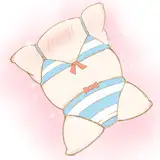
In Ballmonsters! the balls have taken over. No longer will they be kicked around! The boot is, as it were, on the other foot, except that the balls don't have feet.
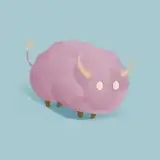
The object of the game is to manoeuvre your balls so that they push, scare and drive an unfortunate meal into the goal - that is, the cavernous maw of their tribe's megaball.
The game is played on a small pitch, no larger than an A2 piece of paper, with around 5 balls per side. The core mechanic (for those of you follow the Game Design Tutor series) is the Forsyth Flip - British readers may just be old enough to remember Play Your Cards Right, in which participants had to guess whether the next card from a normal deck would be higher or lower than the previous card.
Ballmonsters! takes this simple idea and puts it to use, with more difficult tests requiring players to flip more cards correctly for success.
What's Changed?
For those familiar with earlier attempts, a number of important things have changed. First of all, it's definitely not snooker any more. The balls no longer float on awkward, top heavy flight bases but rather are normally based on 20mm, 25mm or 40mm bases.
Instead of flying, balls either roll or bounce, and they can bump or bite their opponents. Bitten opponents have a chance of being taken out of play for a while, but they always roll back.
Also, the meal can fight back, either running away or attacking whichever ball is nearest.
It also does away with both tape measures (awkward for children to handle) and hex grids (which never appeared in previous designs but which have been haunting my concepts since day one), replacing them with three simple measuring sticks - best made from bamboo kebab sticks, as discussed with Tony in my video some time ago.
Also absent are any dice - even 12-sided ones! I looked at my experience playing tabletop games with younger children and remembers how hard they found rolling dice - often just dropping them or accidentally hurling them off the table. I decided that cards would be a simpler and neater approach. The "higher or lower" concept also has a useful educational spin that's accessible for most children from about the age of 6 or 7.
The game is fast and simple and ideal for introducing miniatures wargames to youngsters (the based balls also provide much less of a choking hazard and, eventually, I will replace my existing designs with "pre-based" versions that are cast with the base already in place.
What's Sillier?
The main obvious silly aspect is the "push your luck" mechanic of the card flips. I got the idea from my family's shared hilarity at my repeated vain attempts to build a very short tunnel in Ticket To Ride: Europe. It was only made funnier when my mother perfectly executed the longest tunnel in the game, first try.
Ballmonsters! isn't supposed to be the sort of game you can win with enough practice and skill. At most, it's about very simple calculated risk-taking - something people of all ages can have fun at, and which doesn't reward either being risk averse or being risk blind.
Foundational Goals
For those wondering, my foundational goals for this game were:
1. Uses balls of different sizes. I have four sizes of balls in my range and wanted a place for all of them if possible.
2. Accessible to children from at least the age of 8. This is what eventually did for my plans for dice and which forced me to eliminate all mechanics that required some sort of marker or token, as well as ideas for customized ball statlines. Young children don't have the dexterity for some of these, or the patience for others.
3. Silly. This is the foundational goal that I'm now working on: building in accessible silliness. This will almost certainly involve farting in some form.
4. Cheap. I plan to sell the rules, and hope people might buy some of my stock of balls. But otherwise, I wanted to keep the amount of stuff required to play as low as possible. The measuring sticks are easy to make at home, and playing cards are easy to come by.
Beta Test?
I'll have a beta version of the rules up for patrons in the next couple of weeks, with a view to publishing before November.
You needed some help?
I have one reservation about my current concept, which is the victim. I don't mind the idea of it. But I don't like calling the poor object of the ballmonsters' attention a "victim" and I'm looking for a slightly more child-friendly solution to this grisly consequence. One idea I had was that each goal gets a new name: "breakfast", "lunch" and "dinner" for example. So if both goals have had their breakfast, it's 1-all. But if one goal is waiting for its dinner and the other is waiting for breakfast, it's 2-0.
Has anyone got any bright ideas I've not thought of?
Also, I need some suggestions for likely minis. The "peasant running from giant" mini that GW used to do is great, but out of production and, in any case, was only ever available with that giant. Does anyone know of a "fleeing peasant" (or, indeed, knight, mage, thief etc) mini that I could get hold of for photography and demo purposes?