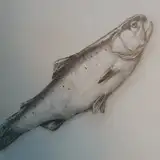
Texture is going to be visible depending on the depth of the textured surface and the lighting setup in a scene.
If the lighting is mostly ambient or soft then we'll see a fairly well defined texture throughout. However, things get a little different in hard light situations.
Angled, single light sources, like a spot light or low level sunlight will cast long shadows and most objects will have an area on the form called the terminator if there are other objects nearby, forcing bounce light into the shadow areas.
The terminator is where a form's surface turns from light to shadow, it's usually the darkest part of the form.
If we look close, we'll see that surface textures are clearest right before the terminator. This is because the form is at a tangent to the light. Texture features will be more visible as we can see both highlights and shadows of these features.
Note
: The terminator helps communicate the form's shape, so it's one of those things we should look for in our observational studies and try to apply in our images. Even if we don't observe the terminator in a form we should think about including one as it will help make a convincing image, though keep it subtle, overdoing it will make a material like skin (or anything that might have subsurface scattering properties) seem too hard or almost reflective.