📊Access the Full Stats Dashboard: https://stats.tcgmatchmaking.com/

The Format Evolves Post-Ban
With the latest bans officially in effect, the OP10 metagame is beginning to take shape in earnest. Thanks to early results from OPBounty, we now have a clearer picture of which decks are rising, which are adapting, and how the community is navigating a refreshed format.
While the meta remains fluid, emerging patterns are already setting the tone. Some leaders have taken the changes in stride and surged to the front, while others are undergoing important refinements to stay in contention. From explosive aggro to calculated control, OP10 remains a dynamic and evolving battlefield.
This week's report highlights the top-performing decks, rising strategies, and key tech shifts that are shaping the competitive conversation.
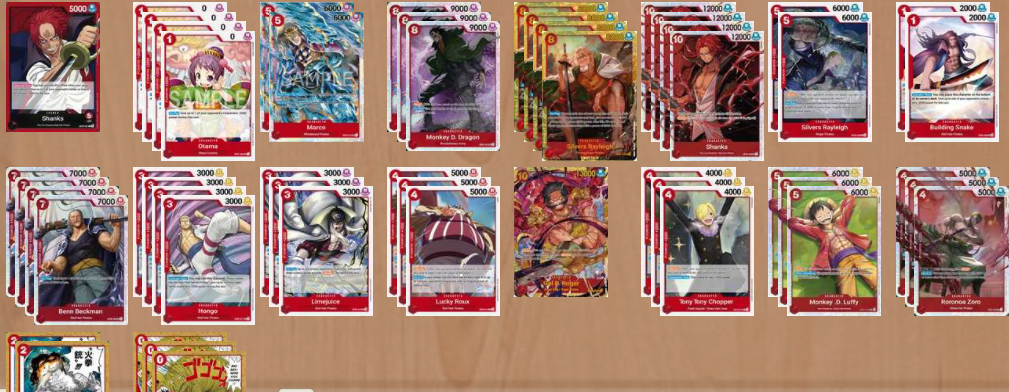
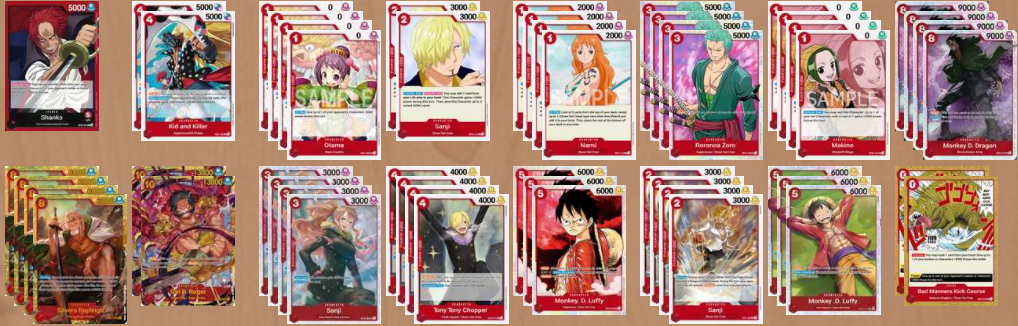
Shanks has seen a noticeable uptick in play this week, as players test the leader’s flexibility across multiple archetypes. From high-pressure aggro cores to slower, hybrid control shells, Shanks has proven capable of adapting to the meta while maintaining a high ceiling.
Its rising popularity reflects the strength of its toolkit and the creativity it enables in deckbuilding. Whether it eventually narrows into a defined "best" version or continues to thrive across builds, Shanks has earned its place as a format staple.
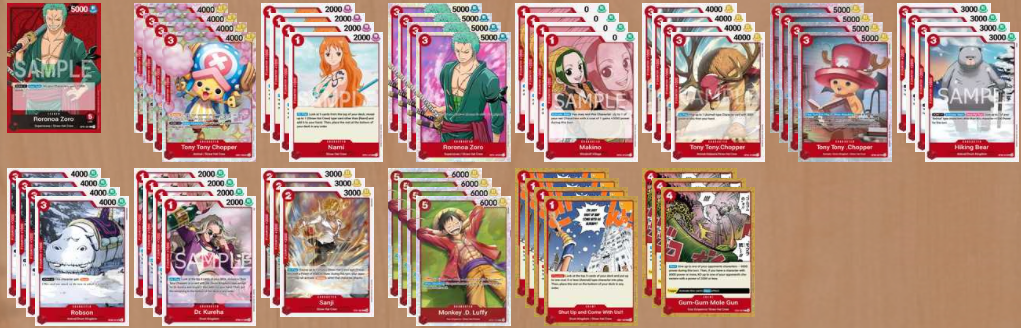
Zoro continues to dominate the aggro field, retaining its title as a premier aggressive deck in OP10. What began as an early favorite has solidified into a long-term meta presence thanks to relentless pressure and blistering speed.
Its unmatched ability to close games before other decks can stabilize keeps it at the forefront. While players are working on anti-aggro counters, nothing has reliably dethroned Zoro yet—it remains the deck to beat.
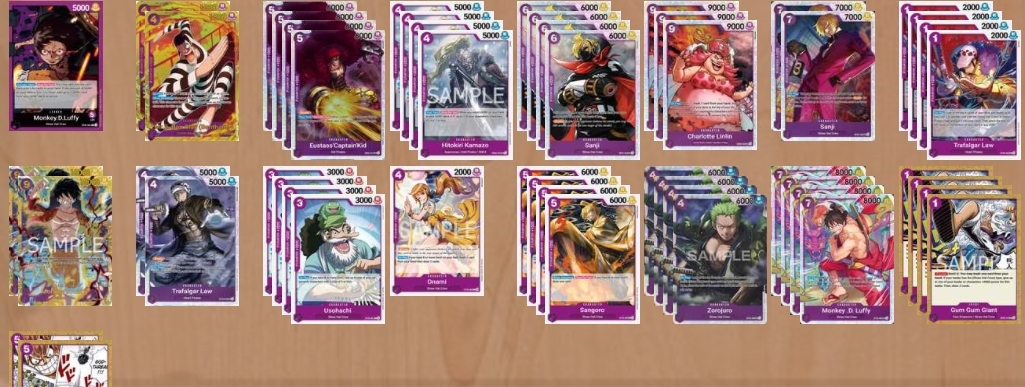
Purple Luffy stands strong as a consistent and accessible powerhouse. With explosive mid-game turns, excellent tempo tools, and minimal reliance on new cards, the deck continues to attract both new and veteran players.
Outside of a few minor tech updates to weather early aggression, the list remains stable. It’s an ideal pick for those who want straightforward but high-impact gameplay—and it’s not going anywhere anytime soon.
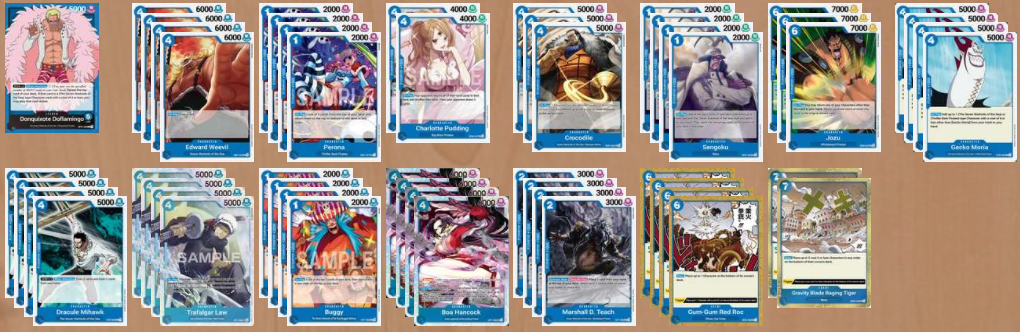
Even with the recent bans—most notably Jinbe—Doflamingo continues to hold its ground. Its engine-focused control playstyle and synergy-driven gameplan remain largely intact, keeping it competitive in the evolving OP10 environment.
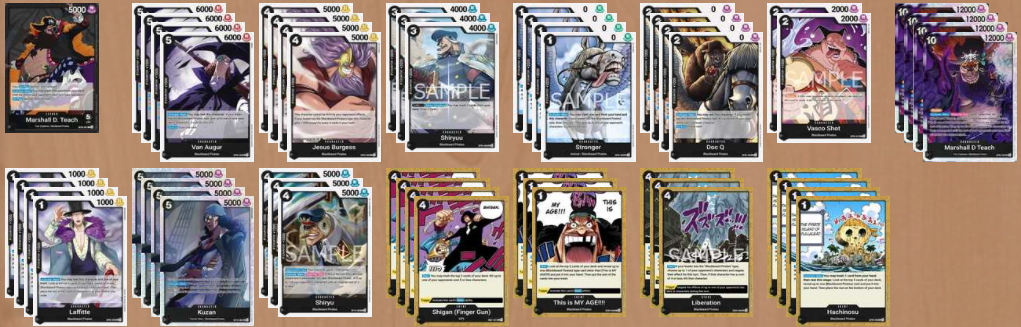
Teach has surged in popularity, emerging as one of the most-played decks this week. Leveraging tools like Kuzan and Liberation, it combines strong value generation with powerful control elements.
Still, the rise of aggro—especially Zoro—has challenged Teach to evolve. Players are quickly tuning their lists with early-game tech to stabilize before ramping into their signature mid-to-late-game power. With proper adjustments, Teach remains a top contender.
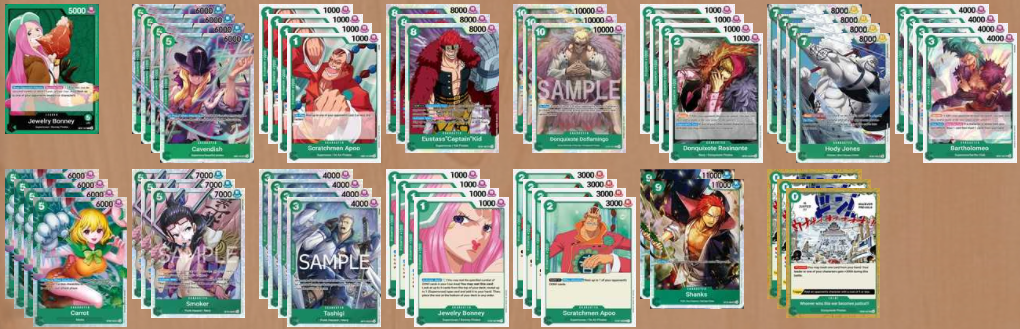
Bonney continues to deliver consistent results thanks to its solid fundamentals. With strong value engines, tight sequencing, and flexible lines, it rewards skilled piloting and matchup knowledge.
As the meta shifts, Bonney’s core remains effective. It may not always steal the spotlight, but it’s a perennial threat with a proven track record.
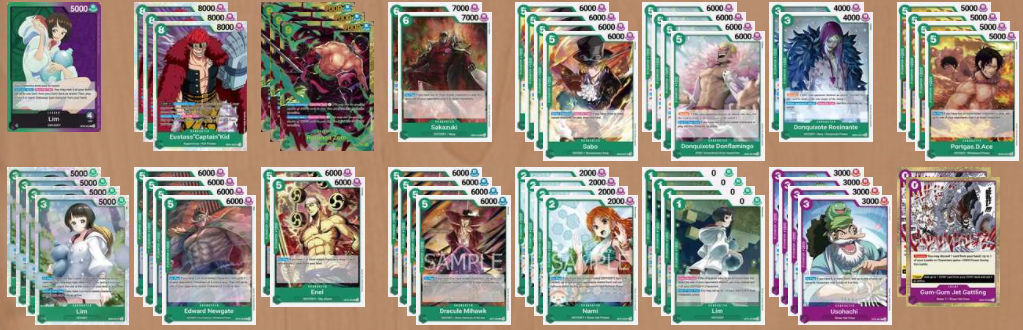
Lim is steadily climbing the ranks as players refine the list and hone early-game sequencing. The leader's ability to apply pressure through wide boards and adaptive play makes it an increasingly appealing option for those willing to put in the reps.
While still a developing archetype, Lim is showing all the signs of a leader that could break out with further tuning.
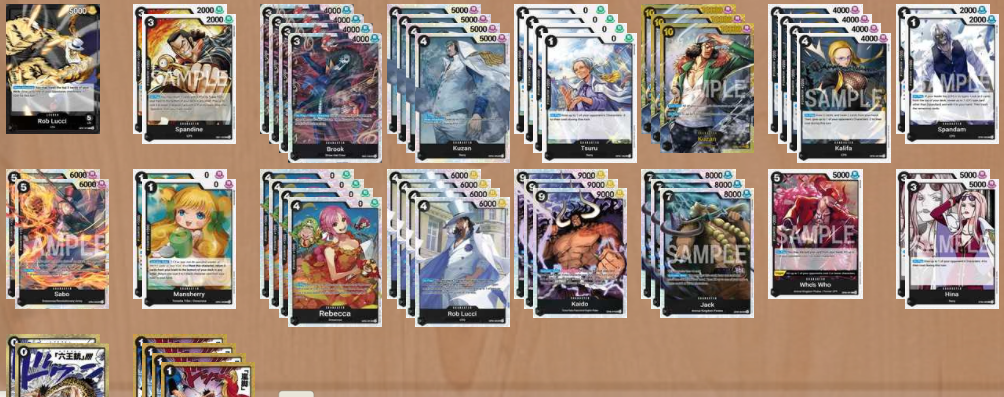
Rob Lucci is re-establishing itself as a strong pick for players who value precision and calculated aggression. Offering a balanced mix of board control and offense, it punishes misplays and rewards tight piloting.
Though recent bans have stripped away some of its old power, creative deckbuilding is keeping Lucci in the conversation—and finding pockets of success.
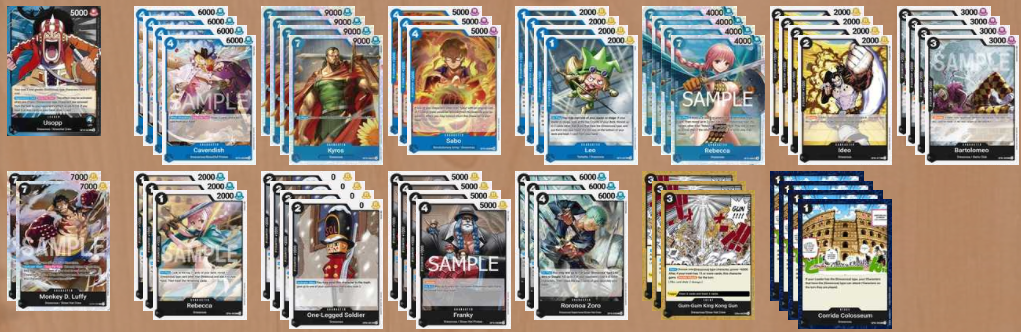
Combining the power of two dominant colors, U/B Usopp offers a compelling mix of efficient removal, card advantage, and steady pressure.
Early results suggest the deck could become a go-to for control-minded players who still want to apply meaningful board pressure. A promising contender in the making.
After weeks of buzz, Yellow Kid is beginning to deliver on expectations. Its unique leader skill rewards smart sequencing and resource control, offering a new take on Yellow’s toolkit.
As builds continue to tighten, Yellow Kid is winning over more pilots—and proving it can hang in a variety of matchups. If momentum continues, it could soon join the top tier of control decks.

OP10 is entering an exciting phase where creativity, adaptation, and refinement are all paying dividends. The recent bans have shaken up the landscape just enough to breathe new life into overlooked strategies while reinforcing the strength of well-tuned staples.
Aggro continues to set the pace, with Zoro and Shanks leading the charge, but control and midrange decks like Teach, Bonney, and Usopp are quickly finding their footing. Meanwhile, rising stars like Lim and Yellow Kid show that the format still has room for innovation and surprises.
As the weeks go on and tournaments provide more data, we can expect further optimization, tech shifts, and perhaps even breakout decks that challenge the current status quo. For now, the format remains open, competitive, and rich with opportunity—just the way OP10 should be.
Access the Full Stats Dashboard: https://stats.tcgmatchmaking.com/
Decklists:
Shanks:
1xOP09-001
4xOP01-006
2xOP03-013
3xOP07-015
4xOP08-118
4xOP09-004
2xOP09-005
2xOP09-008
4xOP09-009
4xOP09-011
3xOP09-014
3xOP09-015
1xOP09-118
3xOP10-011
3xST21-014
3xST21-015
2xOP01-026
3xOP04-016
Zoro:
1xOP01-001
4xEB01-006
4xOP01-016
4xOP01-025
4xOP02-015
4xOP04-010
4xOP08-007
4xOP08-010
4xOP08-013
4xOP08-015
3xST21-003
4xST21-014
4xEB01-009
3xST21-017
Purple Luffy:
1xOP05-060
2xEB01-061
4xOP05-074
4xOP06-076
4xOP07-064
3xOP08-069
2xOP09-065
4xOP09-069
2xOP09-119
2xST10-010
4xST18-001
1xST18-002
4xST18-003
4xST18-004
4xST18-005
4xOP09-078
2xOP10-079
Teach:
1xOP09-081
4xOP09-083
4xOP09-086
3xOP09-088
4xOP09-089
4xOP09-090
2xOP09-091
4xOP09-093
4xOP09-095
4xOP10-082
3xOP10-086
4xEB01-051
3xOP09-096
3xOP09-098
4xOP09-099
Bonney:
1xOP07-019
4xEB01-012
4xEB01-015
3xOP01-051
3xOP04-031
4xOP05-030
4xOP06-035
4xOP07-031
4xOP08-023
3xOP10-030
4xOP10-032
4xST02-007
4xST02-008
2xST16-004
3xOP05-037
Doffy:
1xOP01-060
4xEB01-023
4xOP01-077
2xOP06-047
3xOP07-040
4xOP07-046
3xOP08-047
4xST03-004
4xST03-005
4xST17-002
4xST17-003
4xST17-004
4xST17-005
4xOP04-056
2xOP06-058
Usopp:
1xOP10-042
4xOP10-045
4xOP10-046
3xOP10-049
4xOP10-057
4xOP10-058
4xOP04-077
4xOP04-089
2xOP04-090
3xOP04-092
4xOP05-081
4xOP10-090
3xOP10-095
3xOP04-093
4xOP04-096
Lucci:
1xOP07-079
2xEB01-043
4xEB01-046
4xOP02-096
4xOP02-106
3xOP02-121
4xOP03-081
2xOP03-086
2xOP04-083
2xOP05-088
4xOP05-091
4xOP05-093
3xOP08-079
3xOP08-084
1xOP08-091
2xST06-008
2xOP03-097
4xOP07-096
Lim:
1xOP09-022
3xOP01-051
3xOP06-118
2xOP09-026
4xOP09-027
4xOP09-031
2xOP09-032
4xOP09-035
4xOP09-037
4xOP10-024
2xOP10-025
4xOP10-029
4xOP10-033
4xOP10-037
4xST18-001
2xOP03-072
Yellow Kid:
1xOP10-099
4xOP04-100
3xOP05-100
3xOP05-105
1xOP07-107
2xOP07-119
4xOP08-106
3xOP09-107
4xOP10-101
2xOP10-105
4xOP10-109
4xOP10-111
4xOP10-112
4xOP10-114
4xOP10-119
2xOP05-114
2xOP06-115
Here’s how we evaluated each leader:
Step 1: Game Percentage Ranking (Popularity)
Leaders are ranked based on their presence in the meta, measured by the number of games they’ve been played. The most-played leader scores a perfect 100%, while the least-played receives 0%. This step highlights which decks players are gravitating toward, even if they’re not necessarily dominating.
Step 2: Win Rate Ranking (Performance)
Next, we ranked leaders based on their win rates. The highest-performing leader scores 100%, with all other leaders scaled relative to this benchmark. This step focuses on raw efficiency and success, rewarding decks that consistently secure victories.
Step 3: Ideal Leader Comparison
This step imagines the “perfect” leader: one that combines the highest win rate with the most games played. Each leader is measured against this ideal, balancing performance with popularity. A deck that’s widely played but underperforms—or one that excels in a smaller sample size—falls short of the perfect leader.
Step 4: Score Calculation
Finally, we distill these comparisons into a simple, intuitive scoring system from 0 to 10. Leaders closer to the “100/100” ideal earn higher scores, giving a clearer picture of their overall strength in the current meta.
By leveraging this enhanced approach, we’ve painted a more nuanced picture of the OP09 metagame. As we move forward, these insights should provide valuable guidance for those still engaging with the meta. Let’s dive into this week’s rankings!
Special Thanks:
We'd like to give a big shoutout to SakuraKingdom for handling all the calculations for the advanced metrics. Their expertise has been invaluable! Check out their amazing content on YouTube, where they dive deep into statistical data and analysis. Be sure to support them—they're doing fantastic work in the community!