SakeTami
marcocirilloukulele
marcocirilloukulele

patreon


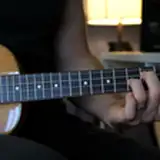
Are We Naming Ukulele Chords WRONG?

In this video, I want to talk to you about playing chords on the ukulele.   

Precisely, I want to show you why I think we are naming ukulele chords wrong.   

Do you agree with me?   

Let me know in the comment section down below.

Are We Naming Ukulele Chords WRONG?

Comments

My comments were meant to go with the romantic chords lesson!

Hi Guys, I'm new to this site but have been playing for quite some while and also mandolin. I find I can follow the video better than the music and tab although I can read both. Is it just me? i have a good ear and am more used to thumb picking. can anyone help me out?

Hi Tommy. Thanks a lot for the feedback. I had a lot of fun recording the video with teacher/student Marco. Yes, it is a C major chord in root position because the C is the lowest note.

Thanks a lot, Lynn. If you have the high G, then the lowest notes you can play on the ukulele will be found on the 3rd string (the C string). Everything we talked about in the video works well also on just three strings, but for the chord shapes I was using in the video, you'll need a low G. By the way, you can still play the chord shapes with the high G, but they are not slash chords. I am glad you enjoyed the student/teacher part. I had a lot of fun doing that! :)

This was a GREAT and very INFORMATIVE lesson! I loved it and I laughed a lot; even every time I think about it. The strategy of using Student Marco and Teacher Marco was superb. It makes the lesson more than just a lesson because it draws the viewer into the learning experience. Asking for viewer comment with a question was a terrific idea. I learned more about high G and low G tuning than ever. I'm focusing on section 1 of the lesson which is giving me a depth of understanding about chords. Since I have high G ukulele what section of the lesson should I disregard? How do I apply what you are teaching about the base note to the high G ukulele? This lesson was just wonderful, Marco. I hope you'll utilize Student Marco and Teacher Marco in the future. It so enhances the already very enjoyable experience of learning to play the ukulele with your style of instruction.

Absolutely amazing video! I learned a lot. 3 things: 1) I was not expecting to laugh from your video 😁 nice job. 2) I’ve noticed the addition of graphics in your videos and they have added so much production value to your videos. Again really nice job! 3) I’ve read the whole low G issue with this video but to test my knowledge. If I’m using a high G and playing 0003 wouldn’t this be considered the root position for the C major chord since 1 of the C notes is played on the base string? (gCec)?

Please go over the minor chords the same way .. Thanks

ryan Grubbs

Thanks, Susanne.

Correct! I forgot to mention in the video that this rule applies if you are using a low-G string (4th string). If you use a high-G (like the one I used in the video), the note played on the 4th string is actually not the lowest, and so it can't be considered the bass note of the chord. I was so focused on putting together a great and informative video that I completely forgot to mention the most important thing about the low-G.

Thanks a lot, Glenn. One thing though. I forgot to mention in the video that this rule applies if you are using a low-G string (4th string). If you use a high-G (like the one I used in the video), the note played on the 4th string is actually not the lowest, and so it can't be considered the bass note of the chord. I was so focused on putting together a great and informative video that I completely forgot to mention the most important thing about the low-G.

I will! I am getting a new ukulele soon.

Thanks a lot, John. I forgot to mention in the video that this rule applies if you are using a low-G string (4th string). If you use a high-G (like the one I used in the video), the note played on the 4th string is actually not the lowest, and so it can't be considered the bass note of the chord. I was so focused on putting together a great and informative video that I completely forgot to mention the most important thing about the low-G.

Thanks a lot, John. I forgot to mention in the video that this rule applies if you are using a low-G string (4th string). If you use a high-G (like the one I used in the video), the note played on the 4th string is actually not the lowest, and so it can't be considered the bass note of the chord. I was so focused on putting together a great and informative video that I completely forgot to mention the most important thing about the low-G.

Great lesson. Have seen the slash chords before and wondered what they were. Guitar pro usually auto picks the slash label (eg C/G) and now I know what is going on. Thank you.

Hi Marco. I see over on YouTube you've already commented that the 'bass' note only makes sense on a low G so that answers most of my questions. I also hear that you are getting a low G uke shortly, so looking forward to any tutorials on what fingerpicking patterns bring out the best of the extra bass note!

That's why I like the low G uke. Marco, maybe you give a lesson for low G uke one day?

I'm confused. Is the first string played the bass note? Or is the c-string (usually the lowest note) the bass note?

Wow, this makes my head hurt (although the video style made me laugh!). I kind of knew there was way more to chords than I realised. This really helps me start to understand. I've a few questions though! You refer to the 'bass' note on the slash chords, but with a high G uke this isn't really a bass note (as it is an octave up)? On my low G uke it makes more sense to call the G string the 'bass'. Is the Slash just whatever note is played first (regardless of it being an octave up)? Also a low G makes it easier to play the 'root C' (543X) which to me makes more sense than X0010 (as the G note on fret 10 is an octave up from the C/E?). Not sure if any of that makes sense! At least I now have a better understanding of why the same chords can sound different!

oops...... as we’re not working towards a qualification, they’d probably be quite relaxed about it all (thank goodness!).

Despite an “O grade” in music 1974 (what?) I’m not qualified to answer at all. You sir, are. I’m not the pedantic type, which is handy as I’m Scottish and my husband English . There is an occasional language encounter! I could take it up with some others with a more more musical perspective but

Interesting stuff. I am building my knowledge of music and i really appreciate these types of lessons. Thanks.

John

Thanks for the slash chord explanation. Although I'd never heard the term, I started playing them over 50 years. Back then, I was learning the organ - now called keyboards, lol - by way of the "Pointer System." The idea was you played a chord by pointing to it with your left index finger. For example, a C chord was the index finger on middle C, thumb on up on E and pinky finger down an octave on G. The 7th was middle finger on lower B flat... For decades, I thought that was 'normal' and had no idea I was taught slash chords or inversions. It's all good though...great building blocks to learn basic musicality. Thanks again, Marco!

bad monk


More Creators