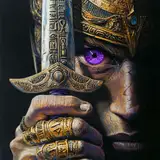
“Once they were stars. Now they are shadows.”
The Elves are a long-lived and long-fallen race, divided between two branches: the elegant but enslaved High Elves, and the bitterly scarred, knife-hungry Dark Elves.
No one agrees on their origin. The old priests call them the “first inheritors of Cradle,” born with memories older than stone. Goblins claim the Elves stole their first machines and passed them off as wisdom. Humans whisper that they are failed angels; half-gods who sinned and were dragged down to live with us.
What is known is this: they are older than most, sharper, and forever marred by their fall.
“Beauty is their mask, but memory is their curse.”
Once, the High Elves stood nearly as tall as kings, their lives spanning centuries. They were known for their calm wisdom, their command of subtle arts, and their strange affinity for magicks and artifacts older than Cradle itself.
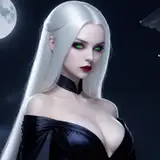
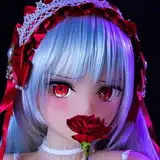
They carry themselves as though they distinctly remember that world, even when scrubbing latrines or singing at feast tables. Their hair is pale silver, their eyes clear and strange, their movements slow and deliberate. Every gesture is poetry, every silence slow and tranquil.
But their grace is a curse. For centuries they were hunted, enslaved, and collared. Today, they are luxury goods—living trophies traded among nobles like jewels. Their worth is measured in skin, song, and silence. Their beauty remains, but their power stripped & suppressed.
High Elves fill the mansions of nobles as servants, scribes, and bedwarmers. They are prized more as treasures than as people. A free High Elf is rarer than rubies and often considered a lie. Yet people say they still dream. That their dreams are long, longer than lifetimes. That in those dreams they see what came before, and what's yet to come.
High Elves are most often forced into roles of service and ornament: attendants, musicians, scribes, dancers, courtesans, and tutors for noble children. They live in gilded cages, some kept in harem halls as pleasure slaves, while others are paraded publicly as tokens of wealth. The luckiest may serve as healers or record-keepers, their sharp memories put to use by those who own them. Their beauty makes them desirable, their minds make them dangerous.
Some nobles prize them as chroniclers, forcing them to tell of history in fine ink. Others breed them into harems, claiming their children as curiosities. A rare few slip into religious or cult circles, their long lives making them natural keepers of forbidden lore.
Spotlight – Collared Poets: Many nobles commission enslaved High Elves to compose songs or chronicles in their name. These works circulate widely, but the poets remain bound, their names carefully maintained and monitored.
Spotlight – House Tutors: Some Elves are entrusted with the education of noble children, mainly humans, or the rare dwarven clan, passing down fragments of old lore, though always under strict watch.
High Elves whisper that memory is divine, that to remember perfectly is the closest thing to immortality. Their private prayers are not to gods, but to names; the names of their ancestors, their lost kin, even their enslavers. It is said they believe every name spoken in reverence builds a chain of memory strong enough to outlast death itself.
Forgetting, to them, is a form of spiritual annihilation.
Some say High Elves see Cradle itself as a prison-womb, a living tomb that cages their people. The most superstitious whisper into cracks in the stone, offering fragments of song in hopes that the walls will someday open and release them. Among them circulates a grim saying: “The stone remembers us better than the living do.”
They keep countless small rituals, often hidden from their masters: braiding strands of hair to mark the years, inscribing secret names under floorboards, or biting their own lips to “seal a memory in blood.” Even their dreams are treated as holy - fragments of forgotten worlds carried across centuries, visions of what came before and what may yet come.
Humans admire their beauty, yet resent it all the same.
Greenskins mock them as “pretty prisoners,” though envy their grace.
Dwarves treat them with solemn pity, as one priest to another.
“Their eyes are too old. That’s why they look so sad.” —Fourth Quarter child
“Every scar is a vow. Every knife is a prayer.”
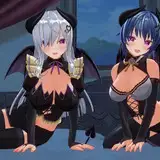
If the High Elves fell into slavery, the Dark Elves fell into vengeance. Banished, most dwell in the cracks of Cradle; the labyrinths, tunnels, and ruined quarters. Their skin is shadowed, hair black as ink or bright as blood, their lithe bodies scarred with oaths carved into flesh.
Dark Elves are feared as killers, smugglers, and sadists. They are scarred, secretive, and viciously clannish. Their Great Houses, if they can be called that, exist in constant vendetta: wars that burn hot in the undercity, unseen by most, but always bleeding upward. They thrive on cruelty, secrecy, and the weakness of others.
Their exact origins are unclear. No one remembers if they were born different, or if they are High Elves twisted and driven mad by exile. What matters is that they hate the world that cast them down—and they make the world pay for it, knife by knife.
Dark Elves thrive in the shadows: assassins, smugglers, black-market traders, poisoners, thieves, pit-fighters and gang captains. Few live openly in the higher quarters; most vanish into the Labyrinth or the buried ruins of the Fourth.
Lesser houses carve their clan-signs into alley walls and whisper in the ears of cults. Every scar they bear is a story: a vow of vengeance, a kin slain, a betrayal remembered. They treat skin as parchment, and the knife as pen.
Spotlight – Gang Lords: Dark Elf gangs rule entire stretches of the Labyrinth, carving their scars into walls as warnings. Their cruelty is legend, but so is their loyalty to kin.
Spotlight – Shadow Assassins: Dark Elf blades are feared above all others. It’s said they take joy in torment before death, whispering secrets to their prey as the knife slides in.
Dark Elves do not pray-- they scar. Each cut they carve into flesh is a vow: vengeance sworn, betrayal endured, kin avenged. Their bodies are living chronicles, maps of blood and pain. To cut without meaning is considered sacrilege; to break an oath carved into the skin is to invite death, often from one’s own kin. Their saying goes: “Words fade. Scars do not.”
They believe suffering itself has power. Pain is proof of life, a tithe to whatever force still listens in the depths. Some cults claim that every scream feeds an unseen god in the labyrinth below, while others hold that agony is the only truth in a world built on lies. To them, pleasure is a fleeting distraction, but pain is the mark of eternity.
Superstitions abound: that Dark Elves cannot be poisoned because their bodies are already steeped in venom; that their shadows move faster than their flesh; that if you kill one without cutting their scars, their ghost will come for you to finish the oath they carried. Children in the Third Quarter are warned never to follow the sound of weeping in the alleys—for it may be a Dark Elf drawing them into the knife’s embrace.
Humans fear them as cutthroats and gangsters.
Highborn mothers scare children with tales of them.
Goblins treat them as rivals, both fighting for the gutters.
Dwarves shun them entirely, calling them “the lost kin.”
“If a Dark Elf smiles at you, you’re already bleeding.” —Common saying in the Third Quarter
You want to roleplay a fallen aristocrat, once-great but bound in chains.
You want to explore beauty as both gift and cage.
You want to struggle between dignity, despair, and dangerous memory.
You want to embrace the role of a criminal, assassin, or outlaw.
You want to explore vengeance, cruelty, and loyalty to kin.
You want to live in the shadows, feeding on fear and secrecy.
This entry in the Cradle Codex explores the Elves, once-great, now broken. The High Elves embody beauty turned into bondage. The Dark Elves embody memory turned into vengeance. Together, they are two sides of a fall that still echoes through every hall of the Cradle.
If you're in the Exalted Text discord, you likely know that I'm heavily inspired by Warhammer 40k and the Elder Scrolls, especially when it comes to the alien Eldar and the Dark Elves of Morrowind. Those are only two of my many motivations in crafting Orphan's elves.
I wanted to take those inspirations and press them through the city’s weight. The Elves here aren’t cosmic wanderers or magical dynasties. They’re prisoners and predators trapped in the same stone cage as everyone else. Both are reflections of a fall too long remembered, and too painful to let go. Like the other entries, this Codex piece is a living document.
I may expand or revise it as the world of Orphan and Reign MUX grows, or fold parts of it directly into the games themselves. For now, it’s here for you, my Patrons, as a glimpse of the myths and sorrows that shape Cradle.
I’d love to hear your thoughts: which vision of the Elves speaks to you more? The chained elegance of the Highborn, or the knife-etched shadows of their darker kin?
🩸 Onward.
— Truth @ Exalted Text