TRACKS UNTOLD: RABIT & EARTHEATER’S ‘ANGELICA’ with Rabit
Added 2023-04-06 19:00:03 +0000 UTC
TRACKS UNTOLD: RABIT & EARTHEATER’S ‘ANGELICA’
with Rabit
In this Lux Cache track breakdown series, we invite artists, producers, engineers and songwriters to uncover the creative process of their work in their own words. In this chapter, Rabit shares insights about their latest album "What Dreams May Come," an immersive sonic experience that blends electronic music with real-world moments and shared human experiences. Rabit discusses a unique approach to music-making and the importance of pushing boundaries, what he learnt from working with Eartheater & Bjork, being an outsider in the LGBTQ+ music industry and the need for artists to ask new questions and be brave in exploring new ideas.
This article is available as both a Patreon text post and a preferred-viewing .pdf document format. We ask you kindly to not share Lux Cache content outside of the Patreon, our contributors rely on your donations.
- Exclusive remix stems, sounds and additional media for Rabit & Eartheater’s ‘Angelica’ are available exclusively to Premium Subscribers, downloads can be found on the Lux Cache website.
~

Cover art for Rabit’s ‘What Dreams May Come’ by Linder, creative direction by Rabit & Lane Stewart - released by Halcyon Veil in 2022.
LC: What is your process for creating sonic landscapes that evoke emotion and meaning? How do you approach balancing musical elements like melody, harmony, and rhythm with more abstract concepts like texture and tone? What is your process for balancing experimentation and boundary-pushing with accessibility and connection to your audience?
R: I have a new process every few months, with each phase representing an idea for a musical direction, narrative, or an overall "tone" that's worth pursuing. I'm currently interested in following ideas down to their core, and accessibility is more of a by-product or a separate step later in the editing phase. So there is a lot of noodling and sound-making between the phases that lead to a release. I've made albums that I didn't release because they didn't fit with the flow and arc of my project. Therefore, I think it's worth experimenting and finding your sound by making every genre at least once. That's what keeps it fresh and fun for me - having no limits. It's your space where you get to decide everything, so make it worth it.
The musical and emotive core of my sounds and ideas, whether it's a synth sound I make or how I use found sounds and samples, is what sets me apart as an artist in this electronic realm. The sounds I choose when I don't use vocals or play a typical instrument are my voice, my personal histories, where I am now, or what I want my future to be. After a while, I realized that what people gravitated to in my music was the unique feeling and sounds. Even if the song had a strange structure and were pretty out there, people would still be into it because there's a listener for everything. So I just follow the feelings in the sounds and trust my gut. Usually, the texture is just there, and I don't go rooting around looking for weird textures. It's more about what the sound does when it's listened to and felt. So when I hear a sound that triggers something in me, I know it's safe to use because it'll work. As far as the meaning goes, that's for the listener to decide.
Similarly, I hear and feel things on an intuitive level and arrange the song's sounds based on frequency, attack, length, rhythmic, and melodic content, with tone and texture as a part of that. When getting a track going, I move quickly to find sounds that elicit a response in me and then start building patterns that feel good. Then I start cutting away and feel what is grounding the pattern, whether rhythmically or emotionally. Then there can be a much longer process of building up that idea, shaping it, and sculptural processes. I take sounds in and out of different software, record them in the room, add fx, re-chop, etc. For me, the excitement is in exploration and making something different.
As an artist, balancing the line between experimentation and accessibility is what makes each artist unique to me. Sometimes, I'm happy knowing I made something beautiful or dark, and I'm not waiting for feedback or responses at this point. I don't make music to be popular or have people scream my name. A lot of electronic artists have gone that route, but my approach is more like this is my journey, and you're welcome to come along and check it out. Maybe you'll get something from it. As an artist, you decide that balance of push and pull with your music. Sometimes it's about making people hear or see an idea my way, and then I have to be more heavy-handed or experimental. You have to prepare for the consequences of not being experimental in the "right" way. Everyone being so worried about how they'll be received is what has made so many music scenes boring. Like I said, I'm fine with sticking to my gut. We each get to decide what we do with our music, and this is simply where I'm at right now and what makes me happy.
LC: Can you talk about any specific influences or inspirations that informed the creation of What Dreams May Come, whether they be musical, literary, philosophical, or otherwise?
R: I had been building up sketches for the fourth album since around 2018. As a creator, it starts with me as a listener and student. I went back to the drawing board of what I was listening to at home, just as background noise, and lived life. Whether it was GAS, Brian Eno, Panda Bear, Éliane Radigue, Boards of Canada, or old favorites like Massive Attack, EBTG, Biggie, the best of Bad Boy's R&B, and alt-rock of the '90s, I found myself gravitating towards them. I think I found myself in the middle of those two points, but also felt very experimental at the time. I found comedy in nostalgia, but also the fact that it can't be escaped or denied was interesting. Lane, who does Halcyon Veil with me, helped me figure out where I wanted to come from with the approach. We usually share ideas every day. At the end of the day, I just wanted to express myself with how I grew up loving music, drum beats, melodic loops that hit you heavily, and things that felt raw and real.
Politically, the politics of the self, of our exterior world, are all connected. I wanted the album to feel representative of that, which is why it's so collaborative as well. Lane and I both felt like our country was mourning the loss of something that was never really real. Like America is the dream that we knew was a scam from early on. I call it a death of nostalgia because maybe nostalgia isn't a real emotion. If you live in the moment, then how can you mourn and want the past so much? Maybe we should just appreciate every moment, and maybe perfection is in the moment. So, putting the skits on the album was a real way to embrace the perfection and flaws of now. Again, it's my way of mixing genres. When there was a skit on a Mobb Deep album or a UGK album, it was always memorable and felt intimate. Maybe people were really hard in their songs, but then in between the songs, you got to see a little bit more of who they are as a person.

‘What Dreams May Come’ calligraphy, 2022
LC: The album features collaborations with a diverse range of artists, from John Beltran to Eartheater to queer ballroom dancers. How does this collective approach to music-making challenge traditional notions of authorship and creativity?
R: It's like when you walk into a place and see someone you know, and you're like, "What's up? What's going on?" It's a basic metaphor, but that's the idea. It's investigative and real. If you want to be political in your music, you have to admit that you don't have all the answers. Making political music and just screaming about your experience comes off as cliché and preachy at this point. People can be boundary-pushing and still be stagnant in their own little box or feedback loop, and there's not a lot of growth there.
My favorite music has never been solitary, music made by an individual in a room, although there is music I love like Grouper or William Basinski that's exemplary of that. So I approached this album from more of a Dr. Dre standpoint. I have my own vibe and my own story that I want to project, but there are things other people do really well that I can't. Therefore, it's about this being a full-bodied statement too and recognizing that I have to give a project what it needs to say what it wants to say. That's why it took time to make and to get right.

Cover art for Rabit’s ‘Angelica (featuring Eartheather)’ / Creative direction by Rabit & Lane Stewart, graphic design by Nicola Tirabasso and Collin Fletcher, illustration by Wayne Bruce. - released by Halcyon Veil in 2022.
LC: The instrumental track for ‘Angelica’ features a mix of live instrumentation and electronic production. Can you talk about how you see those elements interacting and influencing each other in the track, and how you approached blending those sonic textures together?
R: This is something that's so difficult to quantify or explain. Again, for me, it's about the feel of the way the sonic elements interact and tell a story. I have always been aware of and interested in the idea of space when producing a song or making a beat. Coming from a time when I was making grime music definitely helped while making this album.
I've attached an earlier demo of ‘Angelica’ with strings by Maxwell Sterling. This is after I spoke with Maxwell and asked him to work with the song, and this is his early interpretation of what would sound good. So you can hear that I ultimately muted most of the strings and left them for the third/final section/climax. I think I learned a bit subconsciously about layering instruments and electronics from working with Bjork and Arca on Losss. The challenge is not to have it sound like a mess. You can't have a lot of forceful moments at once. I wanted the track to remain slinky and bouncy, and long drawn-out strings would not accomplish this. So I chopped what Maxwell sent me and added the more staccato and pizzicato elements around the Eartheater verse, and throughout the middle section with background vocals from TONE from the band Farai.
Eartheater didn't feel a second verse or a hook was necessary, so I got TONE to lay down a BG vocal on the song just to enmesh and blend the vocal elements evenly throughout. I decided to chop all of Maxwell's strings and also create a breakdown and climax with those. It was good to get out of my comfort zone with electronics and get sounds that really bend and move and have a different kind of life to them than electronic textures.
I could have added a hook to the song, but I think I've made my point enough that I'm not exactly interested in doing things the "regular" way. To me, it was about creating this rich, lush moment that we succeeded in making.

‘Angelica’ recordings in Audacity, c/o Rabit.
LC: You've previously expressed your ambivalence toward the academic approach to electronic music and its hardware obsession. How did you balance your approach to technology with the organic elements of live acoustics and vocals on this album?
R: I think it's about grabbing sounds that excite you and nothing more. I was ambivalent to traditional instruments early on. They can be cliché and boring to me. But also, at first, I was unlocking all of the rave and club genres and wanted to figure out how they work.
But if this album were to be about the human experience or just something new, expressing a new feeling, then having all these great musicians and instrumentalists at my disposal would be a waste without trying everything I could, you know? The album was edited down slowly from about 40-50 songs/sketches. So what ends up being heard is not just sonically what I felt blended together well but also what songs spoke to the narrative I wanted to build.
LC: What role does community play in your creative process, and how does your work with Halcyon Veil and other collaborators inform your music?
R: We often work with people because of the vibe, energy, and intentions they have. It's like being committed to what you do can be more valuable to the world and more interesting than being some type of virtuoso. The world has already seen that. Again, this is just what compels me/the label. Once electronic music made its way off the dance floor, now we use it to tell our story.

Logo c/o Halcyon Veil, creative direction by Rabit & Lane Stewart.
LC: Can you talk about your process for conceptualizing and creating the visual elements of What Dreams May Come, your collaboration with Lane Stewart, and how you approached balancing those visuals with the sonic elements of the album?
R: Myself and Lane edited down the final images and moving images after collaborating with around ten different visual artists over the course of three years. We wanted the imagery to be on the same level as the sound. It's elevated but grounded in the now and everyday life.

‘What Dreams May Come’ process imagery. / Creative direction by Rabit & Lane Stewart, graphic design by Nicola Tirabasso and Collin Fletcher, illustration by Wayne Bruce. - released by Halcyon Veil in 2022.

‘What Dreams May Come’ process imagery. / Creative direction by Rabit & Lane Stewart, graphic design by Nicola Tirabasso and Collin Fletcher, illustration by Wayne Bruce. - released by Halcyon Veil in 2022.
LC: How do you see your music fitting into larger cultural conversations and movements, such as the LGBTQIA+ rights movement or broader conversations around race and identity?
R: I kind of don't care. It feels like a conversation for other people to be having. I've never felt like a part of the gay community. When any group of people gets together in one mass and it's a reaction to society, they end up doing what they hate, which is ganging up and making who they view as the other, the outsider.
And if you notice with my album, I show real-life people in my work, real queer people's lives, but you don't see me getting booked for any of these queer events. No queer magazines, nothing. A lot of the people that do festivals, magazines, and media only want to see the queer community in one way. You can't expect the average person to really think of things in an expansive and groundbreaking way, let's be honest.
I'm okay with being an outsider. I believe in the long-term powers of music and art to effect change. I'm not expecting all of my accolades right now. I think it's good to have gratitude for the ability to sit and just make music. And all the possibilities that lie in that. I'd rather focus on that than the fact I'm not being included in the larger LGBTQIA+ music industry.
Plus, look at the history of music from the American South being ignored and stolen. It speaks for itself. The virtue signalling the electronic music media does right now, and the larger entertainment media, is so obvious I don't even think I need to explain it because we all see it.
LC: The album explores themes of love and loss, as well as larger philosophical concepts around the human condition. How do you see those themes and concepts being explored in your music, and what insights or questions do you hope to provoke through your work?
R: One thing I hope to achieve with "What Dreams May Come" is to encourage people to see themselves beyond their physical form and to recognize the interconnectedness of all things. While being trans or gay may be part of our identity, it does not define us completely. We all share common experiences, needs, and desires, while also having our individual dreams and aspirations.
The album's title is intentionally open-ended, and I hope it inspires people to explore the endless possibilities contained within it. Systemic politics can be overwhelming and pervasive, but it's important to focus on the individual moments of joy and power that we all experience in our daily lives. We need to remember that we can all effect change, regardless of our fame or social status. By finding joy and supporting each other, we can make the world a better place, one day at a time.

LC: What is your process for collaborating with other artists, and what do you look for in a creative partner?
R: I think I actually recognize the potential and maybe the work that I don't hear or see, but that I know is there. I'm more interested, sometimes, in an artist's approach than the content of the work. I've always felt like if you're going to attack the track, then kill it. If you're telling a story, then force people to feel it with your voice, etc.
As humans and artists, you're either different and interesting, or you're not. You can't learn it. But it's also about uncovering that in yourself. Maybe we all have something, finding and embracing that and how brave that is. I never really thought of music in that way, but that's something Bjork would always say to me, like "those beats are brave." So I just like that energy, being brave and trying ideas just to make them exist. Learn something and move on. You learn about life and yourself that way.
LC: How has your personal life and experiences influenced your music on this album? How do you see your music intersecting with or challenging societal norms, both in terms of sound and message?
R: Something I didn't delve into in interviews was that in 2020, while I was making the album, someone close to me died because they had stage four cancer and didn't have health insurance. So they were basically turned away from cancer hospitals here and died. I was texting them through it, and they finally found a place in another state that would give them chemo and had a round of it, but it was too late. One day it was just their mother instead of them writing texts in their phone, like "just letting you know he died. Thanks for being there."
I would have never started making music if it wasn't for this person. So the only thing that mattered was money. That's when I finally deeply understood the U.S. and the situation and the danger we are all in here. I felt an obligation to open up the realm of what's considered cool in electronic music and start putting those real-world moments in my music. In America, we have friends dying all the time from fentanyl, the healthcare system is for profit, they'll let you die without money, and you get worse medical treatment if you're black, trans, or queer. But the fact is no one is really putting it out there in their art, there was a gaping hole where the reality should be.
R: So What Dreams May Come was so intuitive, like it was a necessary statement that needed to exist. If anything, drugs have overtaken the electronic scene in the past couple of years more than they have since the '90s. So a lot of people feel numb and out of reality.
When I started making the mixtapes in 2018, they started as a tribute to DJ Screw, and that was a challenge to the norm of what was considered experimental, genius, etc. If you really examine and are a student of sound, you can hear the Screw influence and how pervasive it was. Let's question what's considered elevated and what's considered an art that touches the soul.
So a lot of what is lauded in our community and industry, it's great marketing, but where are the other ideas that are just as cool or good that we never saw? And never see? Probably music coming from somewhere that's not cool, like the South, from someone with no connections and no funds to push it. So I think our industry really pushes the same isms on us as the mainstream does. This is something deeper and more ingrained than changing policies on festival bookings and making things more inclusive, you know? We each need to do it ourselves. So I'm proud to have unique approaches, with my own music and with the label. I think as artists we hit people deeper than their surface-level consciousness. We can push harder and ask more of people. So I just look at every day as an artist as another opportunity to ask new questions and embrace being me.

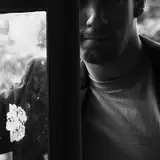
Rabit press photo by Linder & Lane Stewart, 2022.
- Exclusive remix stems, sounds and additional media for Rabit & Eartheater’s ‘Angelica’ are available exclusively to Premium Subscribers, downloads can be found on the Lux Cache website.
~
Rabit, also known as Eric C. Burton, is an experimental producer, recording artist and co-founder of the record label Halycon Veil.
You can stream & purchase 'What Dreams May Come' on all platforms, and follow Rabit on Twitter & Instagram: @rabitwhatdreamsmaycome
2023 © Whiston Digital / Lux Media | luxcache.com