TRACKS UNTOLD: KAI WHISTON’S ‘BOTHERING ME’ with Kai Whiston
Added 2021-08-25 18:34:29 +0000 UTCIn this Lux Cache track breakdown series, we ask artists, producers, engineers and songwriters to uncover the creative process of their work in their own words. In this chapter, recording artist and creative director Kai Whiston exposes the methods, developments and mistakes behind his 2021 mixtape ‘Drayan!’ and unearths the secrets behind the track ‘Bothering Me’.
This article is available as both a Patreon text post and .pdf document format. We ask you kindly to not share Lux Cache content outside of the Patreon, our contributors rely on your donations.
- Remix stems and the complete Ableton Live 11 project file for Kai Whiston’s ‘Bothering Me’ are available to Premium Subscribers on the Lux Cache Patreon.
~

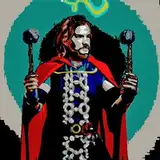
Cover art for Kai Whiston’s ‘Drayan!’, art by Janaina Tschäpe - released by MCMXCV.
LC: Could you talk about how you developed the narrative of Drayan! and its relationship with the mixtape sonically? Were there any key aesthetic references that you brought to the project?
KW: The development for Drayan! came from a weird headspace. I have been working on this other album since 2019 called ‘Quiet As Kept, F.O.G’ that I’ve wanted to do for a really long time. QAKFOG deals with a lot of personal shit -- relationships with certain people that are really close to me. When SOPHIE passed away in January I just had to put a stop on everything. I think I desperately needed a break from the intensity of the QAKFOG subject matter, I couldn’t get back into a headspace where making music felt like a valuable thing to do.
I took a month away from making music and was just listening to shit. I was listening to this mixtape I did back in 2017 called ‘Mukbang’, it's barely available online anywhere. The music in ‘Mukbang’ is pretty meh but it felt like it was a turning point for me to make more story-led projects. That mixtape was a character study on this woman Bridget Neilson and her hybrid-alien baby named ‘Drayan’. I think I was on the dark side of YouTube one night and was diving into this hybrid-child community, these very real people who believe they have had contact with alien children that are their own. In Mukbang I sampled these vlogs of hybrid-alien babymums to create the story of my own alien terror-baby coming to Earth. Something about that resonated with me on so many levels. It’s like, even if the connection to these alien-children came from a sincere place, it’s so fucking typical that a Western woman would be so entitled to call it her own hahaha. It made me laugh a lot, the vlogs felt very telling of our decadent society and super ‘KaI Whiston-y’ with all the amplified theatre components.

Cover art for Kai Whiston’s ‘Mukbang’ from 2017, art by Sam Rolfes & Kai Whiston
At some point this idea of doing an angsty teenage-sequel popped into my head, the very literal ‘alienation’ concept felt really apt for where my head was at. Being able to write a reflective and personal project under the disguise of this alien/mascot thing was enough to inspire me to open my DAW again. Leaning into this alien character felt really limitless as far as sound-design and arrangement was considered.
LC: How was the approach different with Drayan! compared to your previous projects?
KW: In some ways it was similar to my other projects. I have to begin with the art style and surrounding concept first, I don’t really have the ability to sit in a studio and make music with a totally blank canvas. There’s a long pre-production period, building up a collection of all kinds of research. Art books, music books, films, albums, samples, plugins, playlists - just actively consuming anything that I can latch onto in some way. These collections always build as the project is coming on, but I have to have an end product in my head before I start writing anything. The consequence of this is that so much of what I do is project specific, and more often than not I end up with hundreds of demos that I can't really put into another context. Another consequence is that I find it almost impossible to shift into projects that I’m not directing, such as production for other artists or bespoke sync work or something.
The different approach with Drayan! was lot of creative decisions came down to ‘what would Drayan do here?’, it was a total fucking blast. There was no pressure to make this ultra-considered magnum opus thing, I could blast things louder than they should be or invent words in the middle of my vocal takes. Of course my own decisions and bias was always going to be there, but I felt like there was a distance between me and what I was making. The decision to label it a ‘mixtape’ too, it’s a small thing but it obviously has an effect on the listening experience - the seamlessness between transitions and maybe allowing a little more room to be rough-around-the-edges but still feel intentional.

Kai Whiston and his hybrid-alien son Drayan, Image by Kai Whiston, Iglooghost and Daniel Mutton.
LC: Where did the music ideas behind Bothering Me start?
KW: It was one of the last songs to be written on the mixtape. I had just finished Enabling Dreamtime Communication Via Distortion Implant Device and went on a walk around the park to listen on my headphones. After the track ended I just felt this primal urge to hear something really explosive and annoying, to sort of challenge the whimsical nature of EDCVDID and change the tone of the mixtape completely. I rushed back to the studio and wrote Bothering Me - I wrote Bothering Me and EDCVDID in the same afternoon.
I think my ability to make shit really quickly is in part due to my focus on efficient workflow. Thanks to Lux Cache I am constantly making sample packs, presets and so many ready-to-go tools like 2-3 days a week. When it comes to actually writing Kai Whiston music, I don’t experience that 40-minute process of tweaking synths, because I have already built the synths in all my sound design sessions. I can just really get crazy and start layering things and follow the lead of excitement without wasting my time trying to make things sound perfect. The track to me almost feels like a 2021 4K HD reinterpretation of what I was doing on the Fissure Price EP - with an emphasis on resonant bombastic percussion and screaming noisy subs. The second half of the track almost feels like the 2nd drop to Run It from No World As Good As Mine, a giant wall-to-wall waveform with a dizzying amount of shit happening.
LC: Can you go into the sound design tricks you used to create the bombastic textures and percussive elements in the track?
KW: The great thing about this track is that it was fueled by my collection of Lux Cache Season 3 samples that I had made fresh earlier that week.
The workflow of my sound design sessions is always developing, but at the moment it’s foundation is building these jam devices - instruments that I can evolve into different things very quickly. I love synths & processing devices with ‘randomise’ buttons. VSTs like Synplant or any of the MeldaProduction stuff are so reliable for generating new signals quickly. Once I find a signal I’m into, I’ll begin to process it with whatever I’m into that day; sometimes it will be as simple as saturation or EQ, other times it’s an elaborate chain of random shit I’m trying out. I’ll have all the parameters in that chain be randomised and evolving constantly too with LFOs. The most important part is that I record the whole jam. In about an hour's work I can pull 5-10 samples that feel really interesting while still being functional in a track context. The few times I shared a studio with SOPHIE I saw a similar workflow, in that she had a folder of synth devices called SOPHIE Kick, SOPHIE clap etc. that would seem to produce entirely new sounds with even the smallest adjustment of a parameter. Sound design and arrangement are totally different crafts for me, it makes sense not to confuse the two headspaces by merging those processes.

I knew I wanted to go for an over-the-top sort of funky drum-pattern, I immediately started to layer shit on top of each other and build things really quickly. I wanted the focus to be the percussion and sound design so I started on the drums. I layered up these two massive 808 sounds from the Season 3 pack, one lowpassed at around 250hz for the sub, and another highpassed for the crunchy treble character. Layering sounds has always been a core of how I build things, using EQ to carve out frequencies that clash with each other to make something new.

A more extreme example of this would be with the snare sound where I’m using 5 different samples. I had the Teef Chizzel snare from Kai Whiston Sample Pack Vol. 1 as the main transient “punch”, the accompanying noises added character or tone to thicken everything. I use the track delaye feature in Ableton Live to keep the transients from clashing. All of these are also EQ’d individually to prevent more clashing, put honestly sometimes the clashing just sounds better when you’re trying to do brash abrasive shit.

I usually reach for the same style of kick with my productions, ultra punchy hip-hop style kicks that thump really well at 50hz. I did this swooping, almost drill inspired reverse-kick into kick technique that me and Iglooghost rinsed the fuck out of on XYZ. I used to make fun of him for doing it all the time but it actually sounded really good when I tried it in this tune. It's so noticeable so I try to limit how often I pull it out of the bag. Again, the track delays are adjusted as not to dilute the transient.

After I laid the foundations down, I started to go a little crazy on the Season 3 Samples. Just small cuts and hits fill in gaps in between the groove to keep things interesting. I hear a lot of kick/snare/hihat tunes that feel like humpty dumpty to me. This really sick collection of sv1 ‘GOOEY’ textures from the Season 3 Sample Pack made everything feel instantly alien.
The vocal processing was relatively minimal compared to some of the other shit I did in the mixtape. I usually love to play with harmonies and elaborate chains to make the beyond-human voice tones, but the character of this one was really simple. I layered my raw voice with a processed layer pitched up +5st. I then threw on a device I call ‘Turntable Fuckery’, essentially a ping-pong delay set to repitch mode with a subtle random LFO modulating the delay-time. Then after, a ring-mode frequency shifter to make that growly effect - a technique I absolutely stole off COUCOU CHLOE while we have been working together on her new shit.

The pad sound is introduced with this glitchy-gate effect I’ve been doing on textures and wall-of-sound-y signals, basically an ultra-responsive Gate with 0db return and 0ms Attack, 0ms Hold. When you edge the threshold right on the gain, it has this seemingly random cutting out effect - you can change the intensity by automating the threshold. This has been a fun alternative instead of fading in and fading out.

The harmonic guitar pluck that comes in during the breakdown is probably my favourite sound in Bothering Me. I used a lot of tactile pluck sounds when I was writing Fissure Price EP, something about the organic sampler/physical modelling instrument being processed digitally that becomes total ear-candy to me.

The source sound comes from a sampler instrument of Spitfire Audio’s LABS series. Spitfire Audio consistently puts out great work and their free LABS series is always a goto, where larger Kontakt instruments are too slow to load and mess with my workflow.

This pluck is then treated with Objeq Delay by Applied Acoustic Sounds, a delay with amazing physical modelling abilities that I’m constantly finding new tricks in. I think this is literally a Richard Devine preset that came with the VST with very minor modulation. The random LFO on the ping-pong echo does these great ultrawide glitchy digital artefacts.

LC: How would you describe your progression as an artist since when you first started to make and release music?
KW: I think the main thing that stuck with me when I was younger was this kinda stubborn DIY mentality. I had a lot of collabs go wrong which really put me off working with people for a long time. I’m grateful that it allowed me to learn so much, but I realise now how important it is to build ideas with other people. I’m still flawed in some areas of collaboration, especially when it comes to working on other peoples projects, but some really amazing shit has come out hearing second opinions and combining individual styles.
Another thing that was a big turning point for me was getting over the archaic producer-specific ‘sound’ identity. I think artists can fall into a habit of trying to recreate a magical moment that felt totally unique to them, making more and more tracks that functionally do the same thing. So many of my favourite artists do that, across all mediums - I don’t think it’s a bad thing it’s just not for me. When I wrote ‘Kai Whiston Bitch’ I guess I felt like I had ‘my sound’, but the way my brain works I got immediately tired of it and have been defining my discography with these stylistic pivots ever since. I don’t worry about ‘my sound’ anymore, there’s things I do and directions I take that give me a style but the story is always going to come first. I would rather my work be defined by my ideas than my sonic palette.
LC: What advice would you give to artists just starting out that are looking to push their work beyond the ‘producer’ label?
I think how you package and communicate your music is almost as important as the music itself. To me, one of the easiest ways to dedicate your life to something you love is as simple as changing all your passive consumption to that interest - from the films you watch, the pages you follow, the books you read, just everything small thing you’d usually fill with junk instead relating to your passion. That, and a dedication to eliminating wasted time - whether that’s doing something that you hate or getting stuck into inefficient habits. I think picking up these broader skills infer back into the music too, keeping a mindset of trimming the unnecessary and a constant refinement process. What I would also note is how much my work improved when I began to consume a wider range of mediums; processing reading, art, film, installations and more with the same concentration as music.
LC: How would you describe the throughline of your work, between all the different genres and styles you work with?
KW: My favourite adjective when I try to articulate my shit is ‘amplified’ - that word is so versatile for me. Where I am right now, I just feel totally dedicated to full length projects. I’ve really loved taking things one project at a time and approaching albums like a director or a studio artist where the story dictates the sound. As far as the tangible craft of music production goes, I’ve been at top-level for sometime as far as being able to accomplish the music I’ve wanted to make. I had the privilege of being able to start music production really young and I’m not really embarrassed with anything that I’ve released in the last 5 years, which is crazy. With that being said; learning the architecture of creative direction, storytelling and being able to communicate my ideas as fluently as possible is what I plan to spend the rest of my life worrying about.
- Remix stems and the complete Ableton Live 11 project file for Kai Whiston’s ‘Bothering Me’ are available to Premium Subscribers on the Lux Cache Patreon.

Kai Whiston, 2021. Photographed by Daniel Mutton.
~
Kai Whiston is a recording artist and creative director based in the UK.
You can stream/purchase their new project ‘Drayan!’ everywhere and follow on Twitter & Instagram @kaiwhiston.