Runner's Mind (Full story)
Added 2025-02-19 06:32:28 +0000 UTCTina felt the thrill of the morning air against her skin as she maneuvered through the crowded aisles of the supermarket, her petite frame of 5 feet 1 inches darting between shoppers. Her basket overflowed with groceries, each item carefully selected for the week ahead. The sun was bright outside, beaming a warm glow through the glass doors of the supermarket, promising a day full of potential.
With a satisfied grin, she pushed through the exit, her arms laden with bags, the rustle of plastic and the soft clinking of glass bottles filling the air. Her mind was already on her next run, the rhythm of her feet hitting the pavement, the breath syncing with her heartbeat.
Once her right foot steps off the pavement, chaos erupted.
The screech of tires against asphalt shattered the peace, a sound so sharp and sudden it pierced through the usual hum of the city. Tina turned, her eyes widening in horror as a car, its driver distracted, bore down on her at breakneck speed.
Her instincts kicked in; she tried to jump out of the way, her body twisting unnaturally as she leaped. Her right leg, however, didn't clear the vehicle. The wheel of the car caught Tina’s right foot. A sickening crunch, not loud but felt deeply by Tina, as her ankle twisted violently. The momentum threw her to the ground, her bags spilling around her, groceries rolling away.
Pain exploded from her ankle, shooting up her leg in waves. She screamed, a raw, guttural sound that echoed off the concrete. Her leg was twisted at an unnatural angle. Tina could feel her bones grinding against each other internally as pain quickly enveloped her..
Lying there, the world seemed to spin. The sounds of the city were drowned out by her own scream of pain. The concrete was cold against her back, the early afternoon sun now mocking her with its warmth.
People gathered around, their voices a distant murmur, some calling for help, others whispering in shock. Tina couldn't focus on them, her consciousness teetering on the edge as she fought to stay awake through the pain.
---
Time stretched out like an endless thread as Tina lay on the cold pavement, the sun relentlessly observing her agony. Each second felt like an eternity, her breaths shallow and her mind racing with the fear of what was to come.The throbbing pain shot through her nervous system. Around her, the world moved in slow motion; the onlookers’ faces blurred into a sea of curious looks
Finally, the wail of sirens pierced through the haze of her pain. The ambulance arrived, its doors swinging open with urgency. The paramedics jumped out and rushed towards Tina.
One of them knelt beside Tina.
"We're going to splint your leg now," she said, her voice steady but soft.
Tina nodded, biting down hard on her lip as they maneuvered her leg. The pain was excruciating, like lightning bolts shooting through her with every slight movement. She clenched her fists, her nails digging into her palms, as the paramedics tried to secure the splint to stabilize her fractured leg.
"Here, I am going to give you something for the pain," a paramedic offered, a syringe in hand.
"No!" Tina gasped, her voice a mix of pain and panic. "I am deadly allergic to anesthetics and pain medication. You will kill me with that."
The paramedics exchanged a look of concern but nodded, respecting her warning. Instead, they focused on securing her onto the stretcher, every movement causing her to scream in agony, her face contorted in pain.
The ride to the hospital was nothing but a nightmare. The ambulance, caught in the snarl of city traffic, Though the sirens are blaring, people just won’t move out of the way. The ambulance jerked and bumped over the uneven roads. The trip took an eternity. Each jolt sent fresh waves of pain through Tina's ruined leg, her cries muffled by the sirens and the chatter of the radio. She tried to focus on breathing, on anything but the relentless pain, but it was futile.
The paramedic beside her held her hand, offering silent comfort as they could not administer any pain medication, her eyes conveying sympathy and professionalism. "We're almost there," she murmured, “ the doctor will take your pain away.” The words ring like a hollow, empty promise in the midst of the chaotic journey.
The ambulance finally pulled into the hospital bay, the last speed bump caused one final sharp pain before the doors were flung open, and they were moving again, this time into the sterile, bright environment of the hospital.
---
The fluorescent lights of the hospital corridor were harsh, a stark contrast to the dim, pain-filled world Tina had been living in for what seemed like forever. The doctor ordered quite a number of x-rays to be taken before he could make a diagnosis. Tina was then wheeled into the radiology department, the cold, clinical environment doing little to soothe her nerves or her pain.
The process of getting the X-rays was torturous. Each adjustment of her leg felt like a cruel twist of fate, her cries echoing off the tiled walls. The pain of her bones grinding with the slight movements sent Tina pain. The session nearly caused her sanity. The technicians worked as gently as they could, but the reality of her injury meant that Tina would feel the bone grind against each other with every movement.
The x-ray session was not something Tina would ever want to go back for. She was wheeled back in the examination room, the air was thick with tension. The doctor studied the X-rays on a lightbox as Tina sweats profusely from the pain of her x-ray session. The doctor’s brow furrowed. Tina watched him, her heart pounding with each moment of silence.
Finally, he turned to her. "You see the spiral fracture here on both the tibia and fibula in your right leg," he explained, “ both displaced.” His voice is clinical but not unkind. “We need to realign the bones or you will lose your leg."
Tina, still reeling from the pain, managed to speak. "Allergies… No anesthetics or pain medication, I will d…" she reminded, her voice shaky.
The doctor nodded, “No anesthetics, right?”
The doctor looked down at her charts.
Tina nodded.
The doctor’s expression is a mix of understanding and mixed concern.
"Without anesthetic, we can’t risk going into surgery with your legs. We'll have to proceed with manual reduction. But you will be in a lot of pain because of your allergy.” the doctor rubbed his chin and then continued, “We'll do our best to minimize your discomfort."
Manual reduction without anesthesia meant enduring the process fully conscious. Tina will feel every manipulation of her shattered leg. She will have to feel the pain as each bone gets popped back into place. Tina knew too well of the agony. At ten, Tina broke her arm after falling off a tree. That is when she discovered her allergy. The doctor was trying to put her under to reduce the broken arm. That incident almost killed her. Eventually, Tina had to endure the pain of having her radius pulled back into place. Somehow she knew this was going to be worse.
A nurse appeared, wheeling her to the cast room where the procedure would take place. The journey was a blur, her mind a mix of fear and resignation. The room was small, filled with the necessary equipment for such procedures, the walls lined with casting tape of various sizes.
The muscular orderly came into the room and held Tina in place as ordered by the doctor. As she was positioned, the reality of what she was about to undergo sank in. A Hulk-like orderly braced her right thigh. Another held her left leg down. A final one holds her upper body down so she would not fall in case she overreacts to the pain.
Tina’s heart was racing, being secured on the table, the doctor's hands hovering above her leg, ready to begin the grueling process of realignment.
---
The room was silent except for the labored breathing of Tina. The doctor began the daunting task of realigning Tina's fractured bones. His hands are cold, in contrast to the burning sensation Tina has in her leg. The first attempt at setting the tibia was met with resistance; the bone was stubborn, unwilling to yield to its intended position.
Tina screamed, the sound raw and filled with agony, as the doctor's hands worked. "I'm sorry for your pain," he murmured, his voice a mix of professional focus and genuine sympathy. He tried again, sweat beading on his forehead. The second attempt was no less painful, the bone shifting slightly but it was not enough to get alignment. Tina could feel her bones grinding painfully upon each tug.
On the third try, with a firm but careful pull, the tibia finally aligned with a grind. A sigh of relief escaped Tina, though it was short-lived. The doctor moved to the fibula. Another pull and the push on the calf, the fibula is back in alignment but the tibia shifted back slightly. His jaw clenched, a sign of his determination not to give up.
Two more tries to align both bones in Tina’s right leg, Tina’s voice was long gone. Each manipulation of her leg is a battle of patience and pain. Finally, both bones were aligned to the doctor's satisfaction. The relief was palpable, not just for Tina but for everyone in the room.
The process of casting began. A stockinette was gently rolled onto her right leg, the soft material brushing against her sensitive skin, providing a small relief through the pain from the ordeal she had just endured. The sensation was strangely comforting, a stark contrast to the torture she had felt moments before.
Next came the cast padding, applied with a gentle touch, wrapping around her leg to cushion the bone beneath. Extra padding was added to her ankle and knee to prevent the rubbing of the cast against her joints. Then, the fiber cast tape was unrolled, its application slow and deliberate. The tape spiraled from just the top of her thigh, encasing her leg entirely down to the roots of her toes, securing the newly set bones in their fragile new alignment.
By the time the cast was fully applied, Tina was drenched in sweat, her body exhausted from the ordeal. Her face was pale, etched with lines of pain and relief. She was wheeled back to her bed, where her casted leg was carefully propped up on a Thomas traction frame to elevate it, aiding in controlling the inevitable swelling.
Tina was utterly spent, her chest rising and falling with heavy breaths as she lay back, the cool hospital air doing little to soothe her overheated body. Her leg, a heavy, painful object attached to her.
---
In the silence of the night, the hospital room was bathed in the soft glow of dimmed lights, the only sounds being the rhythmic beep of heart monitors and the occasional distant footsteps of night shift nurses. Tina slept, her body finally yielding to the exhaustion after the ordeal of setting her broken bones.
Her right leg, now a stark contrast to her sleeping form, lay on the bed, elevated by a metal frame designed to reduce swelling. The cast began just below her hip, where the edge of the stockinette peeked out from under the hard shell of the fiber cast tape. The white cast is almost glowing under the hospital light.
From the thigh, the cast curved gently around her leg, following the natural line of her body but adding a bulk that was foreign to her petite frame. The fiber cast tape was smooth, the surface unmarked by any personal touches yet, just the uniform texture of the fiber cast material. It was thick, offering both support and protecting to her leg. The padding beneath, though unseen, was felt in the gentle cushion it provided against the rigid exterior.
As the cast descended, it widened slightly around the knee, ensuring the joint was immobilized entirely, preventing any movement that could disrupt the healing process of her lower leg. The contours of her knee were lost to the uniform shape of the cast, which continued down her lower leg, where the break had occurred. Here, the cast was at its thickest, designed to hold the tibia and fibula in their new, delicate alignment.
Her calf, usually visible with the definition of her muscles, was now an indistinguishable part of the cast, all the way down to her ankle. The ankle, where the damage had been particularly severe, was encased with extra care, the cast providing stability where her body could no longer give. The transition from leg to foot was seamless; the cast covered her heel, leaving only the tips of her toes free, twitching slightly in her sleep.
As the night gave way to morning, the first light of dawn crept through the hospital window, casting long shadows in the room and illuminating the cast in a new light. The sun's rays touched upon the white surface, highlighting every curve and line of the cast, making it almost glow with the promise of a new day, a new beginning in the long journey of healing.
The sun rising fully, its light now bathing the room in warmth, signaling the start of another day for Tina, one where she would slowly come to terms with her new reality, beginning with the sight of her casted leg.
---
The morning light felt like an intruder as Tina stirred from her sleep, the pain in her leg was an immediate and unwelcome companion. Her eyes fluttered open, groggy from the remnants of sleep and the heavy weight of her new reality. She tried to move her toes, a small act she had always taken for granted, but the pain shot through her mangled right leg.
Lying there, she sought distraction, her gaze drifting upwards to the ceiling. The tiles were uniform, white, and numerous. She started counting them, her lips moving silently, trying to focus on anything but the searing, throbbing pain in her leg. Each number counted was a second away from her suffering.
When the ceiling tiles no longer held her interest, her eyes moved to the walls, scanning for imperfections. Cracks, though few, became her new focus. She traced them with her eyes, following the jagged lines as they meander across the wall, each one a story she made up, a small escape from her current condition.
But the pain was relentless, a constant, pulsing reminder of her broken leg. The distraction was only temporary; the pain always found its way back to the forefront of her mind. Her breathing grew shallow, each breath a cautious dance with the pain.
As the morning wore on, fever began to take hold, her body's response to the trauma and stress. She felt hot, her skin clammy, and her thoughts started to blur. The room seemed to sway slightly, or perhaps it was just her perception, distorted by the fever. The nurse continues to feed her zips of cold water. Dabbing cool damp towel on Tina’s forehead to control the fever.
Tina drifted in and out of consciousness, the line between wakefulness and dreams blurring.
Tina dreamt of running down the river bank again. With wind in her hair and music in her ear. Her legs carrying her along the jog trail. She was rudely pulled back by the sharp pain from her leg.
Tina was caught between these two worlds, the reality where her body fighting the fever and her mind escaping into dreams where pain couldn't follow. She tried her best to stay in the dream but only to be dragged back by the relentless stabbing in her leg, her consciousness flickering like a candle in the wind.
---
A week had crawled by, each day marked by the slow, persistent ticking of the hospital clock, each second another drop in the ocean of time Tina felt she was drowning in. The pain in her leg was no longer the sharp, searing agony of the first days but had settled into a constant, dull ache that seemed to seep into her very bones.
Her face, once vibrant with youth and the joy of running, now bore the marks of her ordeal. The lines around her eyes and mouth were deeper, etched by pain and sleepless nights. Her eyes, usually bright with determination, were now shadowed with fatigue and a hint of despair. Every slight movement, every shift in position, was a reminder of her injury, a rekindling of the pain that never truly left.
Tina tried to distract herself with books, television, and the occasional visitor, but the pain was an ever-present companion, sitting at the edge of her awareness, ready to remind her of its presence with every heartbeat. She had tried to adjust to the weight and restriction of the cast, but the sensation of being anchored was overwhelming.
The cast itself had become a part of her identity in the hospital room, a stark white against the sterile environment. But it was the toes, bruised and peeking out from the bottom of the cast, that truly haunted her. Each time she looked down, there they were, a vivid reminder of her injury. They were discolored, the purple and yellow hues speaking of the trauma beneath the surface, a constant visual echo of the pain.
As the days melded into one another, the pain, though less acute, never faded into the background. It was a dull, throbbing entity that lived with her, in her, shaping her moments and her mood. There were moments when she could almost forget it, but then a twinge or an accidental bump would bring it roaring back.
---
Two more weeks slipped by in the hospital room, each day blending into the next, marked only by the changing programs on the television. The screen had become a portal to another world, one where pain didn't dictate every moment. Tina watched with rapt attention. She allowed the stories, news, and comedies to pull her from the persistent ache in her leg. The distraction was working; at least, it made the hours pass without her mind fixating on the pain.
The ache in her leg was still there, a dull, persistent reminder of her injury, but it had settled into a background noise rather than the loud, demanding presence it once was. She was cautious, almost afraid to move, worrying that any shift could undo the delicate work of healing. Her life had become a careful balance of stillness and distraction, her body a prisoner to her own fears of regression.
The room was quiet except for the murmur of the TV when the nurse entered, her presence breaking the monotony. She was kind, her smile a small beacon of hope in Tina's otherwise routine days.
"Good news, Tina," the nurse said, her voice cheerful yet professional. "We're going to take you down for an X-ray to see how your leg is healing."
Tina felt a mix of anticipation and anxiety stir within her. The prospect of seeing progress, of knowing if her careful stillness and the pain she endured were paying off, was both exciting and terrifying. What if there was no progress? What if the healing was slower than expected?
The nurse helped adjust Tina's bed, preparing for the move to radiology. As they wheeled her out of the room, her eyes caught one last glimpse of the television screen, a flickering light in the room she had come to know too well. The journey to the X-ray department was short, but to Tina, it felt like the beginning of another chapter in her long recovery.
Tina is being positioned for the X-ray, her heart racing with hope and fear, as the machine hummed to life, ready to capture the images that would reveal the truth of her healing leg.
---
After the X-ray, Tina was wheeled back to her room, the journey marked by a silent anticipation. She tried to distract herself with the TV again, but her mind was elsewhere, imagining the images of her bones, hoping for signs of healing. The hours stretched on, each one heavier with waiting.
It was late afternoon when the doctor finally arrived, the X-rays in hand. He placed them against the lightbox, his eyes scanning the images with professional scrutiny. Tina watched him, her breath held, her future seemingly in those black and white shadows.
"Good news," the doctor began, his tone lifting with a hint of optimism. "Your leg is healing. There's good bone formation, and everything is aligning well."
Relief washed over Tina like a wave, her eyes welling up. It was the first piece of positive news in weeks, a small victory in her battle against her own body's limitations.
"We'll change your cast soon, and if everything continues to progress, we might consider discharging you," he continued, his words a promise of freedom. "But before we do, you'll need to be assessed by a physical therapist to ensure you can manage with crutches. We need to make sure you're safe to move around on your own."
The idea of leaving the hospital was exhilarating, yet the thought of navigating the world with crutches was daunting. She nodded, understanding the conditions of her potential release.
"The physical therapist will see you tomorrow to assess your mobility," the doctor concluded, handing her back to the reality of her current situation but with a new horizon in sight.
---
The morning was still young when Tina was wheeled back to the cast room, the air crisp with the promise of a new day. The doctor, with practiced efficiency, began the process of removing her old cast. As the last of the fiber cast tape was cut away, the room was silent, save for the soft sounds of the scissors.
Her leg was a reminder of the journey it had been through. The skin was pale, almost ghostly where the cast had shielded it from the sun, and lumpy where the bones had begun their healing process. The area around the fracture was visibly swollen, the skin taut over the irregular, bumpy shapes where the tibia and fibula were knitting back together. The muscle, once firm from her love of running, had atrophied, the definition lost to the weeks of immobility, leaving her leg looking thinner, the muscles slack.
The nurse approached with gentle hands, using warm water and soft, soapy cloths to clean Tina's leg. The water felt almost foreign against her skin, the sensation of touch returning after weeks of being encased. The nurse was meticulous, cleaning around the healing site with extra care, noting the areas where the skin had become dry or irritated from the cast. Tina's leg, though lumpy and bruised, shows evidence of the healing process even if it was not yet complete.
Once cleaned, the process of recasting began. The nurse applied a new layer of stockinette, this time with a little more care to ensure it was smooth against her skin. Over this, she layered the cast padding, wrapping it around Tina's leg, ensuring it was evenly distributed to provide cushioning and comfort.
Then came the fiber cast tape, applied with precision. Starting from just below her hip, the tape was wrapped in overlapping spirals, each layer building up the structure that would support her leg as it continued to heal. The new cast was slightly different, extending from the top of her thigh but stopping short of her toes this time, allowing for more freedom of movement when she eventually started using crutches. The tape was pressed down, ensuring no air pockets were trapped inside, which could lead to discomfort or skin issues.
The process was methodical, the room silent except for the sound of the tape being unrolled and the occasional instruction from the doctor to the nurse. As the last piece of tape was secured, the doctor inspected his work, ensuring everything was set correctly for her continued recovery.
With the new cast in place, Tina was wheeled back to her room. The doctor was showing a mix of professional satisfaction and genuine care, and spoke as they moved. "You'll be waiting for the physical therapist now. They'll assess how you manage with crutches. We're one step closer to getting you out of here."
---
The physical therapist, a woman with a reassuring presence, entered Tina's room, her arrival marked by a gentle knock that broke the monotony of the hospital sounds. She introduced herself, her voice calm and encouraging.
"Alright, Tina, let's see how you manage with some basic movements today," she said, moving to adjust the bed so Tina could sit on the edge.
Tina nodded, her resolve firm despite the trepidation. She swung her legs over, her uninjured left leg moving easily, but as she lowered her right leg, the rush of blood down into the healing fractures caused a spike of pain so intense it took her breath away. Her face contorted, the sudden increase in pain a cruel reminder of her injury.
Seeing the distress, the therapist was quick to respond. "Tina, let's elevate your leg again," she said, moving to help lift it back up.
But Tina, gritting her teeth, shook her head. "No, wait, I can manage. Just... give me some time," she managed to say, her voice strained but determined. She knew the importance of circulation for healing, even if it meant enduring this pain.
The therapist paused, respecting Tina's determination but keeping a close watch. "Okay, but if it gets too much, we'll adjust. You're in control here."
Tina closed her eyes, focusing on her breathing, each breath an attempt to manage the pain. The blood flow was necessary, she told herself, even if it felt like a fire coursing through her leg. She could feel the throbbing intensify, each heartbeat a pulse of pain, but she sat there, enduring, pushing through the discomfort.
The room was silent, the only sound Tina's controlled breathing and the occasional rustle as she subtly shifted to find a bearable position. Her hands gripped the edge of the bed, knuckles white with the effort of not succumbing to the urge to lift her leg back up.
---
The pain was a sharp, relentless reminder of Tina's fragility, each pulse a barrier to progress. The physical therapist watched Tina closely, her professional instincts kicking in. She could see the struggle, the determination in Tina's eyes, but also the acute pain that was more than just discomfort—it was a warning.
"I think that's enough for today," she said gently, her tone carrying both concern and authority. "Overdoing it can set back your healing. We need to respect your body's limits."
Tina's shoulders slumped, a mixture of pain and defeat washing over her. She had wanted to push, to show she was ready, but the reality of her condition was undeniable. She nodded, her eyes closing as the therapist carefully maneuvered her leg back onto the frame, elevating it to help mitigate the pain.
The relief was immediate but small; the throbbing eased, but the sense of failure lingered. She had hoped to prove she was ready for crutches, for discharge, but her body had other plans.
The therapist, observing the disappointment on Tina's face, offered a gentle smile. "Healing takes time, Tina. It's not just about physical recovery but also about listening to what your body needs. We'll continue with these sessions, but we'll do it at your pace. I'll be back soon for our next session."
Tina managed a weak smile in return, her spirit slightly lifted by the promise of another chance, another session to work towards her recovery. However, the prospect of staying in the hospital for another week or two was daunting, a reminder of the slow, often frustrating journey of healing.
---
Over the next two weeks, the physical therapist became a familiar face, visiting Tina every other day, each session a small step forward in her recovery journey. With each visit, Tina's tolerance to the pain in her leg grew, not dramatically but steadily. The acute pain that had once overwhelmed her was now more of a dull, manageable ache.
During these sessions, they worked on gradually increasing her leg's exposure to different positions and movements. The therapist would lower her leg, letting it hang off the bed, teaching Tina breathing techniques to manage the discomfort. Each session ended with her leg back on the frame, but with each passing day, the time she could spend with it down increased, her pain threshold expanding.
On the day marking the end of the two weeks, there was a sense of cautious optimism in the air. Tina, with the therapist's guidance, sat on the edge of her bed once again. This time, the pain was not the sharp, debilitating sensation it had been but a persistent, dull ache that she could breathe through. It was progress, and for a moment, she allowed herself to feel a flicker of hope.
"Alright, let's try something new," the therapist suggested, her voice encouraging. "How about we try standing?"
Tina nodded, eager but cautious. With the therapist's support, she placed her uninjured foot on the ground, then slowly, with great care. Her injured leg dangled on the side. Her face paled, and she gasped, the ache turning into a sharp reminder of her injury's severity.
The therapist, quick to react, supported Tina back to a sitting position. "That's enough for today," she said firmly but gently. "We pushed a little too far. Healing is about progress, not perfection. We'll keep building your strength and tolerance."
Tina, though disappointed, knew this was part of the journey. The pain was a familiar foe, and while she had hoped to stand, she understood the importance of not rushing her recovery.
---
The following two weeks marked a significant phase in Tina's recovery. With each session, her strength and endurance improved, and under the watchful eye of her physical therapist, she finally managed to stand, balancing on her uninjured left leg while allowing her right, injured leg to dangle without touching the ground. This was a moment of triumph, a testament to her resilience and the slow but steady healing of her leg.
The physical therapist beamed with pride. "You've made incredible progress, Tina! Standing like this, even for a moment, shows how much stronger you've become."
Tina felt a surge of pride and relief. The sessions had been grueling, each one a battle against pain and patience, but seeing her therapist's smile and hearing her praise made it all feel worthwhile. They continued to work on her balance, ensuring she could maintain this position for longer without pain overwhelming her.
As they were wrapping up the session, the door opened, and the doctor walked in, his timing almost serendipitous. He observed Tina standing there, balancing with a determination that had become her hallmark.
"Looks like we have some good progress here," he commented, his voice carrying a note of approval. "Let's schedule another X-ray for your leg, see how the healing is going. This could be the step towards getting you some mobility aids and perhaps planning your discharge."
The words were like music to Tina's ears. The prospect of an X-ray meant another chance to see if her bones were knitting back together as they should, a step closer to freedom from the hospital walls.
---
Tina barely slept, the excitement and anticipation of her progress keeping her awake through the night. Each toss and turn was accompanied by thoughts of standing, walking, and eventually running again. The morning light seemed to come too slowly, but when it did, it brought with it a mix of eagerness and nervousness.
She was wheeled to the cast room in a wheelchair this time. The journey was smoother, her spirits high despite the slight nervousness about what the X-ray would reveal.
The process of getting the X-ray was still uncomfortable; the positioning of her leg, even in its improved state, brought about a familiar ache. However, compared to the excruciating pain she had experienced upon her arrival at the hospital, this was manageable, almost trivial. She managed a small, proud smile through the discomfort, knowing how far she had come.
After the X-rays were taken, she was returned to her room to wait, the anticipation building. The doctor arrived later, his expression one of satisfaction as he held up the new images against the light.
"Your leg is healing much better than expected," he announced, his voice carrying genuine pleasure. "The bones are aligning well, and with the swelling reduced, we can give you a better-fitting cast. This should be more comfortable and support your healing even more effectively."
Tina's heart lifted at the news. A recast meant progress, comfort, and a step closer to recovery. The doctor continued, detailing the plan for the new cast, explaining how it would be lighter and allow for better circulation and mobility.
---
Tina was roused early by the gentle touch of a nurse, the morning light barely peeking through the blinds. She was wheeled back to the cast room, the same path she had taken many times, but this time with a sense of renewal. The doctor, with his usual precision, cut away the old cast, revealing her leg to the air and light for the first time in weeks.
The nurse, with utmost care, began washing her leg, the water warm and soothing on her skin. But as the old cast fell away, Tina couldn't help but gasp at the sight of her leg. It was not the leg she remembered; the muscle, once strong and defined, had weakened significantly. Her calf and thigh had lost all tone, appearing thin and almost fragile. The sites of the fractures were still evident, small lumps under her skin, a physical memory of the trauma.
Despite the shock, there was a moment of decision when the doctor asked, "What color would you like for your new cast?"
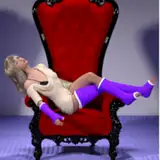
"Purple," Tina replied without hesitation, a small smile touching her lips. It was her favorite color, a choice that felt like bringing a bit of her personality back into the healing process.
With the nurses assisting, the doctor began the process of recasting her leg. The new purple cast was applied from her thigh down, the color vibrant against the clinical environment of the room. The process was familiar by now, yet there was a sense of ceremony in this new casting, a symbol of progress and personal choice.
Once the cast was set, ensuring it was snug yet not too tight, accommodating the reduced swelling, Tina was wheeled back to her room. Her leg was placed back on the metal frame.
“TV?” asked the nurse.
---
Another week had passed in a blur of therapy sessions, each one a step closer to reclaiming her mobility. With her leg now encased in a new, lighter purple cast, angled at 30 degrees at the knee to support her healing, Tina was ready to push her boundaries further.
During the physical therapy session, she stood, her injured leg not bearing any weight, the cast providing the necessary support at the knee. The lower part of her leg still ached at the fracture sites, a dull reminder of her injury, but it was a pain she had learned to manage. She balanced on her left leg, her muscles tense with concentration.
The therapist stood by, offering words of encouragement. "Now, let's try moving forward with the crutches. Shift your weight onto your left leg, and move the crutches ahead."
Tina nodded, her focus intense. She shifted her weight, feeling the strength in her left leg, the one unaffected by the cast. With a deep breath, she moved her crutches forward, planting them securely. The movement was slow, deliberate, her body adapting to this new way of moving.
The moment of truth came. With her crutches positioned, she swung her body forward, her right leg, still in the cast, dangling safely, not touching the ground. Her left leg followed, bearing her weight confidently, and she took her first step with the crutches.
---
Over the next two weeks, Tina's proficiency with crutches grew exponentially. Each day was a lesson in balance, strength, and patience, but she progressed from cautious, slow steps to confidently maneuvering on flat surfaces. Her injured leg, still non-weight-bearing, was supported by the cast, but her upper body and left leg had grown stronger, adapting to her new mode of mobility.
The physical therapist introduced her to the challenge of stairs. With one crutch under each arm, she learned to navigate the ascent and descent, by hopping up stairs with her uninjured leg going first on ascent and her injured leg going first for descent. Tina’s movements became more assured with each session.
Tina's progress was undeniable. She could now move around her hospital room with ease, tackling the small set of stairs that led to the physical therapy area without assistance. The joy of this newfound independence was palpable, her spirit buoyed by each successful maneuver.
At the end of this period, her physical therapist watched her navigate through the therapy room, her movements smooth despite the crutches. There was a moment of silence as the therapist assessed her final performance.
"You've done exceptionally well, Tina," the therapist said, a genuine smile spreading across her face. "I'm pleased to say you're ready. I'm clearing you for discharge from the hospital."
The words were a release, a culmination of weeks of hard work, pain, and perseverance. Tina felt a rush of emotions—relief, excitement, and a hint of fear about the world outside these familiar hospital walls.
---
Months turned into years, each one marked by the slow, painstaking process of recovery. Tina learned to walk again without the aid of crutches. However, the journey had left its indelible marks. Her gait was now characterized by a persistent limp caused by the muscle loss and the lingering pain from her injuries. Even though her bones had healed, the damage had altered her body's mechanics forever.
The arthritis that set into her knee and ankle was a cruel reminder of her past traumas, each step a negotiation with pain. Her right leg, visibly thinner than its counterpart, never regained the muscle tone it once had. Every movement was a challenge, a daily battle against the stiffness and discomfort that arthritis brought. Her knee or ankle will sometimes suddenly give causing tina to stumble.
Despite this, Tina adapted to her new reality, her limp was a part of her identity now, but not the entirety of it. She focused on strengthening what she could, working tirelessly in physical therapy, not just to walk but to dream bigger.
One morning, standing in front of her mirror, she observed her reflection – her limp, her thinner leg, the slight grimace of pain with each step. But instead of despair, she felt a surge of determination. She remembered the joy of running, the wind in her hair, the freedom of movement that had been so violently taken from her.
"Boston Marathon," she whispered to herself, a promise, a challenge. It wasn't about walking normally; it was about reclaiming a piece of her past, about proving to herself that despite the limp, despite the pain, she could still find joy in movement.
She started with small steps, literally and metaphorically. Jogging was out of the question, but she began with brisk walks, then light jogging on soft surfaces, always mindful of her limits. Each attempt was painful, each small run fraught with the risk of aggravation.
Tina knew she might never run as she once did. The limp would always be there, the arthritis a constant companion, the sudden buckling of her knee or ankle a surprise guest. Despite that, Tina found new ways to move, to enjoy the act of running, even if it was just for a few moments at a time.
---
Epilogue: The Marathon of Resilience
Five years had passed since that fateful day, and Tina was once again at the Boston Marathon. Her thin right leg secured in heavy brace that helps provide support was proudly displayed under her shorts.
The signal sounded, and the crowd surged forward, a sea of determination and dreams. Tina moved at her own pace, each step a negotiation with her body. She wasn't racing against time or other runners; she was racing against her own limitations, her past, and the pain that was now part of her.
Throughout the course, her right leg protested with every movement, the brace offering support but not relief from the discomfort. Yet, she did not stop, did not falter. Every meter was a victory, every mile a milestone in her personal marathon of life.
As the day wore on, the racers thinned out, and when Tina finally crossed the finish line, she was the last. But in that moment, she was first in her heart, first in her battle, first in her resilience. Her face, streaked with sweat and tears, was not of defeat but of triumph.
–The End–