![[Necromancy] Item - Cadavera Lamina](https://img10.saketami.com/storage/11/fh/ll/9a2cd0-019e84be-8ba3-7457-92b0-0455041d5f0a.png)
![[Necromancy] Item - Cadavera Lamina](https://img5.saketami.com/storage/11/zd/gb/9a2cd0-019e84be-8ba3-7cff-a627-0e542ff82292.png)
![[Necromancy] Item - Cadavera Lamina](https://img10.saketami.com/storage/10/to/lv/9a2cd0-019e84be-8ba7-733a-97b8-d7d522b80550.png)
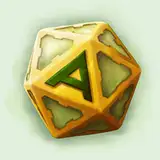
Necromancers and street magicians alike greatly enjoy the use of these metal plates, though for entirely contrary purposes. Uninformed mages often mistake these instruments for arcane devices of portal conjuration, rather than their gruesome truth.
——
Cadavera Lamina
Wondrous item, uncommon
These sheet metal plates always come in pairs. You can use an action to push both plates into a willing creature’s limb or hand and sever it. One plate remains attached to the creature while the other remains attached to the severed part. The plates’ necromantic magic temporarily prevents both creature and severed body part from bleeding to death, and the creature can still move or take actions with its severed body part as if it were still attached, using its own senses and statistics. Different severed parts have different movement speeds or available actions, as follows.
If a severed body part takes damage, its original creature takes that damage. If a body part has been severed for more than 1 hour, the creature loses 2d8 hit points every hour and its hit point maximum is reduced by the same amount; the creature dies if its hit point maximum is reduced to 0. This reduction cannot be reversed until the severed part is reattached and the creature finishes a long rest. Any creature can use an action to reattach a severed limb to its original creature by pressing both plates together.
Once these plates have been used to sever a body part, they can't be used again until the next dusk.
——
DESIGN COMMENTARY
While brainstorming, I wanted to touch on some alternative uses of necromancy beyond "raising the dead" and "healing." Some necromancy spells are capable of keeping creatures alive, and so do these. These were partially inspired by a magician's cut-someone-in-half trick.
This set of magic items are Uncommon without attunement requirement. The main factor in this consideration is how the severed limbs require vision for most of their work and have fairly poor statistics, which generally limits them to slow or careful scouting missions. They overall function like a worse version of find familiar, and are pretty safely in the Uncommon range.
The requirement for a willing creature snuffs out most shenanigans, even if you use charm person (the charmed target is friendly, but under no impulse to obey) or dominate person (the target obeys physically, but isn't technically mentally "willing"... that's up to your GM. It would be hard or not worth the effort to make work in combat anyways).