Behind The Real Thunderbolts Story- Episode 1
Added 2025-08-09 17:49:16 +0000 UTC
With the first episode complete, it’s time to let you guys know how this project came to be, starting with this write up detailing my experience making The Thunderbolts Story, a video series where I go through the history of the comic to a certain point and discuss not only what made it special, but also what is says about the era of comics it was created in.
However, with this being the first part, I think it’s important to use the write up to let you in not just on how the episode was made, but how the series itself began. We’re going to go all the way back to 2020, when the Fantastic Four video had wrapped, I had yet to undergo radical eye surgery, and a sneaky pandemic was about to change everything.
What a time.
----------------------------
The Start

‘There was an idea.’
After completing the Fantastic Four video, I knew I would want to do another comic book related one. It was getting a good reception, I’d enjoyed what I’d learnt putting it together, and I really wanted to try something like that again. However, I didn’t really want to be a comic book Youtuber. People wanted me to do Spidey and X Men and I loved all those guys, but I didn’t really want to commit to 100 more of those knowing other people would probably scoop them up in the time I spent trying to make them, and I had so many other projects I wanted to do that would be quicker (comparatively speaking, anyway.) But, as some of you might remember, I did let slip once or twice that there was another comic I felt I could do something interesting with.
Thunderbolts was very high on my list, I felt like I already had some good angles on it, and as far as I could tell literally nobody on Youtube really cared enough to do the full throated version of its history. I wasn’t sure how serious I was about trying it yet, as I was looking at starting up some other stuff in my real life and considering just how serious I was getting with this whole Youtube thing given the FF video hadn’t exactly taken off. It seemed like a bit of a crossroads- was the FF kind of my last big thing, or was I going to continue down this path and try another?
And then a crazy thing happened- a global Pandemic.
Suddenly, I had all this time on my hands. You can certainly go back and track my Youtube career really ramping up around that time- many more video essays released and doing whatever I could to stay afloat and busy as the UK ground to a complete halt. I had a lot of projects and drafts of other essays on the go to keep myself occupied while all of that was going on in the background, and really, that was where I found the time to get serious with another big Marvel project. I took a look at the comics I already owned, reaffirmed just how much that story stood out to me from the other choices, and made a vow to go all in on the best possible video I could imagine for that team’s journey.
And so it began.
The Choice

Thunderbolts is one of Marvel’s most unique books. The hook of Bad Guys pretending to be Good Guys is an incredible premise, a red hot idea that they’d hinted at before or done very light takes on, but had never taken all the way, and it ended up creating a book that remained fascinating for years. Spider-Man was always my first Marvel comic love, and the X-Men, Fantastic Four, Avengers and more all held extremely special places, but Thunderbolts felt like it was made purely for me- getting into the interpersonal relationships of the people who’s main gimmick was fighting superheroes, and showing the effects of Marvel continuity on their lives. A book about villains. Hell yeah.
There was so much I wanted to talk about, but unlike the FF, I realised this would have be very different. For one, the Thunderbolts were not as easy to pitch because it came with baggage. The FF I could be really loose with and sell in a broader way, but so much of the Thunderbolts appeal was the fact they existed and had lives before their own story, as well as it being a very specific set of events within a linear narrative you couldn’t just jump into at any point. I found their adventures often covered multiple eras of Marvel that would have to be more directly discussed, and I had always felt they represented things about those eras that was also going to be worth discussing. They also, at the time I came up with the idea, had never been properly adapted. There was a very quick attempt in one of the Avengers cartoons in the 2010’s, but it wasn’t particularly well explored, and I felt like nobody was ever going to adapt this the way I’d always seen it in my head.
That lead to some key decisions early on- that it would be a multi part series, that it would cover more than just the Thunderbolts own comics, and that, crucially, it would be a narrative as much as an analysis.
The Plan

The first thing I did was outline everything I already knew. All the runs I’d already read, the characters I wanted to follow, and the tie ins I needed to line up. I took out a new set of shelves and gathered all the material I already owned to read through, and began to go through in order. I made notes of important scenes and details and filed them away for later. When I came up against gaps in the collection, or references to events I didn’t know, I’d make a note and circle back to those later, and if I liked what I read or thought it was relevant, I would commit to a full physical purchase of those issues. This lead to a lot of explorations into researching the character’s other appearances, from their debut onwards, and literally any events that had an effect on the story outside of the main comic. I knew fairly early on where I wanted to end the entire series, so I went all the way up to that moment and a bit beyond, and eventually, I’d worked out a pretty clear roadmap.
The difficulty at that point would be choosing how to divide the episodes. Sometimes there were really clear stories like the very first arc, but sometimes the later runs felt more loose in how they were shaped, the eras not equally defined, and I knew some episodes were going to end up longer or shorter than others with the weight of how many comics would be included. In the end my decision came down to wherever I felt the thematic arc of that episode reached a natural conclusion, one that would play well in a video regardless of how much material came before it. Overall the Thunderbolts is and always has been about the concept of redemption, but I wanted to build to that with other themes under its umbrella, and worked long and hard to organise the episodes until they felt like they had the right stories contained within their respective themes. Once that was done did the writing truly begin.
It was an extremely intense process. I basically started drafting the essays straight away- I let my fingers just go and tell me what I wanted to say most and get things down on the page, knowing in my mind where certain cutaway sequences might appear. I didn’t edit myself much and tried to just barrel through the story as I saw it, believing I’d be able to reshape it the way I wanted once I had all the clear beats of the story down. Doing so began to suggest sequences I’d want to do more with than just voice overs- it became really obvious that this was a story that had to be told in a very specific way to emphasise certain moments. No way I could just do this with comic panels alone.
There was one more thing that began to leap out at me- the role of Bob Reynolds, the Sentry. As a kid, I’d never really understood this character, he seemed totally random (what is this confusing all powerful deus ex-machina guy doing in my Avengers books?) but he was so pervasive when researching the timeline that I made it my mission to sit down and read everything he’d ever been in. In doing so, I actually ended up loving the character- and saw, quite clearly, that he existed in parallel to the Thunderbolts story. He debuted really not long after they did, born from a lot of the same sentiments going around comics at the time, and through a member of the British Invasion group reshaping comics, Paul Jenkins. Sentry’s conflict was extremely similar to the Thunderbolts, in ways I had already considered, but most of all, he and his story was about the superhero archetype, the raw appeal of great good against great evil, underscored by a narrative on how difficult it was to maintain that in a new era of moral ambiguity.
In a series that was going to be about the very concept of heroes and villains, and the conflict between choosing those roles, Sentry became a really clear way for me to talk about that through every episode, setting a tone that would compliment the main story. What really sold me was reading a comic set before his debut- The Age of the Sentry- which told an idealised version of his history within the Marvel universe through Reed Richards, recounting an unreliable narrative to his son. It just seemed totally perfect, a way to hand over the baton of storytelling from the FF video, and seemed to tell me that I was on the right track.
Clearly there were a lot of moving parts here, but that gave me the confidence that this wouldn’t just be a boring recap. With so many comics chosen outside of the main story as well as a bunch of thematics across the eras that tied together, the selection of those scenes would in itself be an analysis, the videos a patchwork creation that, when fully stitched together, would express an idea that couldn’t otherwise just been seen in the source alone. I knew this was going to be a lot of work, but I felt compelled to complete it, and spent the next couple years between everything else just getting that done. It took a lot of drafts, thanks to constantly checking myself and looking at anything I’d missed (there always seemed to be something) but eventually, I did complete everything, or at least assemble a lot of drafts I was happy enough to keep as my foundation.
Didn’t mean for it to take quite that long, but that’s how it worked out.
The Cast

With all the scenes chosen, it was time to cast the roles.
My feeling was that not only should the entire series be drafted to completion, it should be recorded to completion too. I wanted the cast not to feel tied to an incomplete series that either wasn’t done or worse, might be abandoned under the pressure of writing it as it happened. Recording them all at once meant I’d have consistency, getting everyone while they were available, not having to remind themselves of how to deliver the performances chosen, and that everything would be ready to go after each episode was complete. Plus, most of the money I’d saved at that point for the project could cover it so that everybody was paid a fair amount, and I didn’t know when I’d come into that kind of cash again. Sure, there would be additional scenes and retakes that might come up later, but I had the whole series fresh in my mind at that point and wanted to complete the performances while I was still in that space mentally.
Now, I had a host of actors already on call from the FF video that I wanted to work with again, but I also wanted to seek out some fresh talent for the voices I was still deciding on, as well as see what was happening in the VA sphere while I’d been busy on other things. I had very specific vocals in mind for certain characters I wanted to hunt down in the wild- and, well, that’s pretty much what happened, without the guns I guess.
I did an extensive dig through all the social media apps, looking for demo reels and going by three main things- quality recordings, impressive range, and killer acting skills. Most useful were anytime I saw a commercial reel- if you can sell something with your regular voice, you can probably sell just about anything else. I collected names for hundreds of people and sorted them into potential roles that I then had to sift through. I did also go to some effort to ensure characters of any particular heritage were as closely cast as possible, while also not locking those actors into only roles of that heritage. While the main cast was going to have a lot of material, I felt that the actors in smaller parts could take up a variety of roles, so that in the end everyone had more or less the same amount of stuff to do. In the end, I chose 40 or so people, with some backups in case anyone turned me down, and them emailed to confirm everyone’s place in the series and the rates they were okay to work by.
My key cast in this episode were incredibly important to get right, given they'd define everything from this point, and I think we picked the right group-
John Whinfield as Helmut Zemo (Baron Zemo/Citizen V) . His reel came to me on a simple retweet and I found his energy infectious. I needed someone who could catch the nobility and bitterness of the character, and John caught that in spades.
Abigail Turner as Karla Sofen (Moonstone/Meteorite) . She'd been a terrific Sue Storm and I wanted to push her to the complete opposite end of the spectrum, knowing she'd have the chops to cover such a deeply complex, nasty character.
Jalen Askins as Paul Norbert Ebersol (The Fixer/Techno). His reel displayed great range and I felt he could bring forward Paul's arrogance in a way that was as charming as it was obnoxious, and he rode that line on every take.
Kailynn Haskell-Harbert as Abner Jenkins (The Beetle/Mach 1). Kailynn had the voice I was looking for- someone who could believably sound like a washed up crook and a potential hero in the making.
Peter J Kanis as Erik Josten (Goliath/Atlas.) Another FF alumni who had killed it as Doom, and who I wanted to put in a contrasting role with a voice closer to his own, to again show the subtleties he was capable of with another conflicted character.
Ghia Burns as Melissa Joan-Gold (Screaming mimi/Songbird.) She had this incredible voice that went from 0-100 which is exactly the edge I wanted for Melissa, who played both victim and perpetrator throughout her life.
Crystal Lee as Hallie Takahama (Jolt), who had an incredible reel and enthusiasm that sold every line Hallie delivered, which was important in making such a suddenly introduced character so likeable from the start.
Marlon Dance-Hooi as Bob Reynolds (The Sentry) another actor with incredible range who caught every facet I wanted for Bob, able to hit literally every version he'd project through the story so uniquely and yet all of the same mind.
(I will of course talk about the supporting players in more detail elsewhere as well- many of whom have larger roles in later episodes!)
The thing about the Thunderbolts, from beginning to end, is that it’s about a set of characters who play more than one role. You’re not casting an actor just to play one character, you’re casting them to convey different versions of that same person in different roles and identities under the pen of dozens of different writers, and you have to somehow make them sound believably consistent and all part of the same person. So that became a huge consideration in casting the roles, listening to the range of each actors reel and determining if they could play all those different colours without feeling like the character themselves would be unable to do that. I also wanted to make sure there was vocal chemistry between everyone. As important as it was to get the right sound for each member of the main team, they also needed to sound distinct within a group and compliment each other in some way. It’s hard to truly describe but it’s like an instinctual thing, not wanting people to ever feel like I was mistaking one character's tone for another.
Overall I’m extremely proud of the casting, and the actual recording process was incredible- because this time, we did it live.
There were a couple occasions I had remote recordings as before, where the actors do it in their own time due to busy schedules and whatnot, and then send it all to me way later, but this time I worked up the courage to try and organise live sessions. I love live theatre, always have done, but I’d never directed strangers before, let alone for voice sessions, and I was extremely nervous about how this would go down. I needn’t have worried- every actor was extremely friendly and accommodating, and willing to do whatever it took to do the job to my specifications. I’d explain a scene, give a little context, and then we’d either do a couple takes of a line in isolation or a full read through with me acting out the other parts so they had something to work with. It just made things so much easier, them hearing immediate feedback on what they were doing, getting the tenor of me as a person on the other end and generally being able to play with the material.
I had an absolute blast, and I’d do it again in a heartbeat.
It was an incredibly long, multi-month process however, running all the way from early 2024 into the beginning of 2025. The priority of course was recording all of the first episode, amongst the 40 or so actors chosen, and as soon as that was done, I started putting it all in the timeline, getting the rhythm of the audio as planned and then going through with SFX and initial visual blocking with the comic panels. I had a library of SFX on hand already, but I was still going through and looking for assets as I concentrated on each scene, really taking the time to find sounds that matched the moment or didn’t feel exactly the same as something I’d already used for similar motions and background tones. It’s always an interesting process as you gauge the look of the space in the blocking and what sounds might be happening there, double checking that you correctly directed the actors to match the action of the images in your notes and the space they were speaking in, all those little details that suddenly matter when faced with the actual panels.
With all of that done- the sequences recorded, blocked and timed with SFX, I was like, great, let’s start editing.
The Edit

The very first episode was by far the easiest to structure in the writing process. It’s the most obvious arc- The Thunderbolts pretending to be heroes, realising they kinda like it, and suddenly forced to see if they can do the job for real. I knew exactly where I wanted to start and end, and I had a lot of the key beats figured out, like Zemo’s past, showing the team being assembled, the execution of the plan and talking about why it worked, and then why it stopped working. So much of it was emotionally really clear in my mind.
But I wasn’t sure how I was going to actually present it.
Here’s the dirty secret- I assumed I’d do what I did on the FF video again. I thought it was going to be still pictures with some editing tricks, accompanied by a couple of things I’d arrange to have artists recreate. However, it came to a certain point where I realised I just wouldn’t be able to afford to do that. Having paid for all the voice work already, 40+ people over nearly a 100 sessions, I didn’t have as many funds left over to complete the art as I wanted, nor did I necessarily know everyone who’d be able to help. Plus, I didn’t know exactly how I was going to visualise the stuff in-between where it was just me narrating or presenting ideas like how it was made, analysing the choices or just filling in some narrative details.
And the problem was I wanted it to look better than the FF video. While I am proud of it and how it was received, the truth is it was absolutely overcompensating in the edit for the fact that I couldn’t really move the panels or make them look dynamic. I thought everything had to be blown up big and moving a lot to keep people’s interest as well as using as many panels from the comic as humanly possible to show just how much I’d read and that anyone worried things were missing could see it was all acknowledged. Instead it made the video feel a bit feverish, very frantically cut and edited with very little stuff just taking its time to settle, hiding speech bubbles and panels as if that would somehow break the immersion. I knew this had to be different, and that it had to respect the medium of the comic more.
It all came to a head when I was blocking out the sequences. As I put that together, I was getting very frustrated that I couldn’t portray all the nuances of the acting with the still pictures. These guys were giving incredible performances, and truth is they sometimes did extra things that were so good, but were so impossible to convey with those panels alone. I was editing one performance from Crystal Lee, who was playing the scene were Jolt realises the Thunderbolts might not be able to help her after all- and it was so moving, so conflicted, and I couldn’t get it to play based on the images alone. I threw up my hands in the air and said ‘screw it- we animate.’
That was how I forced myself to figure out a way to animate the scenes, and I had a vague idea how it could be done.

I had the luxury in some ways of growing up in the 90s and early 2000’s because it steeped me in all of this weird stuff people were trying, often making limited motion go a really long way. You know I'm a fan of the Sly Cooper series and what they were doing with their 2d Cutscenes, which extends to Sucker Punch's work on the Infamous cutscenes as well, and I was thinking of stuff like the weird live action Titanic point and click game, and paper stop motion cut out content in general. There was a basis for me to try all of this- I’ve always been an animation fan and have a degree in the subject with some work experience, but realised my strength was more in talking about it than doing it, so I never pursued it as a career and instead put the skills of the course to monetary use in other ways- but I knew I could pull out that knowledge in a situation like this, and I figured it’d be feasible, certainly with the technology and skills at my disposal in the 2020’s, to make a limited motion comic.
I knew I could go into Photoshop and cut all the pieces out for the characters, and the try to draw in the backgrounds behind them. Of course, I do not consider myself a great artist, let alone a great photoshop user, so this was all very new and daunting to me, but I figured I could cheat a lot and just learn on the job to get better at it as I went. I also knew I needed to draw in new features, like blinks, mouth shapes, hands and all sorts that would have to change or be added based on the context of the performance. That already seemed like maybe I’d set the bar too high. There were sequences where I had to create entire new drawings for it they turned around. Some had intense action or energy blasts. One scene was entirely in the rain! And I had to remove it! In every panel! On every character! Agggghhhh!
But again, things got easier as I learned on the job. I also realised it was okay, on occasion, to cheat. Some backgrounds were just block colours, some you could obscure or use multiple times or flip to make it seem like the shot was different. I’d use assets from other pages and panels as and when needed, so long as they looked like the same model as the character in the shot. I had to tell myself it was okay if the page itself didn’t have all the material I wanted- I could find it elsewhere in the book if I looked hard enough, and that did prove to be the case (hell, this is pretty much how a lot of puppet-animated shows are put together with multi-use assets and whatnot.) I also used, as planned, a lot of free online presets that you could download and overlay however you wanted which equally helped out. The more I adapted to this mindset, the easier it became to solve severe visual storytelling problems.
In the end the motion comic stuff took around 3-5 months of work, solidly sitting in front of Premiere and Photoshop every day, time I feel I could now considerably cut down with the knowledge applied and with the possibility of getting others in to help achieve what it was doing. It was gruelling, but it got me over the finish line.
The visuals for the narration was where I wanted to try and figure out the balance between honouring the comic, matching the feel of what was being discussed, and finding a consistent voice that would be carried across the entire series. Anything I decided to do would be the template going forward, so I had to tread carefully and find a visual language I was comfortable with, and really it was something I felt out as I went. For the objective, factual stuff around comics themselves, I went for a really pared back, stereotypical video essay style. Set background texture, lots of panel and page cut outs, nothing terribly strenuous. Then bits of the in-universe narration would start to get more immersive- backgrounds of generic shapes representing wherever the scene was set, and letting unedited panels be shown at their proper aspect ratio within borders, again, trying to find a way to keep it simple. And then I’d play it up a bit when it got more dramatic, telling the story of the Zemo’s or the assembling of the team, letting that get you into the heads of those characters and sometimes match the energy of music behind it.
It was easy to do once I got the rhythm of it all down, but it did take a long while to settle on, and I think it was worth taking that extra time. There were still, however, the final flourishes I wanted to add, and had been working on alongside this process.
The Art

The big thing I knew I wanted to do with this since the start, however, was that I wanted some original art.
As much as I love the original comic, the truth is there were things I feel about it that didn’t entirely exist on the page the way I saw them in my head. I’m a big fan of visual juxtaposition and allegory, and while I could explain all the subtext of the series to death, I wanted people to really emotionally respond to it by physically seeing that stuff on the screen. I also really wanted to do something that felt like it had a lot of different textures- again, the 90’s and 2000’s were great for this and it seemed to fit the pop culture scam the Bolts were pulling off, different flavours of American propaganda and commercialism that allowed them to get away with it all.
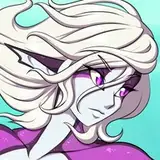
I was extremely lucky because of my degree to have some very close friends in the animation industry, and who were willing to help get this started. Rufus and Bonnie leapt at the chance to work together on what we called Saturday Morning stills of the characters, ones I could use throughout the video both to illustrate the point of what the team wanted to be seen as and to serve as visual aids for other points made concerning their design. It already elevated the feel of the video and became my calling card to get other artists on board, and I’m completely indebted to them.
I’d also made some fans along the way who just wanted to be a part of the project. Some had messaged me years ago and I think they thought I was brushing them off by saying ‘I’ll talk to you later’, not realising I’d legit come back and hire them because I liked their work so much. Grambo (Tyler) was top of my list given how off beat and aggressive his style was, Copy I still had on call from the FF video, and of course Aron was my first choice for the Dexters Lab inspired animation. I’d also met a guy called Cable Comics (Cabtaxi) on Discord who had a style that was, honestly, pretty much everything I wished mine was, so of course set him to work on the hands down best villain stills for the big reveal.
I had a good team of talented people helping whatever happened- but it became pretty apparent that I still needed coverage that I could pay for with what was left of the proceeds. I put out one more call on twitter very late in the process and was floored by the responses. A whole gaggle of artists came out of the woodwork and I signed up a few while keeping an eye on the rest for the future. Tenshi and MBT were invaluable in fleshing out some sequences I had in mind and just knocked it out of the park with their contrasting styles. MBT (Graham) had this fascinating next-level take on storyboarding, really thinking out the texture and nuances that would bring forward John’s performance as Zemo. Tenshi is like a demon, he would draw up stuff and have it finished in like a day after getting assigned and ALWAYS able to hit the target when it came to switching up styles, I couldn’t possibly thank him more.

A few of you might have noticed some of the art is for sequences that aren’t actually in the comic. The rally, for example, never happens, at least not that way. It was an idea I had in mind that was extremely specific to capture a particular emotional beat, and it’s also part of something I want people to consider going forward. I’ve called this the ‘real’ Thunderbolts story, inspired by, of all things, the ‘Real’ Ghostbusters cartoon, which wasn’t ‘real’, was it? It played itself that way to act like the film was the fake story and the cartoon was the actual reality. At first glance it might seem like I’m doing it to contrast with the existence of the film, which is intentional, but I think the ‘real’ of this series is an important thing we’ll be playing with as we continue, looking at the perception of the comic as it continues and how it relates to the true identities of these extremely conflicted characters- as well as my view of what’s actually being said.
So, without saying too much more, do think on that as the series continues.
The Music

A quick word on the music too- this is very much what I always start with.
I try to find what emotionally matches the story and gets me going, even if I can’t necessarily use it in the video due to copyright. Some things I knew I'd be able to get away with, some I had to hope and pray, and some I'll edit to buggery until they stop triggering the system. I knew early on that I wanted The Misfits 'Universal Appeal'- not only because it fit so perfectly, but because it also called back to a video I'd already made on Jem and the Holograms. Really, every track has a couple of meanings, some more obvious than others.
Sometimes I just get really lucky- I sought out things with 'Thunder' in the name very early in searching for the right sounds, and the Thunder Force games fit the bill and kind of established the base sound I was after when it came to scoring their action. Once again, aggressive, but also heavy on electronic sounds and guitars, anything that matched the lightning bolt imagery. The 'Tan Tan Ta Ta Ta Tan' theme was just such a good heroic take and matched the era so of course I had to go with it as the Thunderbolts Motif, and you'll hear it and a few other tracks a couple times throughout.
Still, there was one song I really wanted, which I’d teased all the way since the original trailer years ago, that I actually wasn't sure I'd get. The Stranglers 'No More Heroes' is pretty on the nose, as titles go, but I wanted the aggression it came with, and to present it differently. You can see the song both as a lament and as a bunch of villains celebrating that they finally got what they wanted, which to me really sells that this is a series about Marvel villainy as a whole. Luckily a new service for content creators had been devised where, for a small fee, you can pay to use a library of existing popular songs, and while it’s not completely extensive so far, it did have almost all of The Stranglers output, which was a godsend for this project. I’ve been advocating for something like this for a long time and I’m glad it finally exists for us to use.
I’ve tried to be extremely careful with the tracks from this point regardless. Most of the choices I wanted I got, and I found great backups for the ones I didn’t get, and I’ve been tracking what I can and can’t use well into the later episodes as well. Sometimes I get lucky with a track that doesn’t trigger the system but sometimes I get caught unawares, and I have a lot of methods and backup techniques on standby to make that an easier process than it’s ever been before.
Really, I just hope Lickd uploads all the songs I want in the next month or something.
The Film

I devised this series in 2020, and made some decisions I’ve stuck with since, even after many drafts. However, I was made aware that a film was in production in 2021. I assumed this would take a while to get made, longer than it would take me to make something. Then, in 2022, at D23 (which I attended), they announced the film was now going ahead fairly quickly, revealing the premise and lineup of the team. Both were very different from the original story, but now, I was in full panic mode.
Knowing that the Bolts were always about surprising reveals, I had a suspicion they might still do something related to the comic and scoop my effort to recreate the surprise on a public that might otherwise not know. I’d enjoyed being a focal point for the Fantastic Four in an era where nobody was either talking about them in much depth or when they had no active adaptations on screen, and I’d hoped to recreate that with the Bolts, and now I found myself in slight competition with something that might steal, forgive the pun, my Thunder. Sure, I’m just some Youtube guy, and I wasn’t expecting a million views overnight, but I still anticipated a little sense of cultural conflict there. I didn’t want to look like a lame runner up or copycat of any parallel ideas had in adapting their story- and err, that did kind of happen, in the end.
I had tried to speed up the process and I did get some surprise help on that front- there were some major strikes had in 2023 that delayed their production, originally meant to finish a full year sooner, and gave me way more time to improve what I was doing and focus on getting it complete. I even managed to arrange a trailer that I could put out once the recording was completed- but the writing took so, so long to complete, for every episode, between everything else happening either for what I was trying to make on top of that and in my personal life, that it just became insurmountable. The scripts weren’t done until the end of 2023, the casting and recording dipped well into early 2025, and while I had mostly all the material I needed for episode one in the middle of 2024, the actual process of animating and making the sequences just took so much time, even without major breaks, that I was feeling fairly burnt out. I pushed but I could’t make it to the deadline of the films final date- and accepted my loss and went to see the movie pretty much the day it came out.
Now, I will talk about the movie more elsewhere, but I can say I did like it, and I didn’t feel we were that much in conflict, didn’t make me feel like what I was doing was redundant. Still, I was shocked by just how similar the choices made were in some respects. They did a few other stylistic things I felt I was touching on in my piece- the use of commercialised propaganda for the imagery in the credits, that hit a little close to something I felt I was trying first. There’s another line right at the start of the film that eerily echoed something I’d said at the very end of the video a well. Really though, it was the use of The Sentry that shocked me the most. I really thought nobody else had made the connection I’d made, and then in like 2023 it was pretty much confirmed he was in the movie. I had a feeling the director and I had clearly made some very similar observations and sure enough, when I saw the movie, they’d speed-ran a lot of thoughts I was spending an entire series building up to. Not everything, but a lot of the fundamentals. Talk about parallel thinking.
(At least, if you check my trailers, you can see he was always included.)
I did consider changing my plans, and spoke to friends about it. They all told me no. Stick to my guns, tell the story I intended to tell, don’t change for the film, and I did just that. I didn’t change any of my video as it stood before I saw the film- with one exception. Tenshi had come aboard as an artist late in the game and was able to bring a lot of sequences I wasn’t sure I could ever create to life, including the commercialism sequence. I’d already planned well in advance the images I wanted, one of which I’d drawn up for the trailer, but in asking for the final takes, I changed my plan for Atlas and asked him to create one based on the cereal box in the film. It was my one nod towards them to acknowledge that I felt we were on the same page. I do think the video probably would have done better as the hype for the movie built up, but I’m happy to accept where we are because the video did come out the way I wanted with that extra time spent.
I still think the series going forward has things to say beyond the comic and the movie that I don’t think anyone else has mentioned- the only hope I have is that people accept how I’m presenting Sentry with so much of his story now pretty publicly out there. I’m playing a long game with the character, and even though most of the information was always public knowledge, I felt that I was building to it in a way that a lot of people weren’t prepared for or really didn’t know, and I’m sticking to my choice of presentation. That said, I still have things in my original plan that I can’t really talk about yet that I hope will surprise people. Some things to say about him even the movie hasn’t discussed and that I don’t think fans of comics will expect. So stay tuned.
The Future

The first episode finally being out is crazy to me. I’ve been sitting on this so long wondering if I could even make the version of it in my head real, how much I’d have to compromise, and in the end I got maybe 90% of exactly what I wanted to see on screen, which is an insane statistic for a project like this. It’s an ambition realised purely because it was so clear to me and to see people respond to it the way I hoped is enormous, and totally validates all the beliefs I had about the stories effectiveness for years and years.
And now I have to maintain that.
The second episode is very unlike the first. All the planning, recording and even prep for the style of the video has been completed, which was always ongoing behind episode one even before that was done, but it doesn’t mean I want to just do the same thing exactly the same way again. There’s a few tricks I still want to try and mediums I want to incorporate going forward, and maybe even commission other aspects if possible that can change the nature of the story. I always wanted it to evolve little by little visually as it went on, and I think now that I know my limits it’s easier to plan that.
Narratively it’s also very different in tone. Episode 2 has some big moments but it’s not the clear, almighty concept that was the first episode. It’s much more about exploring who the characters have become in the wake of the incident, given they were really forced into making a choice at the end and not one they now have to completely stick with. Certain characters are still going to have to decide what they want their life to look like, and we’ll explore all of them in much greater depth than we managed with the first, as well as the question of who’s going to lead them now that Zemo’s out of the picture. We cover a lot more content due to the nature of the arc and how much can be condensed from comic jargon into simpler stories, as well as even criticisng a couple of decisions that seemed to veer away from where the series should be headed, as well as praise some of the better decisions made to keep it fresh and exciting.
I think it will also, pretty much as soon as the next episode uploads, be entirely obvious who out of the group is my clear favourite, as really, I feel this is one person’s story above them all.
I want to maintain a lot of secrecy the way I did before- even though the story is out there for anyone to read, and you should, I feel my focus and plans are still worth keeping under wraps to ensure some surprises in how the tale is told, which certainly happened with this episode. I can reveal a few things though. The Sentry will remain an important part of the story going ahead. Zemo isn’t done with, though I’d hesitate to call him a Thunderbolt anymore. Oh, and the mysterious conversation at the very end of the video. That character is a very, very important part of this story. Voiced by the wonderful Tom Schalk, there’s someone I’ve been wanting to talk about for years who will finally get the exploration in video essay form I think he deserves. I hope it won’t take too long before I can say his name, but I think anyone who follows what he’s saying and knows comics can probably figure it out. All you need to know is that he, much like the Thunderbolts, has seen an opportunity that wasn’t there before.
‘Now you can have all the Candy you ever wanted!’
Hopefully, if you liked episode one, you’ll be just as intrigued with the second.
----------------------------
As usual, I’d like to thank all your continued support in making this episode happen. Hopefully the above gives you a little more insight into how these things have come together, but do understand that you guys were a big part of why any of it was completed and why I was able to take it over the finish line. This continues to be the case as we progress into the later episodes- and you can be sure when they’re done I’ll be back with write-ups on those as well.
Til then!
- B
Comments
Thank you for the kind words! Believe it or not I still struggle with trying to put my creative vision out there- at least with things like this the subject is tried and tested, but I am hoping at the end of this maybe I'll get to do something original. Whatever the case, I'm happy to provide some inspiration. Never too late to start a story, just as long as you finish it!
B-Mask
2025-08-10 00:51:38 +0000 UTCB-Mask putting up 2018 LeBron stats. Not only did this episode blow any and all expectations I had out of the water, I’m so excited for the rest of the series. Always love to see behind a creator’s mind and see their decision making process and rationale. Big ups to you man.
Manny Venegas
2025-08-10 00:16:11 +0000 UTCYour insight into the making of this is about as invaluable to me as the first episode itself. You have this incredible knack for threading narratives together in compelling sequence, and that knack shows here as well. Being able to follow your creative process, with the hills and valleys it brought, invigorates me as someone with all of the ambition and none of the output. One of the decisions I found most inspiring was in the way you went about animating scenes. As I go into college sort of aimlessly, the scenario of “Hey, my animation degree taught me things that I can apply here” sparks the will to go down the creative path: Regardless of the money. Eclecticism is a damn fairy, and it sprinkles dust over anything you make. Can’t thank you enough for this B 🍀
Mavis
2025-08-10 00:14:17 +0000 UTC