The Fabled Interview from Nintendo Dream Volume 205
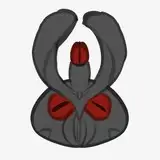
Added 2019-05-23 15:21:18 +0000 UTCHey guys, this is the beta information from Nintendo Dream volume 205 I've been talking about this week. I'll post it to the website in a day or two with an intro to provide context, some pictures, and probably a few typos fixed, but I wanted to let y'all have a look first. Y'all patrons are all thanked following the interview translation, which is how it will appear on the website. Later I'll add some fan art to go along with the betamon descriptions -- specifically, the Hydreigon family, Throh, Sawk, and the miniature ant family. Red Tornadus will also be included, but y'all already saw him in yesterday's Patreon post. Okay guys, enjoy the follow interview.
Tornadus, Thundurus, Landorus: Mr Masuda asked for a Pokemon motif based on Fuujin and Raijin, but the designs weren't completed until late in the games' development. I had a hard time figuring out how gods so closely resembling humans could become Pokemon. Asura statues have a really powerful presence, so I told the designer in charge to make their eyes large and intimidating. At first, Tornadus and Thundurus were designed as red and blue demons, but that was too similar to the designs of Sawk and Throh. As a result, Sawk and Throh's horns were removed and replaced with eyebrows. Landorus wasn't added until later when a change was made during the game's development -- he was designed as the god of land. In their official artwork, Tornadus and Thundurus are facing to the side, while Landorus is more symmetrical and facing forward -- this was done to make Landorus stand out from the other two.
Dr Lava's notes: In Japanese mythology and the Shinto religion, Fujin is the Japanese god of wind, while Raijin is the god of lightning, thunder, and storms. Asuras can be most simply described as Buddhist demigods or titans, pictured below. It seems these figures all served as inspiration for the Forces of Nature trio. Before Landorus was conceived as the third member of the trio, Tornadus and Thundurus were originally designed as red and blue demons -- Thundurus' final design remained blue, so it would stand to reason that Tornadus' original design was red in color. As far as changes in design are concerned, the takeaway here is that in order to differentiate Tornadus and Thundurus from Sawk and Throh, Tornadus was changed from to red green, while Sawk and Throh originally had horns (like Thundurus and Tornadus) but they were removed and replaced with eyebrows.
Mienfoo, Mienshao: The games' planners felt there weren't enough Fighting type Pokemon, so they asked the monster designers to create more, which resulted in the creation of Mienfoo and Mienshao. Since so many of the pre-existing Fighting Pokemon resembled humans, they asked that this time we design animal-based creatures, so we came up with this design inspired by short-tailed weasels. I decided to make these Pokemon in the Kung Fu style since that was something we hadn't done before.
Deino, Zweilous, Hydreigon: Originally, these were designed with aesthetic traits belonging to military tanks, and the pattern that resembles tread marks above Zweilous' legs are leftovers of that early design concept. Initially, the designs weren't really working, so we put them on ice -- but they were later resurrected when orders came down for a powerful three-stage Dragon type. In the latter half of development, there was some discussion about changing them to a color that was underrepresented in the Pokedex. So from the list of colors we were considering, I chose a strong purple. Hydreigon's design is based on the Yamata no Orichi, but when we gave it so many heads it was actually a bit off-putting. So we changed his design, giving him just one head -- but if you see his silhouette, he still has the appearance of possessing many heads. The two heads on Hydreigon's sides are actually just hands, and don't contain any brains of their own.
Dr Lava's notes: Incredibly, the Hydreigon family was originally designed as a family of tank-like dragons. If you'll allow me to briefly speculate, I think it's likely that if these designs had made it into the release versions of Black and White, the Hydreigon family would have been dual-type Dragon and Steel, a typing that even to this day has only ever been exhibited by one Pokemon: Generation 4's Dialga. Sugimori states that the leftover tread marks are still visible on Zweilous' underside, but they're actually much more pronounced on the underside of Hydreigon. It's also interesting that the color purple was chosen later in development -- first, because this tells us that the dragons' original color wasn't purple. Since they had "aesthetic traits belonging to military tanks," green seems like the most likely possibility -- but with the limited information available in this interview, it's impossible to be certain. And the second thing that's interesting about Sugimori's story is that the dragons are only became purple because the color hadn't been used much in the past, and it sounds like the designers had a list of underrepresented colors and they chose "a strong purple," but could have just as easily chosen another seldom-used color, like black for example.
Sugimori says Hydreigon's design is based on the mythological Yamata no Orichi, an 8 headed and 8 tailed Japanese dragon. It seems they experimented with giving Hydreigon more heads but ultimately decided on just one, compromising by giving him two hands that have the appearance of heads. The fact these two pseudo-heads don't have brains of their own raises a strange question -- does one of the brains of the two-headed Zweilous disappear it evolves? Creepy. If you've seen my video about Gold and Silver's cut content, you might have noticed the scrapped baby form of Doduo had three heads, a design choice likely made so it would look like a bird's nest. I didn't delve into this topic in the video, but I'd considered they probably scrapped baby Doduo because of the questions it would raise about losing heads in evolution and the meaning of sentience. But it appears they weren't too bothered about the disappearance of brains when they came up with the Hydreigon family's final design. A lot more could be said on this subject, but you can let me know what you think in the comments below, and I'll move on and continue with the interview.
Golett, Golurk: These were created by a British man who draws and writes many detailed pages about every Pokemon he designs. Mr Umino says the metal bandage on Golett's chest is an intentional part of the design and seals in an uncontrollable power.
Dr Lava's notes: The British designer mentioned is James Turner, the first Westerner to officially design Pokemon for Game Freak. Unfortunately, his designs haven't been very popular with fans -- for Black and White, he was responsible for seven Pokemon: Golett, Golurk, Vullaby, Mandibuzz, Vanillite, Vanillish, and Vanilluxe. As Ken Sugimori repeatedly refers to James Turner only as "a British man" in this interview, I suspect he either doesn't know his name, or doesn't think very highly of him. The Mr Umino mentioned is one of the team of monster designers who worked on Black and White.
Vanillite, Vanillish, Vanilluxe: These were also created by a British man, who wanted to design another fusion evolution like Dugtrio and Magneton. His design concept was that Vanillite is a cup, Vanillish is a cone, and Vanilluxe is a cone with two scoops. The ice on the upper half of their bodies is just covered in snow, they actually have bodies of solid ice underneath. There are designs of them as just ice bodies without any snow, but those designs haven't been released yet.
Dr Lava's notes: The unreleased ice body design of Vanillite mentioned by Sugimori actually actually revealed in an issue of the manga. On February 23, 2019, James Turner tweeted an image of Vanillite with his snow removed, with the caption, "When Vanillite is surprised it sometimes loses its snow covering." When a comment asked if this was canon, Turner confirmed that the snowless Vanillite shown in the manga is based on a drawing of his that is still in the reference sheets, and therefore snowless Vanillite is canon. This would mean snowless Vanillite isn't a beta design, but rather it's a rarely seen state of his final design.
Durant, Heatmor: Both designed by Sugimori. These two are counterparts, with one based on an ant, and the other an anteater. They both can be found on Victory Road. I had a very clear vision of ants that dug themselves a cave and an anteater that came in to prey upon them. For a long time we've wanted to make an ant Pokemon that would be the smallest Pokemon, but this time I focused on the ant's form. Heatmor eats iron, so I added elements of an iron works into its design.
Dr Lava's notes: So apparently Game Freak has long been considering an ant creature that could be the world's smallest Pokemon. Sugimori doesn't specify that art for this miniature ant is actually within their vaults, so it might not be an actual beta Pokemon, but it's certainly an interesting concept.
Tynamo, Eelektrik, Eelektross: This one was designed by Mr Ohmura -- he had an idea that making an eel into a monster would look really powerful, and that idea became a Pokemon. Ohmura said that he once caught a humongous eel in a nearby river and that it was disgusting, but that experience is what inspired his idea for this evolutionary line. The eel he caught actually inspired Eelektrik, who best represents that feeling of strong but disgusting. Then Tynamo was conceived of because we wanted the evolutionary line to reflect how an actual eel physically matures in the real world.
Rufflett, Braviary: Vullaby and Mandibuzz's counterparts. These were designed early on in development by Mr Unnoji. Because the Unova region is based on New York, the idea of a bald eagle immediately came Unnoji's mind, and he used the colors red, white, and blue because of the American flag. He wanted to make a Pokemon that was immediately recognizeable as a bird of prey, so he then added strong, thick legs as well as elements from Native American culture. Unnoji used the Native American aesthetic for Rufflett's wings, but he's always liked chicks with fluffy white heads, so he used that as well.
Vullaby, Mandibuzz: These two were conceived of pretty late in development. When the British man came to us with this design, we already had plenty of birds, but we ended up using it as a counterpart for Rufflett and Braviary. The nest around Vullaby's body come from the bones of other Pokemon, and he grows up inside of them. When Mandibuzz is incubating a Vullaby egg in its nest by sitting on it, it fits together with Vullaby's bones and looks like it's sitting on an upside-down skull.
Foongus, Amoongus: Foongus fools trainers into thinking it's a Pokeball, but no one would make that mistake with Amoongus, so that was included in his name. The black dot at the center of its face is the mouth, which it uses to blow out spores.
Dr Lava's notes: Amoongus' Japanese name is XXX, which includes the character X, meaning "exposed."
Ferroseed, Ferrothorn: These two were created during the latter half of development, after an order came in for a dual-type Grass and Steel Pokemon. Ferroseed and Ferrothorn were designed by the same person as Foongus and Amoongus. The planners proposed the design be something like those seeds that sometimes stick to your clothes. We had the idea that large groups of these Pokemon would stick to rock faces.
Basculin: After realizing we didn't have a relatively typical Water type Pokemon, we designed a fish that could eat you. Basculin is based on a bass because New York is place where you can fish for bass. We made two forms because we felt there was a shortage of fish Pokemon in the Pokedex.
And that wraps up Nintendo Dream volume 205's "Pokemon Origins" feature. Some of this information has been available on websites like Bulbapedia and Serebii for years but without proper sourcing -- which for a while left me with the impression that this information was fake. But here it is. I'm still looking for proper scans of more pages from this issue, as well as scans from all Nintendo Dream issues having to do with beta Pokemon content. I'm also looking to purchase these issues in order to scan them myself, so if you've got a lead on any of this material, please leave a comment below. I need to thank a few people for making this this interview's translation possible. First, much of the credit needs to go to an individual who goes by the username Spidershell, as it was his transcription in its original Japanese back in March 2011 that this translation was based on. Nito, Zelda, and FaeQueenCory were instrumental in tracking down Spidershell's transcription, as well as some of the translation and pictures. Force Fire, an admin on Bulbapedia, also provided me with some crucial links.
I also want to thank Brad Benson, Boreas Bear, Besipeitl, Jacky H, Evan Miller, Elvin Alfonso, Todesspiel, Austin Elliot, KissShot, HelpMePlease, Kenji Castro, Jone, and Justin Stackhouse for supporting both this website and my YouTube channel via Patreon, and especially Kavan Green and Kevin Comiskey who signed up for Patreon support specificially to help hire a translator for this interview. So thanks so much to all you kind people, and if anyone reading this would like to support my efforts to document lost Nintendo content on Patreon, here's the link, and if you're interested in providing scans or fan art to accompany this beta information, please leave a comment below. Cheers everyone.