more at http://quickfound.net/
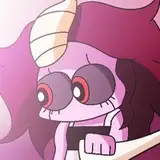
'This drug abuse educational film portrays an animated fantasy based upon the characters in "Alice in Wonderland." The film shows Alice as she toured a strange land where everyone had chosen to use drugs, forcing Alice to ponder whether drugs were the right choice for her. The "Mad Hatter" character represents Lysergic Acid Diethylamide (LSD), the "Dormouse" represents sleeping pills, and the "King of Hearts" represents heroin. Ultimately, Alice concluded that drug abuse is senseless.
Creator: Department of Health, Education, and Welfare. Public Health Service. Alcohol, Drug Abuse, and Mental Health Administration.'
Originally a public domain film from the National Archives, slightly cropped to remove uneven edges, with the aspect ratio corrected, and one-pass brightness-contrast-color correction & mild video noise reduction applied.
The soundtrack was also processed with volume normalization, noise reduction, clipping reduction, and/or equalization (the resulting sound, though not perfect, is far less noisy than the original).
https://unwritten-record.blogs.archives.gov/2013/07/17/the-curious-case-of-curious-alice/
...In Curious Alice (1971), a film intended for eight to ten year olds, our young Alice falls asleep while reading a book. She encounters cigarettes, liquor, and medicines, and realizes that they are all types of drugs. When she sees the “Drink Me” bottle, she understands that it contains something like a drug, yet after a half-second’s consideration, she drinks the entire bottle and enters a fantasy world. In Drug Wonderland, Alice learns about the hard stuff from her new friends the Mad Hatter (LSD), the March Hare (amphetamines), the Dormouse (barbiturates), and the King of Hearts (heroin). The events of Curious Alice play out as an expression of Alice’s drug trip. Unfortunately, the trip is kind of fun and effectively cancels out the film’s anti-drug message.
The psychedelic Monty Python-style animation in Wonderland is one of the best things about Curious Alice. It’s also one of the biggest reasons that the film is an overall misfire. If one listens closely, Alice is saying plenty about why drugs are bad, but the imagery is so mesmerizing that it’s hard to pay attention to the film’s message. Further, the drug users are cartoon characters with no connection to real people or real drug problems. Why take the March Hare’s drug problem seriously when you know that Wile E. Coyote falls off a cliff and is always back for the next gag?
To further confuse the message, Curious Alice somehow has too much and not enough information at the same time. Instead of focusing on situations relevant to children, the film devotes screen time to teaching kids what drugs look like and what they’re called. But really, would the average third-grader understand that the hypodermic needle the King of Hearts is carrying like a scepter isn’t filled with the same stuff as their shots at the doctor’s office? Or that the sugar cube at the Mad Hatter’s tea party is laced with LSD? The finer point of how the drugs differ from every day items is not apparent.
In the conclusion to the film, Alice suffers from nothing but a slight case of pensiveness as a result of her drug-induced adventures in Wonderland. She reaches for her book and then looks into the distance as if contemplating the cause of her bad trip. The film goes to black, so that the final message of Curious Alice seems to be that reading books can lead to scary or confusing situations. That’s assuming a kid takes away anything from the film other than “neat cartoon—when’s recess?”...
Luckily for adults, Curious Alice is a highly entertaining film...