Historical Underwater Habitat Showcase, Part 6: Sealab II and III
Added 2019-01-22 06:08:50 +0000 UTCPardon the lack of a video tonight. There's been a death in the family which has demanded my time and attention. There will be a new video in 3-7 days.
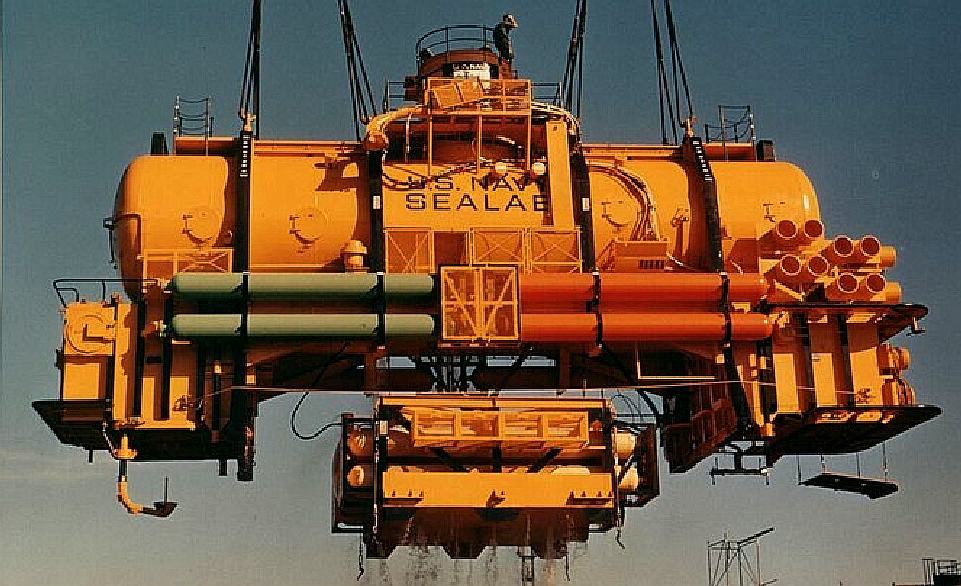
Anyway, why cover two in a single installment? Because Sealab 3 was actually just Sealab 2 with some minor additions and a yellow paint job instead of white (contrary to one of the illustrations). Below you can see the fully upgraded Sealab 3:

There's not much to write about Sealab 3 by itself since the mission was cut short on account of sabotage, which resulted in the tragic death of aquanaut Barry Cannon. More on that later. Below you can see Sealab 2 prior to being upgraded into Sealab 3:
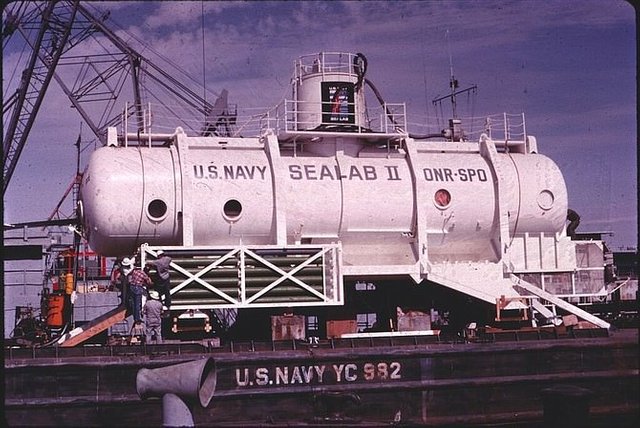
Sealab II, even prior to the upgrade, was an ambitious improvement upon Sealab 1 in every way. All the lessons learned from Sealab 1 about how to make habitats more comfortable for the occupants were implemented, making Sealab 2 vastly more livable.
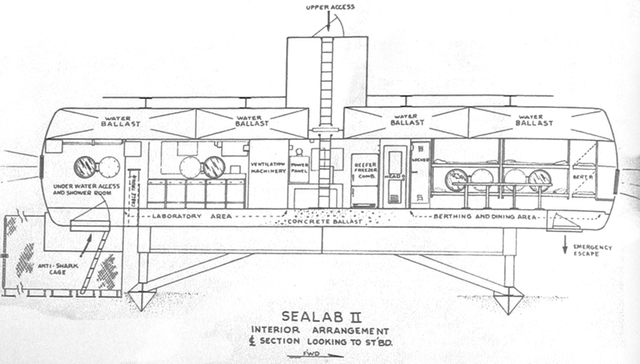
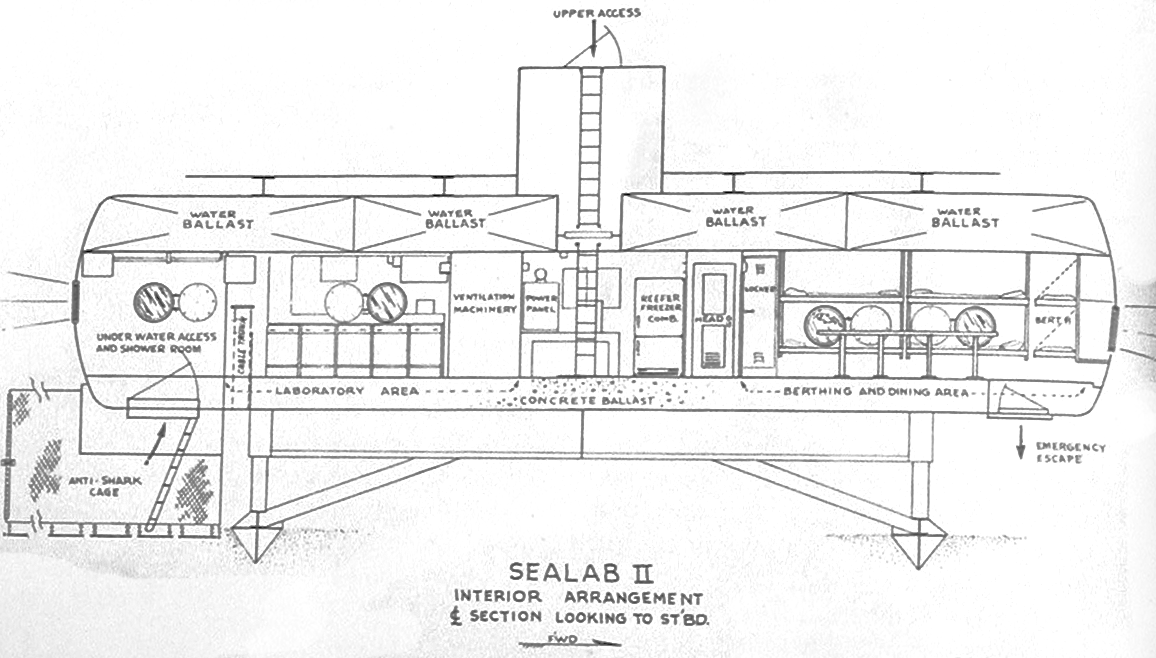
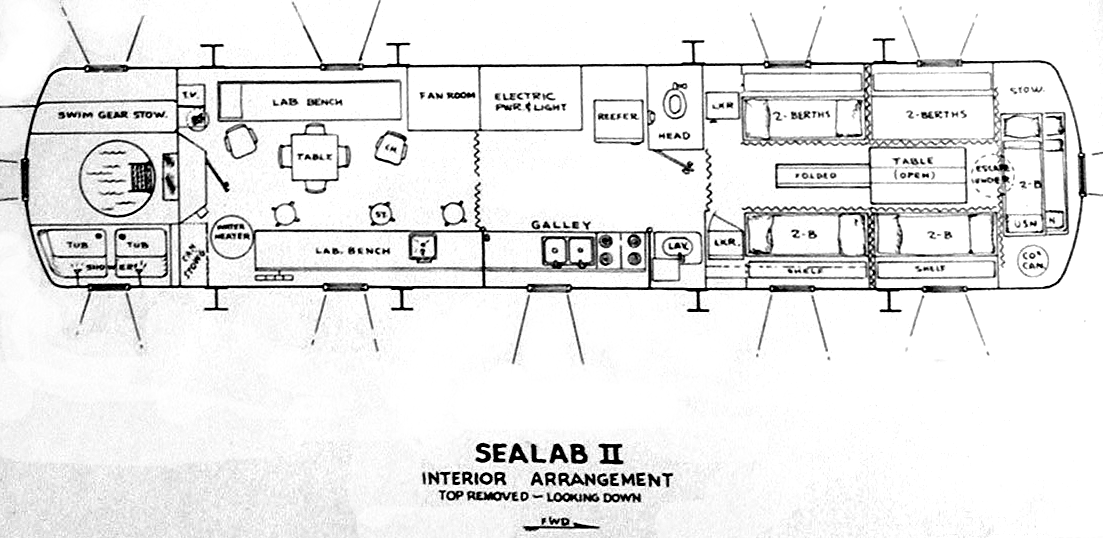
Besides being larger with more windows, the moon pool room (aka "wet porch") was a separate section that could be sealed off from the rest of the habitat to prevent the spread of humid air. That room is also where other "wet activities" like showering or using the toilet took place, which add humidity (and unwanted odors) to the air.
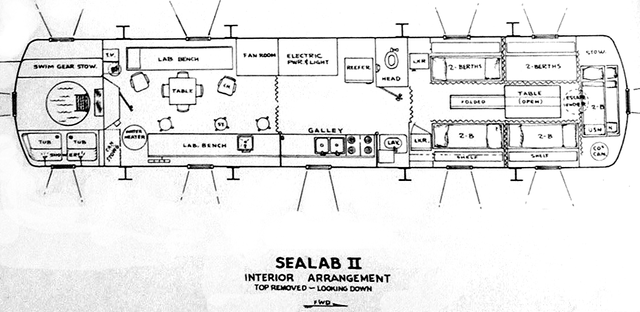
Resembling a water or fuel carrying rail car, Sealab 2 was divided into 4 rooms with expanded amenities which made it the most robust and full featured habitat as of 1965 when it was deployed to a depth of 205 feet. This was later increased to a depth of 610 feet, four years later, as part of the Sealab 3 project.

The principal difference between Sealab 2 and 3 was the addition of the two box shaped rooms at either end. These rooms did not need to be a pressure resistant shape like the main hull as they would not be used to decompress in, and could be sealed off from the main hull by hatches. This is quite like the box shaped wet room at the far end of the Aquarius Reef Base, which also only ever operates in ambient pressure mode.

This often confuses people who don't understand how air and water pressure work, imagining water simply crushes whatever you put into it. Something will be crushed only if the density is enough lower than the surrounding sea water. If the air inside a structure is the same pressure as the outside water, there is no differential. The only stress on that structure is the upward force of buoyancy.

Sealab 2 and 3 were not firmly mounted to ballast trays like most habitats of the day, but suspended by cables from a cluster of weights and backup compressed air and helium storage tanks below it. It floated, restrained by those cables, like an underwater metal parade balloon.

This was not as much of an issue for Sealab 2/3 as it was for Hydrolab, because of the much greater depth. Below around 200 feet the sea is much more calm and still. All influence from the surface has diminished to nothing by that depth. Even if a hurricane passed overhead, they would have felt nothing given that Sealab III was three times as deep as that limit.

George F. Bond, aka "Poppa Topside" once again oversaw the mission. It consisted of more of the same, except for an exercise wherein aquanauts constructed an undersea shelter on the seafloor. This was unprecedented. Before, all habitats had been sunk into place from the surface.

This time, they instead assembled the smaller habitat piece by piece, sealed it while still flooded with water, then filled up the interior with compressed air which forced all of the sea water out. It was restrained not by weights, but uniquely by pilings driven firmly into the sea floor:

This marked the first time a completed air filled undersea shelter had been assembled on the sea floor, rather than prefabricated on land and then sunk. It signaled the intention to move towards a future in which larger, more ambitious undersea complexes could be constructed underwater.
Enjoy these two documentaries produced by the US Navy recounting both the Sealab 2 and Sealab 3 projects. They include rare footage of the secondary habitat construction process, as well as their pioneering work with marine mammals:
https://www.youtube.com/watch?v=pxcUOUEURM0
https://www.youtube.com/watch?v=WEyE2NGJPy8
Unfortunately, due to sabotage the source of which was never discovered, one of the aquanauts drowned. It was later found that his rebreather had been tampered with. This led to the end of the Navy's undersea habitat projects, at least officially.
It's hard to believe they would let sabotage (possibly Soviet) totally put a stop to these efforts, but if they continued in secret in order to better protect the lives of participants, the public would not be informed.
That's all for this time. Stay tuned for subsequent installments!