Gemini 2.0 Flash is Google's latest AI image editor that lets you transform images using natural language. After extensive testing, I've discovered what it's great at, where it struggles, and how to work around its limitations.
Use Gemini 2.0 Flash here: aistudio.google.com

Colorizing Photos: Breathes life into black & white images with remarkable accuracy
2D to 3D Conversions: Transforms flat illustrations into dimensional renders
Adding/Removing Objects: Seamlessly modifies image elements (clothing, backgrounds, text, and more)
Style Transfers: Applies artistic styles across images
Generate Story Scenes: Create a series of images based on story lines


Copyrighted Material Restrictions
Prompt Complexity Challenges
Image Size & Quality Issues
Gemini has built-in safeguards that restrict editing recognizable characters or figures. Here's how to work around it:
Problem: "Make this Naruto character into a 3D render" ❌
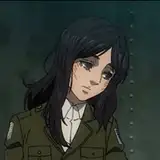
Solution: "Make this 2D drawing into a highly detailed 3D render" ✅
Tip: Avoid specific character names or franchises. Use "2D drawing" instead of "character" for better results.

Gemini performs best with focused commands. When you give multiple instructions at once, it typically only follows one well.
Problem: "Colorize this photo, remove the background, and add mountains behind" ❌
Solution: "Colorize this black and white photo while preserving details" ✅
Tip: Break complex edits into sequential steps. Do one clear instruction at a time, then build upon those results.
Large images are automatically compressed by Google, leading to quality loss:
Large file sizes cause Google to compress your image
Multiple iterations on compressed images compound quality problems
Each edit cycle potentially degrades the result
Tip: Start with moderate-sized images (under 2MB). Save a copy after each successful edit to preserve quality along the way.
Advanced Techniques That Actually Work
Start with clear action verbs: "Transform," "Convert," "Enhance"
Specify exactly what to modify: "the background," "the lighting"
Describe the desired outcome: "into a sunset beach scene with warm orange tones"
Include style references: "with photorealistic details," "in watercolor style"
When converting stylized characters from 2D to 3D:
Avoid mentioning specific franchise names
Use descriptive terms instead of proper nouns
Focus on visual elements rather than character identity
Example: "Convert this 2D illustration into a realistic 3D render with photorealistic textures"
For best results when making several modifications:
Start with major structural changes (background elements, composition)
Move to style modifications (artistic style, lighting)
End with fine details and refinements
Save each version separately
Tip: Limit the total number of iterations on a single image to preserve quality.
Sample Prompts That Work Like Magic
 "Colorize this black and white photo with natural, historically accurate colors"

"Convert this photograph into a watercolor painting with visible brush strokes"
"Transform this portrait into an oil painting in Renaissance style"
"Transform this photo into a line art"

"Transform this 2D drawing into a detailed 3D render with realistic texturing"
"Convert this simple sketch into a fully rendered illustration with detailed shading"
Final Thoughts
Gemini 2.0 Flash is powerful but has its quirks. Understanding its limitations and using these workarounds will help you achieve impressive results without frustration. The key is keeping your prompts simple, avoiding copyright triggers, and building complex edits step by step.
Happy editing!
- Nate Dwarika from Black Mixture