The Early 00s and the Age of the GTA Knockoff
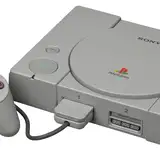
Added 2021-11-10 03:01:01 +0000 UTCHey let's shoot for some synergy, the PS2 Grand Theft Auto games are being remastered/have recently been remastered as of when this goes up. It's hard to describe how singular these games were in defining the way that the PS2 and by extension the entire industry would be going forward. Open world as a design paradigm was popularized almost singlehandedly by Grand Theft Auto 3. That said it'd be silly to just talk about those games, plenty of people have talked about them, people with more nuance and experience, people with ideas of how to contextualize their successes and failings. I'll take a crack at that some day but for now what I care about is talking about their direct influence.
GTA3 didn't just give rise to open-world games in the true sense though. It gave rise to knock-offs, games that played at its style of play too closely to really be called anything but clones. The obvious ones were the ones put out by big name companies like the damnable Activision. You had the games that rode the coattails of the organized crime drenched aesthetic a la "The Getaway". You had games that were essentially taking the time honored tradition of shoving two popular games of their era together and hoping the resultant blend sold. Last but not least you had existing franchises with surface similarities that retooled themselves to function more like GTA. The game design of Grand Theft Auto became an odd sort of gravity well that few games could reasonably avoid responding to. Publishers were overtly hungry to have a piece of the action and while there was plenty of design space yet to be explored, most of them just wanted to have GTA.
So let's examine that list. Activision's low-quality clone was "True Crime: Streets of L.A". This game almost perfectly characterizes the spirit of the GTA knockoff. True Crime is like the exact pitch document you submit to a publisher to convince them that you've got the solution to make GTA but BIGGER. From every corner it is clear that an ungodly sum of money was spent on it. It had a completely unmanageably large map with almost nothing in it except for Dogg Bones to find which existed only to unlock a mission where you played as Snoop Dogg, entirely unrelated to the main story. Aside from the giant map it clearly has ambitions to fix the clunky controls that dogged the PS2 GTA games. It has you playing as a cop which tragically meant it was more palatable to the masses of the era since you were a "good guy" now. It had a branching plot and multiple endings. It was not based in a fictionalized city which gave it an instant sort of "realism" buzz. Then it came out and it instantly becomes clear how hard it is to finesse these kinds of things. GTA's controls were so weird because it was combining a ton of gameplay types into a hollistic game, True Crime doesn't really attempt this, fist fights feel disconnected from gun fights feel disconnected from free roaming both in controls and mission structure. By being segmented in this fashion, even though all the elements functionally are at least a little bit better than their GTA counterparts, they don't feel like a singular whole, they're just a bunch of modes. It no longer feels like anything can happen because if a fistfight was going to happen or a gun battle the design would have to shift. The benefits of Liberty City from GTA3 not actually being New York despite very obviously being New York are immediately apparent because Liberty City is a compact city with the vibe of New York, and L.A. in True Crime is a giant sprawling map the hardware can't afford to populate. The technical hangups mean that despite being laid out like LA, it feels nothing like LA. True Crime has to build missions around a map that was built on GPS data and which can't meaningfully deviate from LA's actual layout whereas Liberty City was designed to have missions done in it. The branching mission structure would be unwieldy to actually implement if it was done the way you'd hope when you heard the concept so the game just reads your Good Cop/Bad Cop meter in a few of the later chapters and has a different final chapter depending on what it detects, this also means the bad path is multiple chapters shorter and the game isn't terribly long to begin with. It all combines to make a game that wasn't bad per se aside from the obvious parts, but sounds way more interesting than it is.
That's kind of a recurring theme, the zeitgeist around GTA was so strong that there was honestly a lot of hope for how other games could improve on them, but for a good few years most games didn't seem to understand how an open world action game came together, so they'd crib bits of them. Sometimes it'd just be a thematic debt. The Getaway, directed by the noted bastard Brendan McNamara (I have many heated words about this man. Executives, don't give this guy money. Not the actor that google first brings up, don't know anything about him.) The Getaway by all accounts entered development long before GTA3 came out, it clearly owes a ton of thematic debt to "Snatch" and "Lock, Stock and Two Smoking Barrels" but its final incarnation was clearly given so much money because Sony wanted its own GTA in case things went south. This stands in the proud tradition of the cancelled "Jalapeno Harry" for the PS1. Much like that project the internal Sony production was heavy on trying to be a technical showcase and never really came together. The Getaway is like a textbook study in overscoping. For the time its 16 square kilometer map modeled lovingly after London is gigantic. The graphics are impressive and detailed. None of it means anything though because the game just isn't very fun, but more offensively it's not even using half that scope. Game design wise it's a strictly linear game that opens up a free roam mode only once the entire game is finished. Impressive as it is on a technical level there's just no reason to have done it. On some level I find this kind of sheer wastefulness insulting, people could have saved time in their precious lives, jobs could have been saved if this wasn't such a bloated disaster. Multiple other UK Sony studios got axed with the intention of pouring more money into this thing, and for what? A mediocre shooter that so desperately wants to ape movies they refused to give it any indicators of how much ammo the player had in their gun. The technical prowess is impressive but it's done so artlessly that to look at it now it's aged even more poorly than the GTA games that it owes so much to, games which were known for not being lookers at the time. The Getaway has a few interesting ideas at play but honestly every piece of information I have heard about its development leaves such a bitter taste in my mouth I kinda don't even want to talk about what it may have done well. The same mistakes made here would largely be repeated but over a longer and more expensive production with Rockstar's L.A. Noire, once again helmed by Brendan McNamara. Please do not give this man money he keeps doing this.
Aside from the blatant knockoffs and the thematic debts/knockoffs it wouldn't be covering the full spectrum of how omnipresent GTA's design language was in the early 00s if I didn't cover something that decided that GTA was popular and something else was popular so slamming the two together would inevitably produce something popular. Midway kindly provided a perfect example of this with 2003's essentially totally forgotten PS2 game Roadkill. Roadkill is GTA meets Twisted Metal, there is no further need to describe that if you know what both games are. I'll take the liberty of assuming you know what GTA is but since Twisted Metal has long since fallen out of style theoretically it may merit some explanation. Twisted Metal is a demolition derby with machine guns and a 90s idea of edgy. There you're done. I can see where the impetus to combine these kinds of games would have come from. Both share a sense of being extremely juvenile in their tone. A love of devil may care edginess of the time. They both are primarily about contriving excuses for big car chases and shootouts. I think though that the problem of Roadkill is summed up perfectly by something a friend of mine said while I was showing it to them. They asked "do you ever get to drive another car in this?" In Roadkill you're not actually given any out of car options, you can only change cars at garages. A lot of the thrill of improvisation is lost when you just have the one car that you can't scramble to ditch in favor of something more immediately useful. If a firefight is going south in Roadkill you have to find a repair icon and then keep up the fight. This is exactly how Twisted Metal and its ilk worked, but those games were maybe 90 minutes long and premised on a very arcadey structure that the 3D GTAs simply don't have. Twisted Metal where your car doesn't have much character and GTA where you're not able to swap cars very easily are both missing a core key to what makes them interesting. The actual mechanics of combining these two ideas blunts what makes either work. Roadkill isn't horrible but the amalgamation could best be described as unspectacular even if you gel well with the very of the time art and can ignore an over the top degree of pointed yet casual misogyny and other grossness that tends to pervade this kind of game from this era.
The GTA gravity well wasn't just in how it affected new games, it also was in how it warped other games to the point of near unrecognizability. Case in point, a rival series that skewed closer to GTA for a number of installments in the 00s, Driver. Driver started as something of a sleeper hit on the original PlayStation, a game bathed in a love of 70s cop flicks with bombastic car chases. Even at the time it was polarizing for its frankly ludicrous difficulty but it was known for large semi-open city maps and impressive graphics for the platform. Driver's name kind of highlights a key differentiation point though, Driver is a driving game first and foremost. In the original Driver there simply isn't a way to get out of your car at all, each mission determines what car you'll be in and you'll just have to deal with it. Driver 2 gave you the option to get out of your car but this really was used almost exclusively for getting another one. There's no "action" in going on-foot. While these games had large open maps they were also strictly linear outside a separate free ride mode. After GTA3 though the franchise warped. Now it had to be more like GTA despite GTA having taken some inspiration from Driver itself (a fact 3 acknowledges when it tasks you with killing a character named after Driver's protagonist who is labelled as "more or less useless outside of his car"). Driv3r (pronounced Driver 3 despite how it's spelled) is self consciously much more an attempt to ape GTA. Suddenly protagonist Tanner isn't just a driver, now there are shootouts and collectibles and just generally a much more Grand Theft Auto esque mission design sensibility. It's hard to discuss this game without discussing how much it was infamously rushed out far too early and quite buggy on release, but developer Reflections preference for extremely hard mission design honestly probably would have tanked the chance for it to have ever reached GTA's level of success. The game's discouragement of actively causing mayhem was also likely going to kill its chance to steal that spotlight. The series never really recovered and seems to have been iced after limping to 2011's Driver: San Francisco.
There are a lot of games I'm not talking about, I could probably double the length of this essay just by talking about other companies attempts to use film licenses to take the crown of biggest open world action game on the market. I feel like I probably will write about EA's the Godfather games or Vivendi Universal's Scarface game eventually but more likely in a retrospective on the mid-late 00s trend of basing games off movies that had come out decades previous, which kind of functioned as the apotheosis of companies really betting on movie licenses for high budget console games. I didn't really have a lesson to take away from this so much as I wanted to just give a snapshot of the omnipresence of a design trend. Every era has its square peg uses of design but I find this one fascinating because a lot of these ideas can work but the desire to make something to take on GTA stunted the growth of the open world action archetype. Naturally that stunting didn't hurt things in the long term but it's fascinating to engage with retrospectively. There were so many right ways to do this but since only one right way had been demonstrated, many of the others weren't attempted until years later.