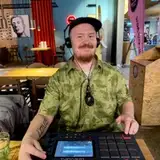
It’s my 41st birthday today, so here’s 41 tips and thoughts from a 41-year-old.
I wanted to do a list of thoughts and tips, looking back at what I’ve done and what I do – some successes and failures (i.e., things you learn from).
My expertise on all things music and audio is, luckily enough, my living, and sometimes it’s interesting to have an introspective look at things. It is OK sometimes to recognise where you’ve succeeded but also where you could’ve done better and acknowledge some possible failures or things that you have learned from.
What I do is a lifetime deal: 2022 will mark a 30-year milestone of music for me, counting from the year when I started making music, and I’ve been on that road ever since.
These days 100% of my living comes from my expertise relating to music and audio stuff.
This will be a mixed bag of stuff in no particular order: making music, making a living from your art and skills, how to conduct your business, creativity, productivity, motivation, how to conduct yourself as an artist, etc. I’ll wildly hop from a topic or a field to another with no actual transition. The connecting thread here is stuff I do and have done. I admit there’ll be some overlapping and possibly some repetition.
I’m trying to keep all points short, while some would warrant a full, juicy post of its own. I’ll force myself to keep every point brief (I know very long articles are hard to digest, no matter how good they are).
I’ll lash things out in no particular order instead of honing this for days (protip number one could actually be along the lines of “Don’t always use more time on a task than is actually necessary!”)
Sheesh, I already feel like I’m rambling – ain’t got time to waste, so here we go!
In terms of knowing how “to do stuff proper” there’s no better person to learn from than an actual professional, whether it be getting music done, mixing music, being productive, growing a business, etc.
Many pros these days offer assistance/services/guidance (some offer direct contact, some run Patreon/Yotube etc.), but of course many don’t, and sure enough in the artist field especially, there’s a lot of secretive operators not willing to share anything.
Get in touch with those that can teach you. Watch inspirational Youtube videos by artists, engineers, etc. Absorb as much as you can: it’ll teach you and also inspire you.
Find interviews of those who have been doing things for a long time, and there’s a lot to learn from their truth, and their words can often spark some new motivation in you.
E.g., recently, I’ve been digging up interviews of some artists that have been making their living by making music for 2-3 decades, and there’s plenty of truth that they’re dropping, and they’re also often open about admitting some of their career mistakes etc.
(I, for one, help music heads with literally everything I know and I love doing it, and that is a big part of my career: mixing and mastering music, offering critique on song content and mixing, making breakbeats, and whatnot, so get in touch if you need assistance with pretty much anything relating to music)
Find your strengths and listen to your heart, and these will steer you in the right direction.
If you’ve been making many different styles of music, and let’s say your house releases seem to go somewhere, that might be indication that that’s where some of your strength lies, so work on that a bit more.
Or let’s say you’ve been enjoying teaching what you’re good at (art, yoga, music, etc.): even if it’s a side hustle or a hobby, don’t ignore it: it could go a long way if you started giving it more time and focus.
Basically where you keep planting your seeds is where you will see growth over time. Life will give you small hints and pointing you to some roadsigns on your path, so follow them.
E.g., to me, realizing that I’m good at mixing music was a decent realization, and following that lead in good things and my living (the move wasn’t easy or quick, but worth it).
I graduated from the university in 2009 (I majored in English and got an official English teacher’s degree on the side and did some translation studies on the side) but I never had the passion to follow that road (one reason being the teacher life made my creative flower wither). I was doing a bit of teaching here and there for some time, but at one point, for whatever reason, I wasn’t getting any more teaching bookings while I would’ve wanted and needed them, but at the same time, my mastering bookings started to happen properly. Coincidence? I think not. A sign on the road to follow? You bet.
You must understand that all good things take time. No thing that is rewarding and fulfilling comes easy. Or if it does, some serious groundwork relating to it has been done.
E.g., all artists that you see who are doing OK with what they do (earning from what they do, gaining some exposure, selling their stuff etc.) have been doing it for a while. This even applies to those who are small operators: even they have been doing it for a while. Most artists you see out there making some moves have dedicated themselves to their craft for years: anywhere from 5 years to 20+ years. So don’t get discouraged – give it time. Even some new artists whose first releases you’ve just heard have often been doing it for at least five years.
In the world of artists, entrepreneurs, freelancers, Youtubers, etc., most of the time it’s a marathon and not a sprint that gains you something. Not even a good quick sprint (a release on a good label, one big client job, lots of plays for one song/video etc.) guarantees you long-term success, while being patient and stubborn and sticking to what you do kind of does. Remember this mindstate and philosophy early on if you want to advance.
Won’t put the name out there, but it’s been nothing short of crazy seeing a client I’ve been mixing and mastering the longest for (ca. around 60+ songs over the years) become a big artist that travels worldwide doing DJ gigs and releases music on big labels – and when he started, he was a full-time accountant, and all his music stuff was small stuff he was doing for fun. Persistence goes a long way.
Do art from the heart and stay stubborn. When you do this, you’ll make it for yourself first and foremost. And when you do that, you can be a total buddha with your art: once you’re happy with it, no praise or criticism will shake you, and no success or hardships will throw you off your path.
Every single artist making at least a little bit of living from what they are good at is a stubborn person with a burning passion inside of them. This, in the end, allows them to “make it”.
Ignore them. They only serve means for a popularity contest. And if you’re not in it for popularity, stats shouldn’t mean much to you – they can be very discouraging at worst. I could name several great full-time artists who have been making it for 2-3 decades, fully making their living by doing what they do, whose stats on socials are super low – and some are not there at all!
Work for respect, not for attention
These days especially, the modern media and its social tools are built for popularity and attention, while there’s nothing out there to measure respect. Attention can be gained quickly, while respect takes years. After years of hard work, no-one will take respect away from you, while attention can wane overnight. Don’t mix these two, and keep asking yourself which one you’re working for.
In the music scene/world, you have to earn your stripes. You need to climb that ladder to earn that respect. There’s literally no shortcut to that. You need to put in work to cement your position, and that’ll take years.
This is why music makes some drop out: it does take time and that good old hard work. It’s not a game for the impatient ones looking for overnight success.
Respect those who have been doing it longer than you and put in the work and stay in your own lane.
In early 2000, I started making DNB as my main focus, and I really started putting time on drums. It took a lot of time and effort (often still does), especially as back then with my tools (old sampler and floppies), it took way more work and time, but it was worth it, and if you’ve heard my D&B, you may know what I mean.
Some of my early stuff was too concentrated on drums, and hence maybe a bit boring, but being a bit obsessed with drums for a while helped me to become good at that. Sometimes having a burning passion for one thing can help, and it can even become your “thing”.
You can learn a lot from yourself and about yourself by doing your thing regularly.
For example, at the moment of writing this, I have a good flow with making music, and some of my last songs or at least some sections in them are a bit different from my “norm”, and when you do a lot of art, you tend to try out different things – whereas if you only do things on a Sunday, you may stick to your comfort zone to keep it “nice” and comfortable.
Making a lot of music/art makes you explore your own creativity, and you’ll end up exploring new paths.
What it’ll also give you is your own style. That you cannot buy or learn online: your own style will take quite a bit of work, and that takes time, but that’ll be such a dope thing that you can be proud of.
This is relating to the previous point. If you never challenge yourself musically, you will never evolve. If you always only do what you feel you’re good at and what’s easy for you, chances are your output won’t be very interesting in terms of variation. Some will love it, some won’t give your art a whole lot of chance as they’ll find all of it boring.
Example: if you always make abstract music with little melodic content, try making something that has some melodic content for a change: add some chords, strings, or even a piano – and do it in a style that supports your style – and you might see your inspiration enjoy a boost and you’ll find some new paths to travel.
I just read an interview with Dego McFarlane (of Tek 9 for example) and he said he doesn’t have a fixed order in his workflow when creating music, as that leads to formulas. I feel this is good and once again supports variety in your music and keeps it interesting. Habits die hard and they don’t always work in your favor.
When I had the period of always starting with drums, it made my music more drum-centered, naturally, but if I start with melodic content, the song always ends up more melodic.
This is a big load of bullshit from people who cannot mix and/or produce well. It's almost like saying "Those running shoes will make you lose less weight than some other shoes". I can only imagine how bad this is for those who haven’t been music for very long and who cannot mix well.
A bad carpenter will always blame his tools. The most common DAW is see blamed, still, is Ableton Live, for whatever reason; I think it’s one of those things where you see something for a long enough time and you start to repeat it (just like “A premaster should peak around -6 dB” which you always see people say when someone asks for a suitable premaster level, yet you don’t find one person to explain it).
I’ve seen a 60+ page thread on DAW sound superiority on Gearslutz with not one audio example. Take it from me: if your DAW sounds bad, you can only blame yourself and you gotta work on your mixing and production (and I can help you with that if need be).
And hey, to add some weight here: I do 100% of my mixing and mastering work inside Ableton Live. I handle hundreds of songs per year to a global client base, and not one person says it doesn’t sound good. Let this be your takeaway.
You can easily test this: run an audio file out of DAW A and then DAW B.
Insert them both on audio tracks on a DAW, and invert the polarity of one of them, and if you get full silence, it means they sound exactly the same.
Learn one DAW well, and just get some music done. While…
…if they inspire you. The human mind gets bored easily and it benefits from a change. It’s OK to use different tools/DAWs if it helps you make more music. But if it all slows you down because you spend time on learning them, drop it. If you’re thinking of getting a new DAW just because your fave producer is endorsing it, don’t do it.
Remember that…
…and not your tools. Sure enough you’ll see pics of big studios and they look good, and they’ll help you acquire some attention, but remember the respect aspect – they won’t help you with that.
However, as an art creator, do remember that it’s 0.1% of people, if that, that like what you do because of whatever you are using to make what you make.
Gearlust and all that can be fine if it drives your creativity, but at the end of the day, absolutely no-one (other than nerds and some like-minded people) will care what you’re using. Cool gear looks cool in pics but will take you nowhere as an artist per se, and it certainly won’t help you sell music. Musical tools are only that: tools. The moment your music becomes a file that people can listen to, the tools lose their meaning.
…other than whatever makes you make some! I wanted to expand on the the topic of having lots of tools, because I do admit I have several samplers, but I have them for reasons having to do with 1) sound 2) workflow and 3) change. And somewhere there is a bit of a collector angle, too, but still, my main goal is to express myself as an artist and create as much of the end product as possible – not to own tools for the sake of owning tools. I have zero pride about owning some sh*t while I do have pride about having created a nice discography!
So, I don’t claim to know or master one right way of making music and I don’t always start with the same sampler or software – that’s the point here. Also, what works for one may not work for you, so you need to find out what works for you the best, and sure enough, along the years, I’ve tried many ways, and that’s important; that’s my main point.
With buying gear, novelty only goes so far but…
In an Aphex Twin interview he says, “I think I HAVE to be learning something when making tracks, even if it’s something very small. If there’s no learning involved, I wouldn’t get excited enough to do anything.”
So this is where novelty can help, whether it be a new piece of gear, a new plugin, a new technique etc. I find this is very effective, and often leads to ideas, and it’s ideas that songs start with. For example you have a delay plugin you bought some time ago, but you haven’t learned it fully. Start learning it, create a cool loop using it, and hey, soon you’ll have an idea you like. This is how it often works for me.
In all honesty, I pretty much never sit down and think I need to make a song. I’d find that quite intimidating. I always “dabble with stuff” and that leads to ideas, and sure enough it’s those ideas that get me all stoked to try and build a song around it.
With Ableton Live, I save lots of “clips” in the User Lib Clips folder (often it’s chords, bass sounds etc) and go thru the Clips folder content later on and see what I like.
To be able to make songs, you need to be able to have fun and create ideas. What’s the basis of this?
So you see that trying out new things may lead into ideas, and dabbling with stuff definitely leads into ideas. But what makes you dabble with stuff? Motivation. It’s the driving force beneath the surface. You need to have that motivation, or else you won’t be working towards the building blocks you need for songs.
Ask yourself often enough, “Is what I’m doing right now taking me closer to my goal?” and you may find yourself dabbling with stuff, and then you’ll get songs. If you lose the motivation, you’ll lose the hunger.
“How?” you may ask. Try to imagine your future horizon - how should it look? Ask yourself the classic question of where you’d like to be in one year from now (in terms of discography/releases etc) and you may find yourself giving your DAW or music gear more time instead of that Playstation. Ask yourself something along the lines of “If I saw my past year as a recorded video, would I be happy seeing myself do what I’ve done?” and that may work as a motivational nudge: it’s never too late to start giving your craft more love.
Set goals for yourself. I admit, I get the least stuff done when I have no goals in terms of release format etc., but when I get the idea to do an EP, that, immediately, is an energy spark, and I start getting thoughts like it’ll need this track and that style track etc. I’ll also add that while goals are important, stress-free “dabbling” is equally important.
People’s lives follow different paths. Things happen at different times. Life is no math where you can predict or prove an equation to success by looking at how and when it happened to someone else. Comparing yourself to others is a surefire path to misery (been there way, way too many times until I finally let go of all of that, and it was massively liberating). The sooner you stop comparing and start fully focusing on what you do, the better and happier you’ll do it.
It may sound funny, but I guarantee it works. Once you reach a decent drive, it’ll feed itself. Don’t mess with a 100 loops: start finishing songs, as that’s an important skillset of its own. It’s like a plant you’ll water and it’ll start to grow. I promise. I cannot explain it better than this, but simply, finishing songs does promote finishing even more songs (while the opposite is playing with loops and not putting in the work and leaving the comfort zone, all of which may contribute a heavy feeling of “I can’t get anything done”).
It’ll wear it out for you and make you lose perspective, Even some promising stuff will “wear out” over time and you start getting too bored with it. Especially with music, looping stuff while not doing anything to it can be a real killer of the novelty that’s your best friend in getting the song forward. Ideally, only work on your art when you enough energy for it. Sure enough, after a full workday, finding energy for your craft may feel heavy – and I know this all too well, trust me – but then again, working on things in small, effective sessions will take things forward.
There, I said it. And I mean it. There's many things in life that are about “delayed gratification”, and it takes a certain personality to be able to make it.
Someone once said something along the lines of “All artists want to have that finished art, but they wouldn’t always like to work for it”. I fully agree. It’s like going out to exercise when you’re a bit tired and the weather sucks: you’d want the benefit, but not the work it takes.
There are moments when I hate it or at least dislike it.
Dabbling with stuff in a DAW is fun, while keeping up a coherent, productive career, running the big picture always isn’t.
An example from last weekend: I’ve been sending songs to a great label, trying to get my EP done. There was a song that took me a while and once I sent it, I felt, “Effing finally, and that’s a wrap”. Then, I got some suggestions for changes. I hate it, while I can totally appreciate how other people feel about a song. So, of course I wanted to make the changes as well as I could. Had planned on having the Saturday as a day of doing nothing, but I spent the first four hours glued to my chair, making those changes. Not enjoyable, but takes me closer to where the music should be so it can be released. Today, I’ll be working on a better intro for a song I’m already sick of, so it can be released and played by DJs.
I admit there are times when I’d just love to be spending hours and hours on Playstation fun, but on a deeper level, I want something more: to advance my career.
Sheesh, often times finishing a song that’s maybe 65% done is the toughest damn thing. It’s then that I’d often much rather give my Playstation some love and it takes that actual desire that makes you work on the song when you rrrreally don’t want to, and the novelty and fun aspect is fully gone. But you have to accept it that being a person that finishes stuff means that you need to be ready to deal with that non-fun part of it. How much do you want it? Ask yourself that often enough.
This is for myself especially. I make most of my living doing mixing and mastering for clients, and I make my music in the very same space. It’s paramount that I go out after the workday if I want to switch on my creative brain after work. Sometimes it can be tough (weather etc.) but it works every time. I’ve definitely heard of artists saying they get bored when they sit inside all day in the vicinity of their music gear while they’d like to make music.
Go out and come back refreshed.
Do your own thing.
I’ve always, always done just that. I have not done one song during my career that’d follow the then current trends, and I won’t do that. I haven’t made one song to please anyone other than myself either. I’m glad to say my discography doesn’t have much music that’d sound dated in a “That style went out” sense as I never followed trends.
Also, don’t listen to your fans too much. If you make a song that gets popular, you know people will be expecting that from you, and you will hear about it. Repeating that can be a mistake. Your fans will always be behind where you are musically anyway.
Stick to your guns, work on your progress, and that’s what people will notice. See Aphex Twin for example.
This is one of the things I’d go tell my younger self if I had a time machine and I could.
My main thing for sure is DNB/jungle, and I’ve learned that that is what people love and possibly expect the most: it gets the best reactions. Now don’t get me wrong: I love doing it, and always will, but I’d love to go back with a time machine and do a bit more this and that (e.g., house) earlier on so the people following me would’ve learned early on that I keep it varied and they wouldn’t place me in a mould.
There was once this pretty well-known label in the DNB world that wanted me to have a fresh start, but under a different name, as they felt Fanu was too much about DNB to many. That project never went too far, possibly as I always felt a bit crap about having to change the name for that project.
I’ve been “fixing” this being-in-a-mould situation later on for sure, but I wish I had kept my output more colorful earlier.
If you make music and seem to be faced with question, “Should I stick to this style or keep it varied?” let producers like Luke Vibert answer that question with their discography. Amazing, varied discography, with a large fanbase. A total “lifer” who makes what he wants, and it seems he definitely has a paying career around it.
You can’t grind with art all the time. It’s fine not to be fully energized to create art all the time. Don’t feel blue about it. Things often go in cycles: you’ll get a lot done in a month, but the next month may be slower.
An old classic. And I fully agree. If you have this motivation inside of you to make music/art, you will sometimes “force” yourself to make some and learn how to do that. Inspiration is something that you can spark and ignite quite often when/if it’s needed, but don’t expect it to just happen on a Sunday when you’re all well-rested and everything is fine in the kingdom.
Doing a remix you’ll get paid for might actually be a good example of this: you may not be immediately inspired after hearing the samples you’ll get, but you’ll have to find a way to make it happen (if you want to make a good remix and get paid, that is).
To make decent music, you will have to make some poor shit every now and then. Happens to every artist. There are times when I’m hungry for it, but can’t seem to come up with anything that sounds good. You learn that making that shit is an inevitable part of the process. Just accept it. And delete the shit and make some better shit.
Sometimes I allow myself to start lots of songs within a certain period (without even trying to make them into full songs), but it has to be followed by a period of doing the work, i.e., making them into songs. I find this works well: you’ll have a very nice period of stress-free inspiration orgy, and you can do that every day if you wish.
In my freelancer/entrepreneur career, I’ve always aimed to do exceptional work. Sometimes you may have to run uphill a bit and use more time on a project than you initially planned, but it’ll be worth it. Word goes around in good and in bad. Especially in a field where word-of-mouth is primarily what gains you work, this is everything. Don’t be lazy, and don’t send out half-assed work, as it won’t do you any good. Always aim to do as good as you can, even if it means taking a bit more time / telling the client you’ll take a bit longer.
Also, treat every client equally; as an audio engineer, this is my motto. Whether it be a big label/artist or a newbie, they all get the same respect and quality from me: there's no difference in how serious I'm about treating a song.
In a way this has to do with the previous point, but it also applies to artist life.
There’s a ton of “competition” and saturation out there, and I’ve never thought personally that releasing music for the sake of just staying on people’s radars does you any good. And there’s a lot of that.
E.g., two meaningful EPs a year is better, IMHO, than lots of singles just for the sake of not being “forgotten”. We’ve all seen people on music groups discuss artists that have kind of “lost it” after some classic works of theirs…and that may be as they started feeling the pressure of having to release music.
I’ll add that there are also artists that release music often and all of it is good.
My point is, don't start panicking if you haven't released something for a while.
Another thing where I could’ve done better. I still kind of suck at it and don’t do much of it – not because I’m an introvert or anything, as I’m the opposite, but mostly I’m too busy with my stuff and don’t have a ton of energy left over after it all.
But I’ll say networking helps with things: people (and/or other artists) will start to share and support your stuff, they’ll consider you for events/remixes/jobs etc. It’s almost like, there are people who know you’re good etc. but once they get a bit of personal contact from you, that’s when they somehow appreciate you more.
When I was a student and had way more time, all I did was make music and hang out on AIM etc. all day, and I feel those contacts did earn me something.
Applies to freelance stuff, DJing, audio engineering…
These days, I still ask a new client to either pay me the job in advance in full (as an audio engineer, I pretty much don’t “fail” so I feel OK doing it, seeing it’s very standard anyways) as it’s a sign of commitment. TBH every now and then I still get all kinds of people asking me for stuff, and over the years you develop a hunch about who’s trying to get a freebie.
It’s OK to ask for a deposit / advance payment. Every freelancer knows this.
This applies to Djing, too. I learned early on that trusting people every time is not always good, and certain amount of healthy cynicism saves you from some gray hair, as it filters out the ones that lack commitment.
As a DJ, it sucks hearing “Well, we didn’t get as many people as we were expecting, so can I take the price down?” and while I understand it, we’ve agreed on a price, I’ve shown up, done my job, and am entitled to get paid what we agreed on…and these’d get avoided to an extent if you got paid in advance (under the condition that if you don’t show up, you pay it back of course).
There was this one time in Moscow when I learned it the hard way. After the event (that was not successful due to zero promo, I heard), as the promoter takes me to the taxi, he says, “I don’t have money on me now but could get it if you really want it now, or I can pay you in the morning when we meet if that’s OK” and I said payment in the morning is OK. Did I get paid in the morning? No. Did the promoter show up or pick up my call? No. Went thru days of hassling and semi-threatening the guy to get paid. No-one wants that kind of energy in their life.
Get paid at least something in advance and that’s where the commitment will show.
A thing where I could’ve done better when I was younger: keep in touch with labels that released my music and develop a relationship.
When I was young, I did a ton of shopping around with my music, releasing on so many different labels, label after a label – instead of really developing a relationship with one.
I don’t mean I was a prick or anything, but I only realised later on I didn’t express much post-release gratitude or go back to the labels to plan further stuff.
Then again, the same goes mostly for artists whose music I’ve released (can’t say many have come back to me to discuss further stuff) so I guess I get it.
Working closely with a label can be very fruitful: I love it if label can engage in a conversation with the artist and express some wishes, do a bit of planning, or even push the artist to try different things etc.
Synergy in working with labels can be a great thing, and the communication should ideally go both ways.
Sure enough I’ve made some mistakes. We’re human, and unless you live under a rock, you will end up offending some people, no matter how well you present yourself.
With two labels, it happened (different times) that they had tentatively signed some tracks of mine.
In one case, I started feeling a track wasn’t stylistically fitting for that particular project and wanted to take it elsewhere. I presented that as a suggestion, but things blew up and escalated quickly and went to shit. Tried explaining it, but no explaining was helping. I wasn’t being a dickhead, and couldn’t relate to the almost hostile vibes I got from the label, but at the same time I had to understand them: they were stoked about the song, had some passion for it, and my suggested move was a major downer. Never heard from them again in spite of me trying to get back and be all polite (I’m always polite) and discuss it.
Another time, similar scenario, I literally started feeling the songs just were not good enough for the planned vinyl release (I felt they were “OK” songs at best) and suggested just throwing them out (I kind of felt almost bad for a label spending money on them), and it went similarly…another bridge burned, while it was not intended.
This sounds obvious. But in my career, I’ve managed to get my music on four labels that I massively respect: Subtitles, Ninja Tune, Redefinition Records, and Metalheadz.
They all represent a sound that resonates in me. Crazy or not, but in various points in time, I took it my goal to get my music on those labels.
Not one of those cases was easy, I’ll say, but having it as my plan to get music on those labels massively fuelled my inspiration and motivation. Can’t even say I tweaked my style that much to be fitting (I couldn’t do that; my art means too much to me to do that), but it can be a massive drive when you promise yourself that one day, a label you love will release your music. Allow this to motivate you.
Fact of life. You just have to accept it.
No matter how good you are, there will be people who will fail to see that good in you.
You’ll find this to be true in music scenes, business, client relationships etc.
E.g., you may try to offering your music to labels, your services to potential clients, your performances to promoters, and you’ll just have to learn to accept the fact that to a quite a lot people, you are nothing regardless of your experience.
Also, semi-related: never take haters personally. If they’re anything, they’re signs that you’re doing well and/or that they’re not. Not one person busy enough with or happy about what they’re doing has time or energy to be “hating”. Also, not one hater hates “downwards” if you know what I mean.
While you will undoubtedly meet people on your path that will not treat you right or who will fail to respect you, always treat everyone with respect. Try to aim at an impeccable “track record” in treating people and your reputation. The word gets around in good and in bad, and your words and actions will also be presented out of context.
It seems to be the truth, sadly, that there is a bit of back-stabbing and talking shit behind people’s back happening in the music scene, and the longer you stay at it, the higher the chance that you’ll hear some nasty shit about yourself. Don’t fret. Some can’t stand your success and actions. Mind your own business and keep going.
Having said that, I'll add and say that it's an inevitable fact that for us all, there'll be at least that one somebody who will be saying shit things about us.
Esp. in client stuff, dealing with promoters, etc., a certain amount of healthy cynicism is good.
Or, to put in another way, don’t be too friendly or gullible.
There’ll be a lot of people who’d like to use you.
E.g. in audio engineering, I still get a bit of this – e.g., people asking for “previews” without clearly any intention of paying. Job orders where I’m told the money will come from somewhere a bit later, but I could start already. Promoters who’ll say they’ll hopefully pay you after a gig and then you’ll hear after the show there is no money. Sadly I’ve seen all this, but learned, fortunately.
Healthy cynicism doesn’t mean that you have to let it show for everyone, but know your worth and what signs you have to see early on to see mutual respect and commitment.
In all honesty, getting that music/art done after a heavy day of work can be tough sometimes, and, to quote an acquaintance, to work the “Excel side of the brain” all day can be an enemy of trying to wake up the creative side.
It can be good to take some time off sometimes just to chill and wake up that flower of creativity and to have it grow.
To me, that’s often difficult, because, luckily, I’m booked most of the time and in my position, it can be hard to reach a state of no work in the queue, but 2-3 times a year I take 1-2 weeks fully off and just immerse myself in that creation zone, which, interestingly enough, helps with keeping that creative mindset more awake once you return to work.
Point here is that if you only deal with work, work, work, that creative flower may start withering, and you’ll need to give it some water and sunlight (a bit of time off) to get it all perky again.
I’ve always said that a few good friends is much more meaningful than having tons of friends and a vast social circle. Especially when you’re a creative being who’s really deep in what he/she does, it seems that it inevitably shapes the circle of people that are close to you. This is fine and natural. At a somewhat early age I realized that being this creative type of person started to shape my lifestyle a bit: I literally remember some times when I was young and I started saying to my closest friends that I wasn’t going out as much anymore, as I had to be working on my music more. You need to be making those decisions sometimes.
Fun fact about the very first song of mine that was picked up by Goldie for Metalheadz: the song was half-done, I was a bit unsure about it, and wasn’t sure if I wanted to finish it, as I hadn’t been able to give it as much time as I would’ve wanted to feel good and cohesive about it. The weekend was approaching, and I was invited to an event with free beer. I said I can’t go, as I should sit down and get the song made, and I admit when I said that, I felt like a nerd. Well, I spent that Saturday by myself, making that song work, and soon it was picked up by Goldie. Didn’t regret that decision.
Also, it’s OK to leave those people behind who don’t seem to understand you; fact is, not everybody will understand or appreciate what or who you are. You will need to be resonating on the right wavelength with the people that are in your circle, as that supports what you do. Drop those who seem to be questioning what you are doing.
Those close to you are the least impressed by your art. Don’t expect big praise from your close musical “colleagues”: to them, you’re a homie and just a dude (just like it should be), but expecting either big praise or grave criticism from friends is a mistake. They won’t be as struck by the best tune you’ve done as your fans will be, and they also don’t want to give you much feedback as they don’t want to hurt your feelings.
Obvious, maybe bland, but true. You owe nothing to what you were yesterday. Or a year ago.
Applies to art, life events, etc. You can be “reborn” every day and start anew.
You can only learn from the past, so don’t drag it with you or let it weigh you down. You don’t have to forget what was in the past: it’s enough that you accept it.
If there’s one single thing, a connecting thread running throughout most of my life, this is the one. Applies most definitely to labels, promoters, clients, jobs, assignments, relationships etc.
Over time and through experience, you will develop a hunch for these things.
And even without acknowledging those, your heart will know what’s best for you.
For example, some label stuff that’s ended a bit shit was always something that made me feel uneasy, so the gut feeling was there all the time and I should’ve trusted it.
George Ts
2021-08-15 00:46:25 +0000 UTCAltBraKz
2021-03-25 16:01:50 +0000 UTCjoel mason
2021-03-22 08:47:42 +0000 UTCJanne Hatula
2021-03-22 08:32:30 +0000 UTCjoel mason
2021-03-22 08:32:14 +0000 UTCJanne Hatula
2021-03-22 08:28:58 +0000 UTCjoel mason
2021-03-22 08:26:19 +0000 UTCJanne Hatula
2021-03-21 16:08:49 +0000 UTChologroove
2021-03-21 15:57:08 +0000 UTCJanne Hatula
2021-03-21 15:53:48 +0000 UTChologroove
2021-03-21 15:47:17 +0000 UTCAll Hail Eris
2021-03-21 09:27:20 +0000 UTC