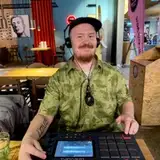
Hey hey, really just wanted to say first, how's everybody doing? How's summer treating you? The winter was the longest ever here, I feel, and spring wasn't amazing, and summer is starting, finally. I took this week off just to recharge a bit, be able to go out more and enjoy the outdoor life, and also reconnect again with my very old hobby, skateboarding, and man, it's been fun...that will always make me enjoy life. Everybody that knows me knows that I work an absolute ton, often giving it all my 150%, but as an entrepreneur, you also need to know when to take a break and recharge, as no-one else will do it for you. Also, being a creative being, I'd say you need a certain amount of that full offtime to sort of restart your brain for the creative stuff...when you're really busy, I find it's hard to find that "zone" for making music, while when my brain is at rest, I make progress quick. Happy to say I finished two songs during my holiday week, and a third one is nearing completion.
BTW, I just realized I started my Patreon page two years ago! 🎊 Wanted to say thanks to everybody for being here for the ride…it means a lot! I started it all as a test: I was always getting posting a lot of music stuff on socials, and it resulted in so many queries, but there was no sense of any sort of compensation, and I guess places like FB aren't the best to collect your output anyways. Back then I said, I'll give it 2-3 months and see, and haven't looked back!
Anyways, as for upcoming Patreon-exclusive stuff:
This month's exclusive video will be showing you the project for the recent remix I did for Make Or Break (the label owns the tune; otherwise I'd give it out, but do take a listen, so the video will make sense). I'll talk about things relating to chopping the breaks, some creative choices etc. Btw, if you want to ask me something about the tune, do so! Or if you have something related, holler. Send your question by Friday June 10. I definitely want to cover songs more, and not only mixing.
However, relating to mixing (which I do get lots of Qs about), the next will cover why Pro-Q3 is literally super amazing (several reasons) and several things to consider when mixing kicks to make them perfect. Got some nice new generative Ableton stuff coming, too, and I want to cover some Bitwig things, too, as I've been getting into it…and more Renoise goodies is on the cards, too!
The list of things to cover is of course long, and I always want to take into account your suggestions, so do send them in!
On the music front, the next FatGyver release is 85% done (wait till you see the funny art), and there's a mixed bag of Fanu stuff done (funny spoof art yet again). Waiting for Headz double plate test pressing…fingers crossed! Those songs will be fun to cover, whenever the release is out.
Btw, anyone lusting for any new gear or plugins? I've been having fun with my Polyend Tracker, and been checking out the videos for their new Play device, and man, do I want that! For some reason I've been kinda thinking about Bass Station 2, as its AFX mode looks fun! Still kinda lusting for Minilogue, too…and MPC 3000…the list goes on! Been thinking of trading my SP-12 for an MPC 3000. BTW, speaking of SP-12, if you want its drumsounds (plus an Ableton rack), they're available on my Patreon here, its Ableton rack is here, and there's a video demonstrating the rack here.
Aaanyways…when I start to talk about music, I could go on. Last day of holiday week, so gotta be hitting up the sauna and let my muscles that are aching from skating relax.
Drop a comment about anything, lemme know how music is going for you, feel free to drop a link to your stuff etc…
Me, took this week off to chill, as it's been mad with work, and the weather has finally shown some signs of warmth and spring.
Just recorded a new Breaks & Beats podcast episode (ep. 27) today – it'll be out on Friday (June 3) and on my podcasts page.
Also, in June month I want to do another song exclusive walkthrough video, and it'll be about my recent remix that I did for Make Or Break – let's talk a bit about breaks soon!
That remix is something I did with Renoise, too, so let's take a look at that: drums, some creative choices, synths etc.
Also, a video about doing a custom breakbeat is coming 🥁
So, it's time to talk about a few other good ones that I most definitely find worth getting (I use them all myself, obviously!). I'll keep the descriptions fairly short: you'll get a much better and detailed info bit from the sites I'm linking you to.
I know everybody's drowning in free plugs, but I can assure all these are goooood.
I admit I don't grab synths that often anymore, and took me a while to get into checking into this, but I'm glad I did – because it's a badbwoy! The best way I could describe this is, it's kind of Serum-ish in that it's a wavetable synth and it does look a bit similar, too. I've been getting some pretty dang good sounds out of this, and I want to learn more. OSCs sound badass, there's plenty of LFOs and envelopes, the (Serum-esque) mod matrix works well, unison is dope, etc…no reason not to get it, almost. I can say if I had to pick one not DAW-specific free synth for the rest of my life, this'd prob be it (I could also recommend Synth1 by Daichi Labs, while it feels less developed than Vital. Another honorable free synth mention is Tyrell by u-He).
Once again, part of Computer Music plugin pack, and once more, I'm not trying to promote the mag (I'm not affiliated, and I've paid for every single issue), but so worth getting. It's a baby brother of the u-He Zebra, but it has a revamped interface. While it's a bit limited, it's become my go-to synth in terms of 808 style basses – somehow its wavetable-morph style OSCs sound mega fat and beefy for basses…a big recommendation!
Beautiful, smokey piano tones – I love it! I like the chord pads that give you some pretty nice chords for that instant smooth lo-fi hip hop vibes, and also the easy controls that control the "lo-fi-ness"!
This one is free, but actually requires the full version of Reaktor. I LOVE this one: it's got so many controls for that lo-fi-ness. Absolutely great for house, hip hop etc…I've even used this on some client work on the master.
You can shave off some lows and highs, and all the tape goodies (noise, flutter, drive, compression etc) are there. If you have Reaktor and there's one thing in this list you're gonna grab, make it this one.
We all know DAWs often sound a bit too clean, and little dirt goes a long way in terms of "audio condiments", and this can be just the thing your music needs.
Yet another classy one-knob tool offering classy saturation! Rock it and roast it. Do note that the Saturation Type control decides what is roasted and what is kept…critical for basses especially (that's what I've often used it on).
(I could swear I've mentioned this before, but guess not…and this does deserve a second mention)
I admit I like my spring reverbs very splashy, and sure enough this is the number one splashy spring reverb I own – I don't use any other spring reverbs. I just love doing some reverb throws into this on drops or at the end of 16 bars etc…works every time.
If splashy springs are your thing, this is the one.
It's technically free and works forever without limitations, but you can pay for this, and I did, because it rocks, and good plugin companies deserve our support.
OK, technically this isn't free (I'm literally not trying to sell this to you), but if you buy any issue of Computer Music, this is among the plugins in the free plugin vault that you get access to (you get a ton of other stuff, too).
This is THE widener I've used by far the most in the past few years. Period.
Very natural, causes no mono/phase issues, and can obviously generate stereo (even for mono signal) and go really wide.
But in a nutshell, having a hecking nice, clear, wide stereo mix doesn't necessarily guarantee that the mix is as good in mono. It's super common these days to have a really wide mix, but then it doesn't work nearly as well in mono – but it most definitely should.
Why? Having a powerful stereo does not guarantee powerful mono. Also, not all things fold to mono that well: they may lose level, brightness, and you may even get weird phasing issues.
You can think of a stereo sound as having two signal chains: mono/mid and side/stereo. When you hear it all in stereo, you can't have a guarantee that it'll be as great in mono (it may be, but in the worst case it may be awful and much less powerful).
The video will show you how to check the mono and fix it if need be, with free tools, so watch that if you haven't.
NOTE! Some reverbs and also actually have really bad mono compatibility. I often boost the mids of my reverb or delay bus, so do check if you can hear your reverb loud enough in mono!
📢STEREO TOO WIDE
I do strongly feel there is such thing as stereo that's too wide!
While it doesn't take away from the mono power that I just mentioned, I think disturbs the smooth listening experience if things leap out of the stereo field – especially drumsounds.
How to fix? Listen to it from all your trusted systems (somehow I like to do that with my Genelecs and get it better than with headphones).
I'll add that wide stereo and powerful mono are NOT mutually exclusive at all!
📢FREQUENCIES IN A LUMP / WHAT'S THE KING IN THE MIX?
A good mix has elements nicely in their own place, frequency-wise.
In many less-than-professional mixes, there's not much frequency separation, and a lot of sounds simply sound too close to each other, resulting in lack of space and congested, cluttered mix where it's hard to tell sometimes what sounds are in the main role, and this affects the energy or excitement.
Especially in terms of instruments, decide what sounds are the king (or queen), and what are more in the side role.
For example, in vocal music, vocal has to stay on top. When you make other instruments duck based on the vocal's main frequencies, you help the vocal to stay on top.
You should also do this to other instruments, because it's very easy to do.
Ducking isn't always necessary, but a lot of times, when you have instruments that largely occupy the same frequency ranges, I always establish this "dynamic hierarchy" where instrument B ducks the main frequencies of instrument A, and instrument C ducks those of instrument B…and so on.
Why dynamic? So that you're not cutting those frequencies all the time. So when instrument B is not playing, instrument C will let its freqs come thru without any ducking.
I do this with Pro-Q3, as it's super easy to do: here's how. Sure enough you can do it with other tools, but the main point is, think about what sounds are the main ones, pay attention to clashing frequencies, and establish some hierarchy.
📢LOW-MID MUD
I don't have a quick fix or a tip for this, sadly, but def worth a mention. Frequency-wise, this is prob the hardest place to get right especially if your acoustics isn't pretty good or if you're not a really good listener of how the low-mids should work in your space. Listen to a LOT of great mixes and how they sound in your space. (room correction tools such as the one by Sonarworks, or Genelec's proprietary correction have a MASSIVE effect on this, and you won't know it before you try it). Try doing lots of narrow ca. 18-dB boost EQ scoops around 120-200 Hz on your kick, bass, and master, too, and see where it really explodes or "whoomps", and also hear if that happens on your headphones: if it does, you could prob use some cutting there.
📢OVERALL SOUND/POWER FAR FROM WHERE IT SHOULD BE
The hardest mixes I tackle tell me that the producer has paid very little attention to how their song fares in comparison to good commercial mixes. This relates to the previous point in this post in a way.
There are times when this is also one of the hardest things for me to fix, and there are times when I can't even fix it, and have to suggest new sounds, for example (common with drumsounds).
When you work on your song for a long time, you become "deaf" to it, and lose objectivity. For example, if you have drumsounds that are poor, you may not even be aware of that anymore.
Also, one cannot ignore the kick/bass relationship AND the bass weight. If you don't know whether the song should have most of its weight either on its kick or its bass – or both, equally – that can sometimes be hard for the mixing engineer to tackle (then again sometimes it's actually easy if the frequencies are there and they can be cut and boosted). Also pay attention to the overall quality of the sounds (or the lack of / rawness of them, if you want to go more lo-fi): if your snare sounds like cardboard, no engineer will fix it.
(TIP! There's actually been times when I've layered some modern snares/claps to give them some more energy; if you're using a murky clap, this can help, and sometimes even a, say, crispy quarter/8th note hihat can bring your drums to life more than an EQ can, if the sounds suck, so do try it!)
How to address all this? Take some time to find some good reference songs whose sound/mix you really like, and they'll teach you a lot about ENERGY and EMOTION in your genre and how they work thru the mix.
Learn to be a very critical listener of music and genre. Use good refs a lot when working on your song. A quick check against a reference song should tell you if your mix is gravely lacking something, for example. Pay attention to how the bass drives the song and how much weight the kick has. Examine how "close" the instruments are mixed. Learn how loud the snare is smacking. Etc. These things are important in your genre – any genre.
While this is not a must, it can help you to a great extent to hear how far your mix may be from where it should be. Picking a few good reference songs and learning how to make your mix sound like them is literally one of the best ways to self-learn mixing.
To quote somebody (I forgot who it was): "To some, mixing without a reference song is like making a smoothie without a lid" and there are times when I agree.
It's absolutely fine to just make music and enjoy it, but when you want to get more serious about mixing, you have to face the reality of how your mix compares to good ones, and see if you can improve it (there are of course producers who completely outsource their mixing when their budget allows it, and that's fine, too – that's a big part of my living).
📢LEVELS ARE OFF
This mostly results from losing objectivity with the mix, as mentioned above. I know it from experience as a music-maker myself.
While it's easy for me to mix others' music, I get this with my own music, still. I don't think there's a quick and easy remedy for this: sometimes you just have to distance yourself from the song – after the actual song has been finished, that is. Only that way you can re-gain objectivity. Also, obvious or not, reference songs do help. Listening to the mix at a low level is a really good way to hear things that stick out of the mix!
Listening is a skill you can't buy. You have to learn it and train your ear.
I've never promoted any sort of visual mixing like "have your kick peak at X dB and then your snare and bass at Y and Z dB". I don't believe in this "color by numbers" type of mixing, while I understand why so many would want it: to fix their mix following a formula. I just saw some advice like that where the accepted dB variation for elements was 6-8 dB…heh. That won't teach you anything. And peak-based info isn't useful: two kicks that sound equally loud can peak WAY differently, so mixing both those kicks by some dB formula would mean one of those kicks will end up way too wrong.
You only have to have a sound or two too loud in the mix, which kind of ruins the mix and disturbs the balance. And with tired ears, this is especially hard. I even get this in my job sometimes: I feel I may be really close to having it done, but I can tell something is off and it's killing me as I know something sticks out and ruins the harmony.
How I approach that is of course by taking ear breaks (trust me when I say long mixing sessions are not the way to fix a mix if you're struggling with them), ref songs, but also just muting tracks one by one and see how it affects the mix.
A good example might be a shaker/tambourine/perc sound in a busy mix: it's too loud and aggressive, and it's asking for too much attention, but you can't pinpoint it. Then you mute and get that "Ahhh that's it!" feeling. I mix a lot of tech house, for example, and there's often up to 15 perc tracks happening at the same time, and finding the perfect balance often takes a lot of muting tracks: that allows you to pinpoint/hear the place of the sound in the mix. Find the sounds that are too loud, set their levels right, and get closer to a more balanced mix that way.
📢BLOATED KICK
House is the #1 genre I mix and master, and bloated kicks are common. It's much too easy to bloat the kick esp. when you're not mixing against a limiter.
Limiting your song to a comparable level with a good commercial song will teach you a lot about this!
Watch that 500-800 Hz range: cutting there can make a big difference. The best way to describe that range with words is "the kick sound you make with your throat".
📢…AND A KICK THAT'S TOO LONG OR SUBBY
Esp. in house music and also other forms of electronic music. You don't need a kick tail in bassy music, trust me, unless it's trap. You cannot even hear that tail in busy sections, but it'll overlap with your bass and it'll be all trouble in master limiting (yeah, I can sidechain things, but that tail isn't loud enough to trigger sidechain on bass). I'm all up for fat, punchy, heavy kicks, but unless it's trap, we don't need that tail! Kicks don't necessarily need a lot of sub, either (this has to do with the point I mentioned above: learn to perceive how your mix sits in the realm of your genre and examine whether subby kicks are used or not; e.g., tech house has them lower than DNB, to generalize a bit).
📢OVERLAPPING SUB BASS AND KICK
This is simple: if you have a subby kick and a sub bass, that's fine, but don't have them play at the same time. Tech house, for example, often has kick and bassline occupying same-ish freq range, but as long as they're not overlapping, all good.
How to fix fully: stay on the safe side, and have your kick peak above the sub (at least 30 Hz above the sub, or ideally an octave, i.e., sub hertz x 2).
Ever been in a place where you keep EQing a kick to no end, and it just doesn't fit? I swear, sometimes transposing the kick +-2 semitones may literally solve your problem! I know this, as I've been in that EQing-kick-for-hours so many times and learned the hard way that sometimes changing its pitch can literally solve your issues with kick/mix low-mids, and even improve its energy (lower kick has more sub, but higher kick may have more energy and it leaves more room for low-mids and sub).
📢OVERCOOKED TRANSIENTS
Every has a transient tool these days to boost their transients. A less experienced producer will overuse it in hopes of better sound separation or punch, and this results in a sharp mix, the opposite of fat and punchy. Esp. if you mix against a limiter, do a lot of on/off with the limiter to hear if you're overcooking your transients; a limiter will shave them off, but they may also hurt your master limiting. Esp. many kicks that come in for mixing are just too snappy – yes, there is such thing as too snappy!
📢LACK OF SUB – OR WAY TOO MUCH
This is prob because not everyone has a system that produces ample sub.
2) use Voxengo SPAN for example, have the sub on master hit around -30 on SPAN's own metering when the song is limited to commercial loudness, and you're in good ballpark, trust me!
📢HIGHPASSED TRACKS
Gggaaahh! One of the biggest peeves of mine in terms of mixing advice that everybody seems to be sharing. Man, just don't highpass your tracks, because it's soooo easy to thin sounds out with that. If they clash in terms of sub, find out where, and reduce clashing. For boxy low-mids, use a bell or a shelf.
I get premasters or stems sometimes where i can hear that everything's a bit thin and i can't fix it, and i ask the producer if he has HPd everything, and in those cases the answer usually is "yes".
📢TOO MUCH DYNAMICS
We're used to hearing smoothed-out dynamics. For example, a totally untreated vocal track will sound immediately homebrewn if the dynamic range is too big. An unexperienced mixer will have sounds and their levels leap up too much. Learn to listen to classy mixes and compare. BTW, if a sound is too loud, no need to compress it: just turn it down. But if that sound/track does a lot of level jumping here and there, compression might be the trick.
📢EVERYTHING IS LOUD
I understand you want to do loud shit sometimes. But if everything is loud in the mix, nothing is, and it's just a mess. Notice that often the loudest, most banging mix are more minimal. It's ok to have some things loud, but if everything is loud, nothing works in the mix.
📢SHEEN IS MISSING
This nearly impossible to get right without good reference comparisons. This is how you can get that sheen once your mix is about right.
By learning to hear things! So, learn to hear things is how you'll get to the root of fixing the issues. You cannot fix an issue before you locate it.
Listen to a lot of music, critically, in your workspace. Listening to your own mixes is not enough: learn how your mixes compare to some really good ones: find the best dang mixes you can and hear how they sound and ruthlessly compare your mix to those (ALWAYS level-matched, as the one we perceive the loudest always wins!).
Make more music. Make more songs and learn more thru that. Mixing one song forever will not even teach you as much as mixing lots of songs. Mixing and making music is a life-long process. I've been making music for 30 years, and doing audio engineering full-time for 7+ years, and I'm still learning…have fun doing it!
But I love taking them out. It's part of my daily living, literally. In this video, I show my favorite four tools and how I fight resonances. All for the smooth-as-possible sound!
Hear how much a simple bass punch energizes the mix – it changes from sleepy to more energetic.
The synth is u-He's free ZebraCM, but any synth can do this (quick envelope -> osc pitch). So even if you like to use sinewave basses, do consider adding a bit of punch!
I'm not always big into teaching numbers when it comes to mixing and mastering, but there are scenarios where they can be massively helpful. This is especially useful if you don't have a system that offers great sub bass reproduction.
One question I get often is "How loud should the subs be in my mix/master?" and I'm here to address this today. Every now and then I get premasters where the sub is sometimes way too loud (if I mix the song, I can handle it myself better), so I do see this isn't super basic stuff for everyone. While I sure enough can pinch the sub region in mastering when needed, having a sub that's not massively too loud will be helpful in nailing that perfect master. Let me help you get the sub loudness roughly right! It's easy once you get into it.
First, the only master analyzer I've used for so many years now is the free Voxengo SPAN. It's great, and it's all I use when it comes to this specific matter. The settings above^ are what I use, and the Slope setting that's in red above is critical to my tip, should you follow it; it has an effect on how the angle of the slope. The tip I'm giving here mostly relates to bassy music such as house, tech house, drum and bass, trap, etc., so this most definitely would not apply to rock, old skool hip hop etc. where you don't have a sub bass. Also, this has to do with songs that are limited to comparable loudness (just run your song into a master limiter to achieve that loudness – for the purposes of checking the sub level, it doesn't have to work out super clean: we only need to get that song level up temporarily).
The way SPAN works in checking for frequencies and their loudness is this: when you place a cursor anywhere, you see the frequency of where your cursor is (top left) and its loudness by some SPAN proprietary loudness number (top right). First, this allows you to see where your sub is hitting (see my previous post, sub bass tip number 2) and its loudness. I've analyzed a whopping amount of bass music masters over the years and (here comes the main tip!) noticed that there's definitely what I could call a "ballpark loudness" for sub bass. What is it then? It's roughly where you reach -30 number on SPAN's loudness for that frequency. For example, in the pic above, the cursor (see the crosshair – cursor isn't showing due to MacOS screen grab), the sub is peaking around 48 Hz (so it's in a good place) and its loudness is slightly below -30 (you see the crosshair is slightly above where it's actually peaking). So in a nutshell: when analyzing your master (when it's limited loud enough), put your cursor at that -30 spot (so you'll get that -30 at top right) and aim at your sub bass hitting that loudness, and I guarantee it's in the ballpark.
I could post so many pics of good bass music masters thru SPAN, but their sub placement looks roughly like this in all good masters: the sub is around 45-60 Hz, ideally, and its loudness is that -30 by SPAN's loudness metering (top right) when the master is pushed to decent loudness. Also, don't just take my word for it: I encourage you to check some of your fave bass music masters this way for their sub level, and you should find this to be true.
Well, it's as simple as that.
Some relevant considerations:
1) Where is that sub bass coming from? It can of course be a combo from your kick and bass, but your bassline at least should be hitting that spot. In general, for example house / tech house kicks prob hit slightly lower than for example D&B does; D&B usually has its kicks a bit higher and they're not necessarily as whoompy as house kicks are – but there are exceptions in both genres, of course, so I don't want to try and generalize this too much! DNB, I feel, leaves a little more room for sub bass, while house may have subbier kicks and slightly less subby basslines. But to have things in the ballpark, limit your song to reference loudness, have the sub loudness right, and then chew on how the sub may be divided between your kick and bass – you may set it to taste. (If you want to have another numerical guideline that can help you: for ideal separation, have your kick peak at least 20 Hz higher than your sub bass. Even more is better. All this depends on the kick. You can of course have a really subby kick, but just make sure it's not playing at the same time with the sub OR have a bassy tail (keep it short!!)
2) Does this apply to a non-limited mix? Nope! This is only applicable when your song is playing at a level that's comparable to the loudness of commercial/released masters. Even if you're not super interested in mastering, you can do this sub level check when you just slam your song into a limiter/maximizer (or two if needed) so that its perceived level (measured by your ears) matches that of your reference song. Now that is when you can check the level of the sub as described in this post. (NOTE: you can of course gain your reference song DOWN and then do the comparison (it's just, then don't go for the bass loudness number I gave you: check that of the reference you gained down). Btw, if the song is distorting a lot at that level, it's likely that is has too much sub and/or clashing between kick/bassline subs and low-mids. You may find out this way that your song may have too much sub (or not enough, especially if you find it's super easy to crank your song louder than your nice, bassy refs). I'll also add that limiters offered by DAWs are mostly really bad for master limiting, but they're still OK for checking the sub level...so if it completely smashes your song, yeah, that's what DAW limiters do, but let's just stick to checking that sub level for now, and your DAW limiter is prob OK for that.
3) Aren't some genres less loud than some others, and do they still have the same amount of sub? Yes. For example, deep house is less loud than, say, more EDM-type house. They still might have a somewhat similar amount of sub when compared – it's just the more dynamic genres usually have relatively more sub bass (this is why they kind of hit harder in the club). They have more room for it. The mega-loud songs have relatively less sub (their sub hits roughly the same loudness as less loud bassy tunes, but the bass isn't relatively as loud in the mix).
4) Sometimes I make my sub hit that spot and it feels too much – why? If you have lots of harmonics in your bass in 120–300 Hz range, sometimes it feels you may want to have a bit less sub, I feel. Also, when you have really subby bass with no harmonics and your kick hits nice and high, it's often nice to make that sub bass a bit louder, as there's more room for it.
Well, hope this helps! Remember that every song is individual, and all this info is ballpark info, but still, it should help you to get the bass roughly right.
Coming up next: • the most common mix issues • the things I do to achieve perfect kickdrums …till then!
Here’s a thought relating to sub bass frequencies in bass music – i.e., music where the sub bass usually sits below the kick on the frequency range (e.g., drum and bass) or fairly close to it (tech house etc). This doesn’t apply to genres such as rock or house, for example, for there you may have your kick lower than your bass in general. Also in genres like tech house, sometimes the bass *may* live a little higher than the kick, but there definitely has to be sub frequencies for the song to work and have energy.
In a nutshell, we want to have our sub strong enough around 40–60 Hz area, because that’s where the meat is. ”Strong enough” is subjective, of course, and there’s definitely variation how loud one likes his sub, but here’s a general guideline, from the perspective of someone who does mixing and mastering every day, that’ll help you have the bass energy in the right place at least. However, I'd say that 40 Hz is too low, almost, and many systems cannot produce that, and even if they can, it'll sound "sleepy" in terms of energy. I'd say around 50-55 Hz is as ideal as it gets.
So, you need to have your fundamental frequency in the right area, and that’s around the aforementioned 40–60 Hz range. In simple terms, fundamental frequency means the lowest peaking area in your mix, and we’re aiming at having it within that area, roughly.
With the right tools, it’s very easy to see where it is in your mix. Especially if you don't have speakers that can produce good sub, learning to look at it is essential!
In both pics, you see Voxengo SPAN, which is a free plugin and just great for seeing where the fundamental is hitting in your mix (I’ve set “slope” in SPAN to 4.5, which makes the curve look somewhat natural in my eyes).
Pic 1 shows a D&B track that has its fundamental frequency peaking around 55 Hz. That means there is energy in the right place, and in mastering, that can be boosted somewhat easily, and we’ll have a solid low end.
The problem arises if the fundamental is too high – see pic 2 (this track is quieter than pic 1 but that’s irrelevant in terms of seeing the fundamental). That shows a track that was sent to me for mastering. The track is pretty strong and doesn’t sound too light, but it’s very “boomy”, for the fundamental is happening around 100 Hz, which is too high to be a sub, and there is a lot of kick energy around that area as well, which means that if we cut that area, we’re going to lose some of the kick, too, which is not what we want, and we’d end up with a master that does not have enough power.
In mastering, pretty much any problem can be addressed, but they can’t always be solved – this is case-specific. In mixing, one can address this more. However, this tip is so you can avoid all these issues early on in the sound design stage. When you create a sub that has the energy in the right place, one only has to control its amount. If it's not there, it can be close to impossible to fix (although I've successfully added sub to basslines/mixes where the bass has been too high using tools such as MBassador by Melda, or bx Subsynth).
Where should the kick live then? This depends on the genre and your preferences. At least when you have your fundamental right – and your kick above it. *Ideally* your kick would be an octave above your sub: i.e., if your sub is hitting 60 Hz, try having your kick hit 120 Hz – you’ll make sure the main building blocks are in the right place. I can guarantee this'll allow for very loud masters as it completely eliminates the fight for bass space, which is pretty much reason #1 in terms of distortion when trying to go loud. However, like I said earlier, esp. in tech house, kicks often hit lower. But take this as a guideline, and at least don't let the sub from the kick clash with the sub from the bass.
How loud should the sub be? I'll tell you about that soon in the next episode ;-)
Oi peeps! Hope everyone's doing good. Me, writing that long mixing issues post.
But in the meantime: a tip relating to bassline / sub content in bass music. You should be able to hum or sing the melody of it, ideally.
What do I mean by this? Every now and then I receive songs for mastering that have a really messy low end – boxy, rumbly, undefined – and it’s genuinely hard to tell what the sub is doing or hear it properly. Sometimes it’s because the sub of the kick and bassline are clashing badly, and they just get really messy as a result, or maybe your bassline doesn’t have enough sub content.
I know what you might say: “You’re crazy…sub is all mumbly rumble anyways!” Actually, it's not, necessarily.
My tip does not mean that your sub should be a melodic masterpiece. If you have a multiband plugin that lets you isolate a certain frequency range (e.g., Ozone), set the lowest band to <74 Hz. Solo the band and listen to it. You’ll find that in a really well mixed song (check your good and trusted reference songs), you can usually hear the sub “melody”. Even if it’s just one note, it has to be a clear note. If you’re hearing an undefined mess, it often means there is a problem.
In most cases you’ll get a bit of kick drum there as well, but in songs that are well mixed, you’ll find it still sounds quite clean and they’re not creating a mess at all. Learn to listen to this range, and it can be a good tool in your box of tricks.
📝 I'm doing a Patreon-exclusive post about the most common mix issues (I mix music every single workday), why I think they occur, and how producers could learn to address them, and I'll publish that in April 📖
But I wanted to ask YOU at this point for your input, as I'm very interested in how producers perceive their mixing and the possible struggles at this point.
Simply put: what's the hardest part for you to get right in mixing?
It's my birthday today and I thought I'd give something back to the community, people that support me and so on. I'm taking the whole week off to work on some music, and one of the things I'm doing is work on a remix that uses the classic Think break by Lyn Collins.
I haven't used that break that much in spite of the fact that I own the very original pressing (Polydor 1972). I got the 7" record ca. 15 years ago from Jukka Sarapää, the drummer of The Soul Investigators and head of the amazing Finnish funk/soul label Timmion (DO check that label out, as they literally have TONS of breaks on their records). It was very generous of him: I got the record for free! Well, as it often is with really old records, this one is rrrrreally crackly – especially on the break part, which I, of course, wanted to sample.
So today I'm working on that remix and I thought now's the time to use the break…but it was so mega crackly, it needed some serious work. I was able to decrackle and declick the serious offenders in the audio using Izotope RX , and I think the result is "OK". In my music, I prefer a slightly dirty / lo-fi sound anyways, so this'll be fitting. I know you all have this break, but I guess an original pressing rip is at least slightly rare. If you want hi-fi, look elsewhere!
Hope you like it :-) PS: This post is actually free and public (it's a reverse bday gift, ha!) so feel free to share it!
PPS: I'm looking for no monetary gains with this. If you represent Polydor Records or Lyn Collins estate and want me to remove this post/download, just let me know and I'll do it. I claim no ownership to the copyright of this audio file.
Now this one's something I should've done a long time ago: a video on how to make sure that the mono of your mix works. In mixing music for others, this is something I fix all the time, every single day. The good news is it's very easy to find out about mono issues AND fix them with free tools. But a lot of producers don't do it, and when they play their music in clubs (or any mono system) for example, some of the important elements of the song may appear way too quiet. This video will show you how to spot and fix mono issues. I also talk about WHY it's important to have a powerful mono, in case it's not obvious.
One of the things that home masters often lack is this brilliance, "sheen" in the very high frequencies. Producers often use exciters to bring that up. Well, let me tell you that you don't need to pay for an exciter – your basic decent EQ can probably get that energy up, as long as it's there.
Ever since I started doing this, I've barely touched my fave exciter (Revival by Slate Digital).
Get an EQ that can give you a really steep curve: see pic for an example. There, I'm using ProQ3 with a 48 dB/octave curve, and I'm placing it really high. You usually want to get it around 8K> so you won't pull up any high mids.
When doing this, you should hear how that beautiful high-frequency "sparkle" comes up, and it can often invigorate your mix. It's very easy to overdo, so be careful: boosts of 4-7 dB are often enough!
It's often enough to do this for the master; of course if you hear anything stick out, go and tame the highs of that track/sound.
Vinyl Distortion can add some really good harmonics and grit to your bassline – without hurting the sub at all.
Start with a pure sine, add vinyl distortion, then add a bit of Saturator after that, and you get a really beefy bass with amazing harmonics that'll cut thru any mix.
Saturator makes it kind of "round" and that's sort of old news, but I've recently realised that Vinyl Distortion can add nice sawtooth-style vibe ("non-round") to the bass while keeping the sub in tact (sawtooth oscillators usually don't have that), so do try it out.
Kind of just recently discovered how good Vinyl Distortion can sound, so will def add that to my bass mixing toolbox and wanted to share!
I sit down, get my FatGyver alias and to make a hip hop beat, and drop some Ableton Live tips. and techniques. I check out strumming, chords, midi humanization, why audio input signal matters, etc.
Hope everybody had a great week...how did it go? Let me hear of ya'll! I had quite a sick one, literally, as some flu-type thing kicked me for 3 days, and, being a freelancer with tons of work, I barely took some time off to heal (I juggle a ton of work for my biz on my own), so now, at the end of the week, I'm OK, but drained.
I'm working on new content – btw, new video stuff SOON 🎥 [e.g., been getting lots of Qs about Renoise, there's some cool Ableton stuff to show etc etc] as well as a list of come cool plugins up next…and man let me tell you the list of content to come is LONG! – and in a way relating to that, I was struggling to make some plugins work with my M1 MacBook Pro, which has been a struggle since I got it. Every now and then I've been getting
I've found some info on how to make the plugins work, but it didn't work, until I found out how it's actually supposed to be done.
I found this text string: xattr -rd com.apple.quarantine …and all advice said to enter that into Terminal, drop a plugin (.vst or .component) into it and hit enter, and that should do it.
Well, didn't work for me. I was downloading lots of plugs, did that, and they never worked… …until I realised that the fault is if you drop a plugin into Terminal after it's been downloaded and it's still in Downloads folder. So it HAS to be in the relevant plugins folder when you do that – whatever the reason for that is ¯\_(ツ)_/¯
So, TLDR, to make a plugin that you DAW on an M1 Mac nags about work with your DAW: • download a plugin • place it into a relevant plugin folder • paste this into Terminal: xattr -rd com.apple.quarantine • drop the plugin after that text string • hit Enter …that should be it! AFAIK, if the plugin has already been deemed forbidden or whatever by your DAW, I believe you have to download it again and replace it and do the above procedure again.
This won't be magic to everyone, I guess, but it took me a lot of frustration and "why tf isn't it working?!" with many plugins, even new ones, until I figured it out. At one point I had already given up on some good plugs, until I thought I'll give it one more try in hopes of still being use some good ones (more about those good ones soon).
Anyways, hope everyone's weekend is going soon…what's everyone cooking? Let me know...and enjoy your weekend.
In all simplicity, this is how I often create wobbly basses...this is a decent starting point for anyone to create jungle/dubstep style wobble. It goes against common sense to play two bass notes at the same time…but you'll find it works! The most musical results often happen if the notes aren't more than 3-4 semitones apart. You can get some fairly mad tones when pushing things hard into a saturator. Note that it HAS to be a sinewave for things to work.
Alright guys! I've been getting into doing basses with Ableton Collision, which is a much less covered instrument.
Video will teach you how it sounds and sworks, so you'll be on your way designing basses with it. VIDEO HERE
I actually uploaded the project used in the video – it contains the three variations of (Live 11). Download the project here if you want the bass sounds I'm doing on the video.
WHAT'S NEXT? 🎥 I've got quite a few requests regarding tracker action, so the next Patreon-exclusive video will be covering how to play breaks with Renoise. I'll prob do 1-3 videos relating to different things with Renoise, but the first/next one will be about the different ways of playing breaks with it…so will be covering the different workflows. Coming soon, so stick around!
I have a new tune, Firemind, out on Straight Up Breakbeat’s new compilation. (The label owns the recording, so I respect that, and unlike with my own releases, I can't give the song away)
I've uploaded the stems of the song for anyone who wants to get some drums, bass, and samples! • DOWNLOAD HERE •
I got a good question from a patron: how to create some melodies with Ableton Live that'd be sort of generative, so it wouldn't be looping the same notes, but it'd be adding things and keeping it lively? So, I did session using a certain tool in Live that should get you going. Video will show and tell all you need to know and get you going with some generative ideas!
Before I'll say anything: THANKS to everybody for supporting me here. It means a lot! It does give me energy and good vibes, and it's very encouraging in terms of creating content…so big love to all you!
I found what I think is literally the best sample extraction service so far. And I’ve tried out quite a few. This one seems to do the best job by far, and the results are impressive! This is the one I'll be using, TBH.
“Be sure to check out https://www.lalal.ai/, a next-generation music source separation service for fast, easy and precise stem extraction. Remove vocal, instrumental, drums, bass guitar and piano tracks without quality loss.”
Let’s get busy slicing a breakbeat with the Polyend Tracker. I got it recently and immediately got some requests to do a chopping tutorial and show how beats are laid down.
I’ll show my best practice for slicing and do a drumloop with the chops. Checking FX real quick, too.
The time has come once again to make a potpourri of my productions.
Every time I make a new one, it’s a small proud moment of still being able to make music that I can stand behind – it’s now been three decades since I started, and it’s not always easy!
It’s all it is: nerdy jungle of the highest order, celebrating the power of breakbeats.
Also, this is more a music showcase than an intense DJ skills achievement.
Most of this music is already released (except tracks 05 and 14), and most of these can be found on Bandcamp as well as streaming services.
Big ups to my one and only trusted art guy Lonekink for the art that pretty nicely conveys both the weather where I live and my current, wintery-creative mindstate.
I’ll say no more, as the music’s supposed to do it all anyways, but I’ll slip in a huge THANKS to everybody who’s supporting my artistic efforts in a way or another – it does mean the world to me.
TRACKLIST:
01. Headhuntersjuke (Bandcamp subscriber special)
02. Gone But Not Forgotten (Straight Up Breakbeat)
03. Mental Aerobics (Straight Up Breakbeat)
04. Borderline Offensive (Straight Up Breakbeat)
05. Larson Whiled: Drama [Fanu remix] (forthcoming Lightless 2022)
06. B-Side Science (Metalheadz)
07. Legacy [feat. Infader] (Metalheadz)
08. Norik: Light And Tight [Fanu remix] (Mechanical)
09. Through Thick And Thin (Metalheadz)
10. Tracker Practice Run (Slug Wife)
11. Sekl: Control Signal [Fanu remix] (Make Or Break)
12. Famen (Straight Up Breakbeat)
13. Truth And Lies [feat. Infader] (Straight Up Breakbeat)
14. Firemind (forthcoming Straight Up Breakbeat 2022)
(I was struggling to find a good opening for this post, so here we go…)
Hi! I’m Fanu.
I care about making music, making it sound good, helping people make music, being out there as a creative person, and that sort of stuff…it’s pretty much what’s my life 24/7 and it also pays for my living (and keeps me happy).
That’s why I wanted to lash out some related thoughts that have been brewing in my brain recently. It'll be a bit of a mixed bag.
It can often feel good to look back on the past year and chew on how it went, what you learned (if anything) in the past year, and so on. This type of post could easily become really long, so I’ll at least try and keep all points bite-sized. These are somewhat random, as I may be struggling to find the connecting leading thought, but hey, I hope some of these are useful and thought-provoking.
BTW, I’d love to hear about ANY input of yours! Well, you have some reading ahead, so I’ll just start.
• Have a goal
This is still important, after all these years.
For example, this year I wrapped up my 3rd Headz EP (I did work on a lot other music, too): not to say it’d be easy or that I'd ever assume per se that any label wants my material, but I did take it as my goal to try and do my absolute best to make music that'd fit the label to form my third release for them, and I succeeded in that. When I do that, it can of course take weeks and months, but I don’t let go of that goal.
Same goes for anything: at one point I wanted to play live and get bookings for that, and sure enough it took some serious time and devotion, but it worked out.
I've often felt that 1) without a goal I kind of "lock up" or lose my drive, but 2) once I have an idea/concept/goal, that alone drives my inspiration A LOT.
If anyone ever asks me "How do you keep going?" this'll be one of my standard answers. Of course, in this regard, you have to…
• Have faith in your music
I can’t stress this enough, and I know I’ve mentioned this before, but let’s just revisit this. I still keep reminding myself of this constantly. I feel I’ve maybe got slightly more impatient with things, and maybe it’s the culture we live as well as socials / internet, but I’ll remind myself as well as others that especially any sort of musical career hardly gets to enjoy instant gratification ever: it’s a bit of a slow burner. So it takes faith. Don’t get discouraged. Any artist that has got any attention has already been grinding for a long time – even when you hear from them for the first time.
Those who get anywhere are those that are patient and have a decent amount of that good old blind faith in what they do.
• No need to post on socials all the time
What I’ll say here mostly relates to artists, i.e., people that create art and take that seriously.
This kind of relates to the earlier point/mention about socials, but you don’t have to post about things all the time. Sure enough these days you “have to” post about things, but you probably get my point.
We all have probably seen “tips” like “post content regularly to keep your socials audience engaged” and to “grow your fanbase” and so on. Ewwww, no. Let’s just not do that, unless you’re trying to be an “influencer” or whatever (just don’t).
This leads in a lot of ppl actually posting all the time, as they take heed of that advice, but
1) it’s not necessarily helping and
2) it’ll take away from the important stuff you might want to post about, which is your art and
3) ppl who post shit all the time are actually kind of annoying, artist or not an artist.
Do ppl really need to see that meme you just reposted or that you’re now on the subway? Did the IG story about your cup of coffee reinforce the notion that music is your thing? No.
This is something I’ve discussed with students of mine and some music-makers, and I’ve always said that while there’s of course a balance between your meaningful content and some whatever-type of funny stuff, post about the stuff that underlines you and what you are and do, because people are drawn to things that matter to them. So, if you want the attention of people that are into what you want to represent as an artist, mostly post about that. Simples.
• Try collaborating
I'll be honest, I've never collaborated much, and I've fully enjoyed being a musical hermit.
This year, I collaborated on an EP with a "collabro" (it will be a Lightless Recordings release in 2022), and it was much lighter, easier, and more fun than I thought (the only time-consuming part was to learn to use Bitwig comfily enough, as that became our collabo DAW, as we didn't want to go for ping-ponging audio tracks…but learning a new DAW was actually quite refreshing).
Collabing can be fun and also help you in finishing tunes, so do try it!
• You can't fully concentrate on and be amazing at everything
My most loved hobbies are my music, riding my bike, skateboarding, and this year I also started hitting an outdoor gym I discovered quite close to me regularly. And I have this full-time engineer career to rock and Patreon too :-)
Trying to do all this reinforced the notion that you can't fully do it all (esp. if you work full-time like I do), so a lot of times you have leave something out, at least for a while, if/when you want to progress well enough with something else.
This year, I "had to" skateboard much less than some other years, as, after all, all those things take energy and time, and you'll have limited resources.
Ask yourself what it is that you want the most and what you want to see progress with, and keep rocking that. If you do too many things, you’re either going to burn yourself out or just not progress enough with any of them. While you may have a knack for things, you may end up feeling you suck at something (just because you cannot give it enough time).
Sometimes I have "music periods" when I give it more time, but it does feel good to take time off of music, too, because…
• …it's OK if you're not making music all the time
I think it's almost detrimental to your music if you try to stay TOO active with making music. Taking time off of music is essential to your creativity.
I'm writing this at the end of holiday week 2 of my 3-week holiday, and it hasn't been until this weekend I've felt I can fully approach making music again (needed a reset, because after all, ALL my life/work/hobbies/etc are about music).
I feel that if I can put out 3-4 meaningful EPs a year, that's enough.
Due to the nature of my work, silence is luxury, and often right after the workday, I can’t stand music.
However, I’ve found that listening to music is to inspiration what water is to flowers.
On my holiday, for the first two weeks, I’ve mostly been nourishing and recharging myself with music and that’s made me AMPED to make a lot of new stuff.
• Keep your creative brain fuelled by any means (books, games, etc)
I’ve never been that much of a reader, but this year I’ve started reading. Been getting heavily into Stephen King’s Dark Tower series and also several books by horror-ish author Paul Tremblay.
I feel reading (as opposed to movies, for example) makes you do a lot of imagining things in your mind (that’s why I feel books are great), which I think activates the creative side of your brain.
Oh by the way, as for non-fiction, I great music book I’d highly recommend is Bedroom Beats & B-Sides…so good…check it out!
As for games: the last two games I’ve played are Disco Elysium and Kentucky Route Zero, and while they’re quite different, both gave me very creative vibes and thoughts through their great music and overall vibes. The creative brain absorbs this stuff!
Also, after the workday, I feel it’s an absolute must that I have a quick reset to switch my brain from work mode to a more free mode, and to me, riding my bike or hitting the gym is often the one…besides, a healthy body = a healthy mind. And that healthy mind can get that sh*t done!
• Keep art separate from anything else
This may be a bit abstract and hard to explain, but over the years and especially since I started my company and got hecking busy with things, I’ve found that music is that one thing that easily takes the hit when you’re busy/tired/stressed/worried/etc., and I wish it wasn’t that way, and I’ve been trying to tweak my mind to realize that it shouldn’t be that way: creativity/music should live in its own place that shouldn’t get touched by any of the mundane stuff.
Hippy-ish or not, I feel music – if you have that gift, that is – is this one flower you should be watering no matter what. Don’t let it get shadowed by things that shouldn’t be shadowing it, because it doesn’t deserve that.
The moments of making music/art are precious and fragile…so protect them! (…and note to self: do not check those work emails all the time, esp. when making music!)
• Find new drums!
Let's face it: esp. in DNB/jungle, there's TOO much of the old stuff still circulating! Finding fresh drums is invigorating for your productions – and the genre.
If you find yourself thinking that your music is weird…congratulations! That's a good thing.
You don't have to adhere to the norm, because TBH often the predictable norm music can be quite boring.
• Go by the gut feeling
This applies to labels, collabo stuff, song ideas…weird or not, your gut feeling is right most of the time.
• Idea-making and music-making sessions should be separate
There are moments for making music and making sounds.
The latter often leads to former. Don’t always expect yourself to get music done – that often takes ideas/sounds. Both are equally valuable.
• Revisiting old gear or plugins
I’ll be honest, this is quite often a source of inspiration to me. I already have too much gear and too many plugins, and sure enough I don’t know them all to the fullest extent. Sometimes I just pull out something I realize I don’t know well enough and I start learning it, and hey, once again that’ll lead into some new sounds and inspiration.
Quite often it’s a synth; the latest old new synth I’ve been getting into is Aalto synth by Madrona Labs…it’s wonderful! Will be looking into their Kaivo, which sounds amazing.
The latest processing plugin I re-discovered is Boz Digital Lab’s Transgressor 2, which lets you EQ and level the transient and sustain parts of a sound (great for mixing drums).
• It’s ok to own a lot of gear and plugins
There’s been times when I’ve kind of been against this and felt that a minimal approach would be best, but my bottom line is that as long as it all inspires you and makes you make more music, it’s absolutely fine.
Once in my past there was a moment when I sold all my gear and only kept a laptop, but what do you know, from there I started slowly buying it all back. I guess I just love having a lot of stuff, as you get to kind of re-visit it all, and having a lot (while it’s not necessary!) can be a source of inspiration as switching between gear etc avoids boredom (which the human mind is super prone to).
This week, I’ll be acquiring another sampler thingy, the Polyend Tracker.
• So yeah, trying out new stuff is great (and you don’t always have to buy it)
The best “free” thing all year to me was ZebraCM synth by u-He. While you cannot buy it, you can get it if you buy any new issue of Computer Music or subscribe to it. We used this in our collabo project, and I feel the wavetables sound really good for my bass needs especially.
• …so do stuff like try convolution reverb on drums
This may be a bit unorthodox, but I’ve been trying a convolution reverb on some drums, and it can add an interesting tone/space for bland drums and just make it sound much juicier (just keep it short). While I’ve been using Melda’s paid multiband convolution for it, it seems they have a free version, so try that out!
• Reading about music stuff does get the creative juices flowing
I love the aforementioned Computer Music mag, and if you’ve never read it, I’d highly suggest it!
• Do you need that high-frequency exciter?
Ever since I’ve started using a really steep high shelf with ProQ3, doing it from around 7K and up, I’ve been using less and less high-frequency exciters. Try it!
• Keep in touch with similar-minded musical friends
I’ll be honest: most people in my circle have to do with music somehow. While I’m a bit of a hermit to an extent, I’ve recently sort of reunited with some friends of mine that I hadn’t seen for a while, and it can definitely be a creativity boost to hear from them and just stay in touch with people that you resonate with.
A lot of us are studio hermits, haha, and synergy, just like in collaborations, shouldn’t be underestimated.
Well, that’s it!
I don’t have an amazing sentence to wrap this all up, so I’ll just say, thanks for reading and I hope you had a great 2021 and that your 2022 will be full of success and productive vibes.
Wanted to start this new mini-series, “Cool Little Thing”, where I present some cool features and tricks of devices, plugins, and gear I like to use.
Here, looking at how you can do FX automation for incoming audio (i.e., the audio you monitor through) with the new line of MPCs. Using MPC One here, but will work with any new MPC.
I noticed you can download Izotope's hecking nice Trash 2 for free for a limited time. A good reason to try it out – in addition to trashing the signal – is that it can actually act as a 4-band gate! The fourth band has to be activated from the prefs. Or, you can download this Trash 2 preset I created, which'll give you those 4 bands and will get you gating.
I love gating drums for a tighter feel (you can suck out a lot of reverb)!
Let’s take a look at how one can try and emulate the classic 303 acid sound.
There’s a few considerations:
filter
resonance
filter envelope
glide
oscillator shape
Using Ableton Analog here, but if once you understand the basics, you can chase this classic acid sound with ANY synth, as after all this sound is fairly easy to do.
I know I usually don't use Patreon for this type of content, but every year when I see artist getting all stats-crazy, I can't help feeling something…so here's a few thoughts. I wanted to put them somewhere. I'm fully in the music industry myself, and this is as much about music industry as it gets.
So, screw your Spotify Wrapped stats.
Give me stats of an actually healthy service any day over that. Give me actually healthy music-industry metrics. It’s disheartening so many artists promote the company that, out of so many services, actually treats them pretty much the worst.
I know Spotify making the sharing of stats so easy to do and good-looking is a primary reason here, but still…feel free to do some thinking about this. Posting those numbers promote the company and hardly you. It’s almost like sort of promoting the company of a really bad employer just to somehow underline your achievements. Oh, and the employer did nothing to gain you any of that. You’re just using his platform to promote yourself, and there’s no way you don’t promote his company while doing that. You promoted the service of that bad employer. It’s the employer who invented the product that’s made it possible for artists to earn even less and less, and that’s just more for him.
If the state of music industry was different and even 1/4 of your streamers chipped in and paid you a fiver for your productions (look at your stats and do the math), it’d be much more money for you…but out of all services, at the end of the year we choose to promote Spotify instead? Food for thought.
So while Daniel Ek is absolutely filthy rich and *could* pay you better, he absolutely won’t. For example, he tried to buy Arsenal FC. Heh. And now he’s invested hefty amounts in AI weaponry tech. Yes, weaponry. With the money you earned for him. This is that craze that happens when you just have way, way too much money but you’re not in it for the betterment of the people whose content is the only product you sell. Or people in general. Your music, his sales, his maximum gains, your minimal gains. We’re getting a fraction of what we *should* get.
Also, finally about the whole numbers game. You do not have to try and validate your art by posting those numbers. Back in the days, when music industry was in a healthier state and artists got paid more, none of that numbers nonsense was happening. Can you imagine that? Think about it. There were no end-of-the-year stats flexing. Music did the talking, and people were happy to pay for music.
Electronic music culture – which to me always felt like an anti-pop underground punk movement – has become 100% like pop culture: numbers seem to mean way too much in everything. The more we celebrate the importance of numbers (esp. Spotify numbers…) in validating our art, the more we emphasize a race to the bottom.
Aren’t there healthier ways to do say “I had a nice year as a musician?” and “Thanks for all the support?”
E.g., big up to Bandcamp, for example, and people who use it. Big up to everybody who released music this year as well as people who bought music…let's keep this music industry thing rolling.
PS: New content soon…thanks for a great year here in Patreon, even without posting numbers! :P